Blog

  • 2027: Oyo Rep., Oseni, mobilises support group for Tinubu, empowers members

    2027: Oyo Rep., Oseni, mobilises support group for Tinubu, empowers members

    By Olatunde Ajayi


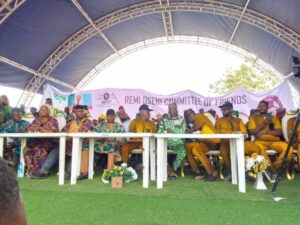
    A group, Remi Oseni Committee of Friends (ROCOF), says it is working assiduously to deliver one million votes for President Bola Tinubu come the 2027 presidential election.


    The group’s convener, Hon. Remi Oseni, representing Ibarapa East/Ido Federal Constituency, stated this in Ibadan on Sunday.


    The News Agency of Nigeria (NAN) reports that Oseni spoke while receiving defectors from other parties at the ROCOF Constituency General Meeting.


    The gathering also witnessed the empowerment of constituent members.


    Oseni said ROCOF was put together to harmonise and network members to think together about the progress of the group and the All Progressives Congress (APC).


    According to him, ROCOF also serves as a platform to encourage and motivate the commitment of party faithful.


    “We are not just asking them to gather for grouping sake, but for the betterment of all, and see how we can move as a team to achieve our party’s common goals.


    “Our goal is to liberate people who have been imprisoned politically and to ensure that indigents are properly empowered.


    “One of our focal areas is to help ourselves in the areas of education, youth empowerment, skills acquisition, and support for market men and women to progress in their businesses.


    “We are also doing this to strengthen APC across all levels.


    “The array of people present at this combined constituency programme is a clue that APC is set for victory in 2027,” he said.


    Oseni added that the success recorded during the just-concluded APC ward and local government congresses was another testament to the party’s leadership commitment.


    “It also reflected the genuine resolve of all stakeholders to put the party first,” he said.


    He attributed the success of the congress to the leadership commitment from the federal to the grassroots levels.


    According to the group’s chairman, Mr Yemi Aderibigbe, ROCOF is a movement determined to add value to APC as it has all it takes to win the 2027 elections across all levels.


    “We are no longer contesting, particularly in Oyo State; we are taking over the government house in 2027,” he said.


    NAN reports that the event featured the distribution of N1,000,000 cheques to each of 20 selected youths from the constituency.


    Meanwhile, some selected market women and artisans were given N100,000 each in support of their businesses. (NAN)(www.nannews.ng)


    TUN/MAM/MAS


    Edited by Modupe Adeloye and Moses Solanke


    Source: NAN – https://nannews.ng/2026/02/23/support-3/

  • APC hails FCT council polls as endorsement of Tinubu’s reforms

    APC hails FCT council polls as endorsement of Tinubu’s reforms


    By Emmanuel Mogbede


    The APC National Chairman, Prof. Nentawe Yilwatda, has described Saturday’s FCT council elections as a resounding endorsement of President Bola Tinubu’s ongoing reforms.


    In a statement issued in Abuja by his Special Adviser on Media and Communications Strategy, Mr Abimbola Tooki, Yilwatda said the results affirmed Tinubu’s governance direction.


    He said the overwhelming support recorded by the APC, particularly in the FCT, reflected confidence in the Renewed Hope Agenda of the Tinubu-led administration.


    According to him, the outcome showed Nigerians believed the current reforms would ultimately steer the country towards sustainable progress and prosperity.


    “I heartily congratulate our teeming supporters in the FCT, Kano and Rivers on the peaceful and credible conduct of Saturday’s polls.


    “The victories recorded by our great party are a clear testament to the resilience, unity and grassroots strength of the APC,” he said.


    Yilwatda said the FCT Area Council results carried special national significance for the party and the administration.


    He said: “The Abuja election is a powerful statement that Nigerians stand firmly with President Tinubu and his bold reform agenda.


    “As residents of the nation’s capital, their verdict sends a strong message of renewed hope and confidence in this administration’s ability to reposition Nigeria.”


    He congratulated APC chairmanship candidates who won in AMAC, Kuje, Abaji, Bwari and Kwali, noting their victories underscored the party’s deep grassroots connection.


    The chairman also congratulated the PDP chairmanship candidate who won in Gwagwalada, describing his emergence as proof that democracy prevailed.


    He further congratulated four APC State House of Assembly candidates who secured victory in Kano and Rivers states.


    Yilwatda said their success reflected effective party organisation and public trust in APC leadership.


    He commended party leaders, stakeholders and supporters across the three states for their discipline and peaceful participation.


    He also praised security agencies and election officials for professionalism during the polls.


    Yilwatda said: “As we celebrate these victories, we must remain united and committed to delivering good governance at all levels.


    “The message from the people is clear: they want results, accountability and continued reforms in line with the Renewed Hope Agenda. The APC will not disappoint.” (NAN) (www.nannews.ng)


    EEM/KTO


    =========


    Edited by Kamal Tayo Oropo


    Source: NAN – https://nannews.ng/2026/02/23/polls/

  • NNPC spearheading Africa’s global energy integration through gas pipeline projects

    NNPC spearheading Africa’s global energy integration through gas pipeline projects

    By Emmanuella Anokam, News Agency of Nigeria (NAN)

    Deep beneath Nigerian soil lies a dormant giant of natural gas with huge potential to transform into kinetic force, bridging the gap between gas fields and industrial heartlands.

    In the quest to leverage this huge gas reserves for regional energy security and global markets, the Nigerian National Petroleum Company Limited (NNPC Ltd.) spearheads Africa’s energy integration through the development of transcontinental gas pipeline projects to connect West African economies and link the continent to global energy markets.

    The NNPC Ltd.’s current strategy centres on enhancing the sustainability of upstream production, expanding natural gas processing and transportation infrastructure and upgrading refining assets to support chemical production and premium hydrocarbon outputs.

    NNPC’s major gas pipeline ventures focus on boosting domestic supply and connecting Africa to Europe.

    This is primarily through the ongoing Ajaokuta-Kaduna-Kano (AKK) Gas Pipeline for internal use, and ambitious international projects like the Nigeria-Morocco Gas Pipeline (NMGP), spanning 13 West African nations and the proposed Trans-Saharan Gas Pipeline (TSGP)

    This ensures the continuous supply of high quality energy products and services, evolving into an integrated energy company with strategic investments in gas and power, aiming to harness Nigeria’s abundant gas resources and deepen its footprint both locally and abroad.

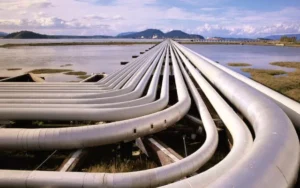
    The 2.8 billion dollars AKK pipeline is a 614 km line set to boost Northern Nigeria’s economy by supplying gas to power plants and industries, and with milestones such as the River Niger crossing (technically challenging segments) completed in 2025, it is expected to be activated for export in early 2026.

    Another key project is the Obiafu-Obrikom-Oben (OB3) gas pipeline, which connects eastern gas fields to western networks, facilitating nationwide supply and linking to the AKK gas pipeline.

    These projects are crucial for Nigeria’s gas-to-power goals, economic growth, and industrial revival, reducing reliance on diesel and Premium Motor Spirit (PMS).

    The Nigeria-Morocco Gas Pipeline, a proposed nearly 6,000-kilometer project to transport natural gas from Nigeria through 13 West African countries to Morocco, and then to Europe was proposed in a December 2016 agreement between the NNPC Ltd. and the Moroccan Office National des Hydrocarbures et des Mines (ONHYM).

    In August 2017, NNPC Ltd. and ONHYM began a feasibility study for the pipeline, which is estimated to cost 25 billion dollars, and would be completed in stages over 25 years.

    Morocco is reportedly in talks with Nigeria to pursue this gas pipeline which is progressive.

    The AKK project aims to strengthen Nigeria’s domestic energy network, while the Nigeria-Morocco project seeks to expand the West African Gas Pipeline (WAGP) to connect countries along the Atlantic coast and potentially extend to Europe.

    Speaking at the 2025 Abu Dhabi International Petroleum Exhibition and Conference (ADIPEC) hosted by the Abu Dhabi National Oil Company (ADNOC), in Abu Dhabi, United Arab Emirate, Mr Bashir Ojulari, Group Chief Executive Officer, NNPC Ltd. focused on deepening infrastructural development.

    Under the theme, Energy. Intelligence. Impact., ADIPEC hosted an extraordinary programme of dialogue and collaboration, uniting global leaders to build resilient systems, deploy intelligent solutions and deliver the energy the world needs.

    Ojulari said the flagship Nigeria–Morocco Gas Pipeline Project was central to NNPC’s continental expansion strategy, designed to connect African nations through energy infrastructure and drive industrial growth.

    “The project is one of our expansion priorities. It will run from Lagos in Nigeria all the way to Morocco around the perimeter of Africa, connecting countries along the route.

    “It will enable cross-border supply and off-take, supporting industrial growth along its corridor,” he said.

    He assured that the gas pipeline would build on the existing WAGP network, which already linked Nigeria to Ghana, extending it first to Côte d’Ivoire and then progressively northward through other coastal nations to Morocco.

    Ojulari said the infrastructure would allow each country along the corridor to feed in gas from local fields and also off-take gas to power industries and communities, creating a mutually beneficial regional gas market.

    “It provides opportunities to connect all those economies. From Morocco, the system will eventually connect to Europe, opening a new energy corridor from Africa to global markets,” he added.

    “The project will help monetise Nigeria’s vast gas reserves, estimated at more than 600 trillion cubic feet, while enabling other African countries with smaller reserves to participate in shared infrastructure that promotes regional development,” he said.

    He said NNPC Ltd. was simultaneously advancing domestic gas initiatives including Compressed Natural Gas (CNG) for transportation and Liquefied Petroleum Gas (LPG) for households to deepen gas utilisation and reduce dependence on biomass.

    “Natural gas is now a big deal in Nigeria. Our retail trucks are being converted to run on compressed natural gas. We are also expanding LPG networks across Nigeria and Sub-Saharan Africa to phase out wood and charcoal use,” Ojulari said.

    He emphasised that gas development remained central to Africa’s industrial future, describing it as the continent’s “pathway to full industrialisation.”

    “Gas provides revenue, creates jobs through industrial parks, and connects new businesses. For Nigeria and West Africa, it is the foundation for sustainable economic growth,” he said.

    Ojulari reaffirmed NNPC’s commitment to partnerships with African and global energy stakeholders to accelerate infrastructure that will make Africa a significant player in the global gas value chain.

    According to him, the NNPC Ltd. is charting a sustainable course for Africa’s energy future through technology deployment, business integration and strategic partnerships.

    After a recent inspection on the AKK project, Ojulari said the NNPC had completed welding of the pipeline’s main line, including the River Niger crossing, a long-standing technical challenge that had delayed progress on the project.

    He said the achievement had paved the way for connecting the pipeline early next year.

    “We have been able to complete the welding of the main line of the AKK pipeline. In summer, we were able to cross the River Niger, which was a struggle for many years. With its completion, we can start making all the connections early next year,” he said.

    According to Ojulari, once activated, the pipeline will deliver gas across northern Nigeria, supporting industrial and economic activities.

    “This is not just about energy,” he said. “It’s about industrialization, fertiliser plants, power generation, and gas-based industries in Kaduna, Kano, Abuja and Ajaokuta. We expect to see industrial parks spring up.”

    He attributed NNPC’s improved operational outlook to reforms introduced under the Petroleum Industry Act, which, he said, had repositioned the company as a commercially driven entity operating without reliance on federal allocations.

    He said the completion of the AKK pipeline network would expand economic opportunities, enhance power supply and support national industrialisation efforts, contributing to improved energy and economic security.

    The AKK pipeline, first conceived in 2008, is a key component of Nigeria’s strategy to harness its gas resources to drive economic growth.

    The project is expected to significantly improve energy access in northern Nigeria, where persistent power shortages and weak infrastructure have constrained industrial development for decades.

    On upstream investment, Mr Udy Ntia, Executive Vice President, Upstream, NNPC Ltd., also listed major gas pipeline projects, including the Nigeria-Morocco project and links to demand centres in western and northern Nigeria; Refinery optimisation and development of hybrid partnerships for co-investment in upstream projects.

    “Co-investment is the new round of financing. We are stepping in as co-investors to ensure projects are bankable and decisions are made quickly in a rapidly changing environment,” he said.

    He emphasised a shift toward partnership-driven growth between National Oil Companies (NOCs) and International Oil Companies (IOCs), calling for collaboration over competition.

    “IOCs are not grabbers; they are partners. We all share the same goal, which is profitability, sustainability and growth. The real question is how we can increase the size of the pie so that everyone wins,” he said.

    Ntia reaffirmed that Nigeria’s upstream strategy balances energy security, profitability, and climate responsibility, ensuring the nation’s resources remain relevant in the global energy transition.

    Also, this gives the country more power and better energy, creates many new jobs for people and also helps the land by using cleaner gas instead of dirty fuel.(NANFeatures)

    ***If used, please credit the Writer and the News Agency of Nigeria (NAN)***


    Source: NAN – https://nannews.ng/2026/01/19/nnpc-spearheading-africas-global-energy-integration-through-gas-pipeline-projects/

  • AFCON 2025 delivers goals, drama, officiating concerns

    AFCON 2025 delivers goals, drama, officiating concerns

    By Victor Okoye, News Agency of Nigeria (NAN)

    The 2025 Africa Cup of Nations (AFCON), hosted by Morocco, combined high-scoring football, strong organisation and intense controversy, as the continent’s flagship tournament unfolded across four weeks.

    The competition, which opened on Dec. 21 in Rabat, featured modern infrastructure, large crowds and strong fan engagement, reinforcing Morocco’s credentials as a major football host.

    The opening ceremony in Rabat set the tone. Against the backdrop of Morocco’s historic architecture, performers blended tradition with modernity, celebrating Africa’s diversity while underscoring the host nation’s growing stature in world football.

    Matches were played across nine venues in six cities of Rabat, Casablanca, Marrakech and Tangier, Agadir and Fès with the tournament producing a mix of shocks, standout performances and recurring debates over officiating.

    Due to FIFA expanding its Club World Cup competition to 32 teams and having it scheduled for June and July 2025, this edition of the tournament was played between Dec. 21 2025 and Jan. 18 2026.

    It was the first time that the tournament was played over the Christmas and New Year period. The situation was further complicated by the addition of two extra match days scheduled for the last two weeks of January in the expanded 2025/2026 UEFA Champions League season.

    This edition of the tournament was scheduled to be the second after 2019 to take place during the northern hemisphere’s summer (June–July), in order to reduce scheduling conflicts with European club teams and competitions; the previous 2023 edition was moved to January and February 2024 owing to the adverse summer weather conditions in Ivory Coast.

    Guinea was originally set as hosts for this edition of the tournament, but had its hosting rights stripped after affirming its inadequacy of hosting preparations. After a second bidding process, Morocco was named as the new hosts on Sept. 27, 2023.

    A total of 122 goals were scored during the competition, surpassing the 119 recorded at the 2023 edition in Côte d’Ivoire and setting a new AFCON record.

    The group stage produced several upsets, with traditional heavyweights facing stiff resistance from emerging teams.

    Mozambique, Benin and Sudan attracted attention with disciplined displays, while DR Congo impressed with tactical organisation and composure in key matches.

    Nigeria emerged as the tournament’s most prolific attacking side, scoring 14 goals, the highest by any team.

    The Super Eagles’ attacking strength was driven by Victor Osimhen and Ademola Lookman, as the team combined pace, width and pressing to unsettle opponents.

    However, Nigeria’s campaign was briefly overshadowed by off-field issues, including protests over unpaid allowances and internal tensions within the squad.

    The situation was resolved following the intervention of the Federal Government, allowing the team to refocus on the tournament.

    Nigeria’s title hopes ended in the semi-finals after a penalty shoot-out loss to hosts Morocco, a match that later drew criticism over officiating decisions.

    In spite of the setback, the Super Eagles secured the bronze medal after a 0–0 draw with Egypt in the third-place play-off in Casablanca, winning 4–2 on penalties.

    The victory extended Nigeria’s perfect record in AFCON third-place matches to eight wins from eight, a feat unmatched in the tournament’s history, and lifted their overall bronze-medal tally to nine.

    Goalkeeper Stanley Nwabali played a key role in the shoot-out victory, which extended Nigeria’s record in AFCON third-place matches to eight wins from eight and increased their overall bronze tally to nine.

    Egypt also reached the semi-finals, eliminating defending champions Côte d’Ivoire in the quarter-finals before losing 1–0 to eventual champions Senegal.

    The Pharaohs, led by Mohamed Salah, again demonstrated resilience and experience, although they missed out on silverware after losing the third-place match to Nigeria.

    Host nation Morocco progressed steadily through the knockout stages, buoyed by home support and improved defensive solidity.

    Brahim Díaz finished as the tournament’s top scorer with five goals to claim the Golden Boot, while goalkeeper Yassine Bounou conceded just two goals en route to the final and won the Golden Glove.

    However, as Morocco advanced, criticism of refereeing standards intensified.

    Players, officials and fans raised concerns over inconsistent decisions and alleged bias towards the host nation, with several matches drawing scrutiny.

    Nigeria’s semi-final loss to Morocco prompted complaints from Nigerian supporters over the performance of Ghanaian referee Daniel Laryea.

    Earlier, Algeria protested decisions following their group-stage loss to Nigeria, while Cameroon also criticised officiating after their Round of 16 exit in the hands of Morocco.

    Many observers contrasted the officiating with the 2023 edition in Côte d’Ivoire, arguing that standards had declined.

    CAF President Patrice Motsepe acknowledged the concerns, saying the observations of fans and stakeholders would be reviewed to improve consistency, accountability and integrity in officiating.

    He said CAF had instructed referees and VAR officials ahead of the tournament to officiate with independence and impartiality.

    The final, played on Jan. 18 in Rabat between Morocco and Senegal, was marked by controversy.

    Referee Jean Jacques Ndala awarded Morocco a penalty in the 98th minute following a VAR review, shortly after Senegal had a goal disallowed.

    Senegal’s players briefly walked off the pitch in protest, delaying the match, before play resumed.

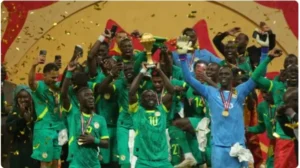
    The penalty was saved by goalkeeper Edouard Mendy, and Senegal went on to score in extra time through Pape Gueye to secure a 1–0 victory and a second AFCON title in five years.

    Following the match, Morocco coach Walid Regragui criticised Senegal’s protest, while FIFA President Gianni Infantino condemned the scenes and called for disciplinary review.

    AFCON 2025 will be remembered for its attacking football, competitive balance and strong hosting, alongside persistent concerns over officiating.

    Senegal emerged champions through resilience, as Morocco confirmed their growing influence in African football, while Nigeria reinforced their attacking pedigree, and Egypt underlined their enduring relevance.

    However, questions surrounding refereeing standards remain a key issue for CAF as the tournament’s legacy continues to be assessed. (NANFeatures)

    ***If used, please credit the writer and the News Agency of Nigeria (NAN)


    Source: NAN – https://nannews.ng/2026/01/19/afcon-2025-delivers-goals-drama-officiating-concerns/

  • PRESIDENT TINUBU DRIVING A NEW ERA OF NIGERIA-UAE ECONOMIC SYNERGY

    PRESIDENT TINUBU DRIVING A NEW ERA OF NIGERIA-UAE ECONOMIC SYNERGY

    By Ahmed Ubandoma

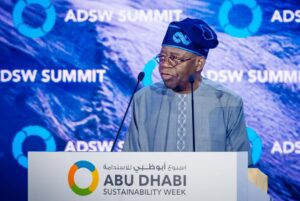
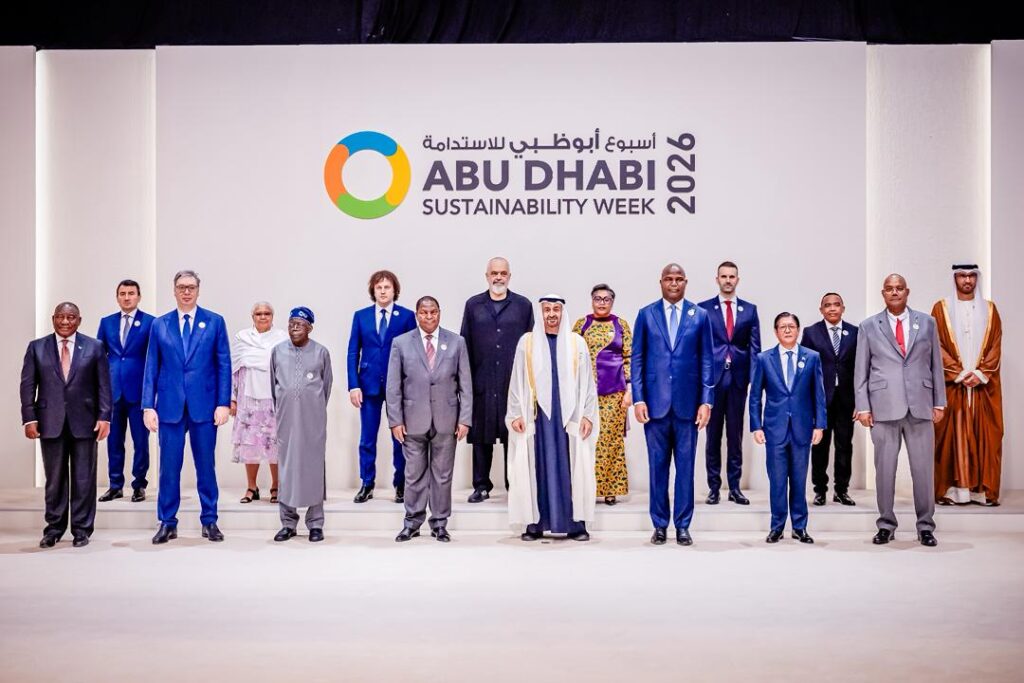
    President Bola Ahmed Tinubu’s participation in the 2026 edition of the Abu Dhabi Sustainability Week (ADSW) marked a transformative shift in Nigeria’s foreign policy and economic strategy.

    The ADSW summit, a premier global platform for sustainability, clean energy and climate finance offered Nigeria a high-visibility stage to showcase its economic reforms, climate action plans and investment opportunities.

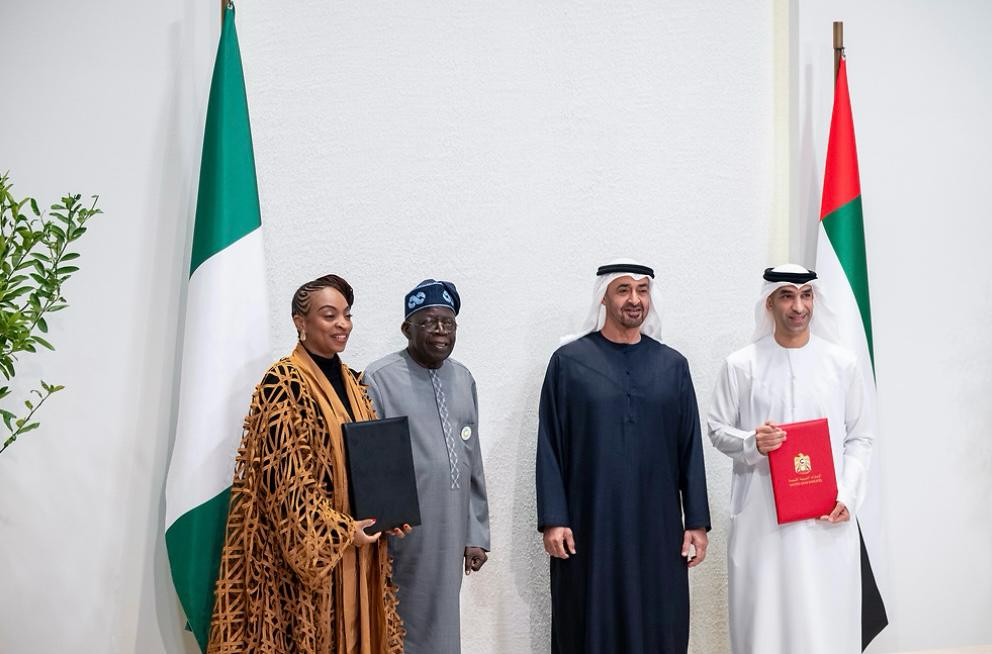
    President Tinubu`s visit in company of Nigeria`s Ministers of Trade and Investment, Finance and coordinating Minister of the Economy and that of Budget and Planning moved beyond mere diplomacy, resulting in the signing of the Comprehensive Economic Partnership Agreement (CEPA) with the UAE, a landmark deal poised to integrate Nigeria more deeply into the global green economy and Middle Eastern trade corridors.

    The President used the occasion to articulate Nigeria’s integrated approach to climate and economic growth while courting foreign capital and forging deeper partnerships.

    At the event, he also announced the co-hosting of INVESTOPIA in Lagos in Partnership with the UAE in February this year.

    President Tinubu described CEPA as a historic and strategic agreement that would also enhance cooperation in aviation, logistics, agriculture, and climate-smart infrastructure, creating enduring opportunities for the people of the two countries.

    He stated that Investopia would bring together investors, innovators, policymakers, and business leaders to transform opportunities into commitment and ideas into investment.

    ”We warmly invite our partners to join us and help build the next chapter of sustainable and shared prosperity for Nigeria, Africa, and the world, ” President Tinubu said.

    President Tinubu told the Summit that Nigeria aimed to mobilise up to $30 billion annually in climate and green industrial finance as it accelerates energy transition reforms and expands nationwide electricity access.

    ”The foundation of every modern economy is electricity. As an emerging economy in the Global South, we understand the delicate balance between industrialisation and decarbonisation, ensuring neither is pursued at the expense of the other.

    ”We are calling for a fundamental shift in the global financial architecture: a move away from the restrictive requirement of sovereign guarantees, which unfairly penalise developing economies.

    ”Instead, the focus should be on blended finance and first-loss capital mechanisms that allow private sustainable capital flows directly into our green projects without further straining national balance sheets,” he said.

    According to President Tinubu, Nigeria has strengthened its climate governance framework with the adoption of a National Carbon Market Activation Policy and the launch of a National Carbon Registry.

    He explained that these measures are aimed at improving transparency and investor confidence.

    President Tinubu highlighted the Electricity Act 2023 as a central pillar of Nigeria’s energy reforms, noting that it enabled decentralised power generation and distribution to underserved communities.

    He added that Nigeria’s climate investment drive includes a $500 million distributed renewable energy fund backed by the Nigeria Sovereign Investment Authority, as well as a $750 million World Bank programme expected to expand clean electricity access to more than 17.5 million people.

    President Tinubu reaffirmed Nigeria’s target of net-zero emissions by 2060, under its Energy Transition Plan, while pursuing industrial growth and universal energy access.

    He invited foreign investors to partner in Nigeria’s lithium and critical minerals sector, stressing that the government prioritises local processing and value addition.

    President Tinubu noted that Nigeria’s ongoing economic reforms are producing tangible results, including a 21 per cent growth in non-oil exports.

    ”These reforms, alongside wider fiscal and monetary measures, are delivering results. Non-oil exports have grown by 21 per cent, supported by a more diversified product base. Capital importation has risen, and Nigeria now has over 50 billion dollars in investment commitments across key sectors.

    ”We are ready to work with partners across the world to ensure that the next era of development is not only green and inclusive, but just and enduring,” he said.

    After signing the CEPA document, the Minister of Industry Trade and Investment Dr Jumoke Oduwole, said the Agreement was designed to deepen economic cooperation, expand market access for Nigerian goods and services, and support economic diversification in line with President Tinubu’s Renewed Hope Agenda.

    “ Under the CEPA, Nigerian exporters will benefit from the elimination of tariffs on over 7,000 products entering the UAE market. Agricultural and industrial goods will enjoy immediate duty-free access, while tariffs on machinery, vehicles, electrical equipment, apparel, and furniture will be phased out within three to five years.

    “ The Agreement also allows Nigerian businesses to establish operations in the UAE and grants business visitors and professionals improved mobility to explore trade and investment opportunities.

    ‘’The Agreement is expected to significantly improve Nigeria’s investment climate by providing clarity and confidence for UAE investors in Nigeria’s productive sectors.

    ‘’Nigeria, in return, will gradually eliminate tariffs on about 6,000 products, mainly industrial inputs, capital goods, and machinery, while maintaining its Import Prohibition List.

    Nigeria also made commitments across 99 service areas in 10 sectors, strengthening its productive capacity and service economy. Strategically, the CEPA positions Nigeria as a key gateway for global investors seeking access to Africa, particularly the African Continental Free Trade Area.

    “It has already attracted strong interest from UAE institutional investors in infrastructure, agriculture, real estate, digital banking, and logistics. With coordinated implementation by relevant government agencies, the Agreement is expected to accelerate trade, investment, job creation, and Nigeria’s integration into global value chains” the Minister explained.

    Speaking at the sidelines of the summit, Director-General of the National Council on Climate Change Mrs Tenioye Majekodunmi, expressed confidence on Nigeria`s ability to attract more foreign investments with the dynamic and focused leadership provided by the President.

    “The leadership of President Bola Tinubu has been instrumental in repositioning Nigeria as a credible climate actor on the global stage and his participation at a summit like this demonstrates Nigeria`s seriousness about attracting green investments and strengthen international cooperation.

    “ The key takeaways here is the transition of Nigeria from a passive participant in climate talks to a proactive economic partner, leveraging “green” diplomacy to secure “gold” standard trade concessions,” she said.

    Mr Sadeeq Suleiman, a Nigerian Businessman based in Abu Dhabi commended the President for taking the bold steps to conclude the signing of the remaining part of the trade agreement with the UAE.

    Suleiman also appealed for stakeholders to follow-up and ensure that every part of the agreement is implemented for mutual benefits.

    **If used pleased credit the writer and the News Agency of Nigeria.


    Source: NAN – https://nannews.ng/2026/01/23/president-tinubu-driving-a-new-era-of-nigeria-uae-economic-synergy/

  • Inside the Military’s strategy against Crude Oil theft in the creeks

    Inside the Military’s strategy against Crude Oil theft in the creeks

    By Sumaila Ogbaje, News Agency of Nigeria (NAN)

    For decades, the oil-rich creeks of the Niger Delta symbolised both Nigeria’s economic lifeline and one of its gravest national security challenges.

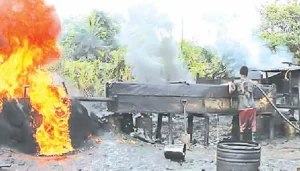
    Vast mangrove forests concealed illegal refineries, crude oil thieves and armed criminal networks that siphoned national wealth, devastated the environment and undermined investor confidence.

    Today, however, a decisive shift is underway.

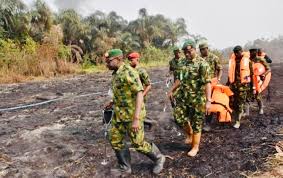
    Recent media tours of Operation DELTA SAFE formations across Rivers and Bayelsa States reveal a more coordinated, intelligence-driven and technologically enabled military campaign that is steadily tightening the noose around crude oil theft syndicates.

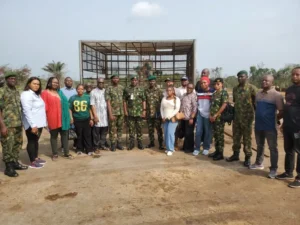
    A Team of Defence Correspondents on Media Tour of Operation Delta Safe at an oil well site in Rivers.

    At the heart of this renewed push is Operation DELTA SAFE (OPDS), the joint land, maritime and air task force mandated to secure Nigeria’s oil and gas infrastructure.

    From the creeks of Southern Ijaw to the oil corridors of Rivers, troops now dominate areas once considered impenetrable.

    The General Officer Commanding (GOC), 6 Division, Nigerian Army, Maj.-Gen. Emmanuel Emekah, disclosed during the tour in Port Harcourt that the Division had recorded zero incidents of pipeline vandalism within its Area of Responsibility in the last one year.

    “Since I assumed command on Jan. 24, 2025, we have recorded zero cases of violent pipeline vandalism. No oil company has reported any breach due to vandalism within this period,” Emekah said.

    According to him, the achievement was the result of sustained patrols, intelligence-led operations, community engagement and close inter-agency collaboration.

    He noted that Nigeria’s crude oil production, which averaged 1.4 to 1.5 million barrels per day before 2025, rose to about 2.2 million barrels per day by December 2025, attributing the improvement largely to enhanced security.

    For the Division, Emekah said, the performance of the oil and gas sector remains a key indicator of operational success, stressing that most oil leakages now recorded were due to aging infrastructure rather than sabotage.

    A recurring theme from commanders across OPDS formations is the shift from routine patrols to precision, intelligence-driven operations.

    Oil thieves, according to Emekah, have grown increasingly sophisticated, laying long hoses from pipelines into remote creeks and communities and restricting waterways to evade detection.

    “We have learnt that destroying illegal sites alone is not enough. That is why we revisit cleared locations repeatedly to ensure they are not re-established,” he said.

    Beyond dismantling camps, the Army now targets the support ecosystem; markets, logistics chains and community enablers that sustain illegal refining.

    “If there is no market, there will be no production. Once we disrupt patronage, the operations collapse,” the GOC added.

    On the Rivers–Bayelsa boundary, troops of 16 Brigade Nigerian Army have dislodged oil thieves from the once-notorious Adibawa oil well area, concluding plans for a permanent military deployment to prevent resurgence.

    The Acting Garrison Commander, Maj. Hassan Mohammed, explained that the swampy terrain posed operational challenges but had not deterred troops.

    “Our objective is to project forces deep into the forest. As criminals retreat further into the bush, we pursue them relentlessly,” he said.

    Plans include deploying gunboats, a houseboat, land troops and surveillance drones, in synergy with the Nigerian Air Force, to ensure year-round dominance of the strategic oil facility.

    On the maritime front, the Nigerian Navy Ship (NNS) SOROH, operating under Central Naval Command and Sector 2 of OPDS, has recorded significant successes across Bayelsa waterways.

    Between January 2025 to date, the Commanding Officer of NNS SOROH, Commodore Omobamidele Akinbami, said the base had deactivated over 12 boats, dismantled more than 15 illegal refining sites and handled millions of litres of suspected stolen and adulterated petroleum products.

    Sustained naval pressure, he noted, had forced oil theft syndicates to move smaller quantities using smaller boats, even as naval patrols remained relentless.

    NNS SOROH has also recorded successes against piracy, militancy and kidnapping, including swift operations that led to the release of abducted victims unharmed.

    Beyond kinetic actions, the Navy has sustained non-kinetic engagements, including medical outreach, peace-brokering and flood mitigation, helping to build trust with host communities.

    Air operations have played a decisive role in reshaping the operational landscape.

    The Air Component of OPDS destroyed 131 illegal refining sites in 2025 alone, while conducting 495 missions in 779 sorties, logging over 784 flight hours.

    Assets deployed included T-129 ATAK helicopters, Wing Loong II UCAVs, EC-135 helicopters and Diamond-62 aircraft, which enabled deep intelligence, surveillance and reconnaissance missions.

    The Commander, 115 Special Operations Group, Group Capt. Abdulafeez Opaleye, said air power had denied criminals freedom of action and created psychological pressure that forced many to abandon camps.

    “Oil theft has become sophisticated, but when oil production improves, the entire nation benefits,” he said, urging sustained community cooperation.

    The Commander of OPDS, Rear Adm. Olugbenga Oladipo, warned that criminals were shifting from open refining to chemical adulteration and exploiting remote wellheads.

    In response, OPDS has recalibrated its intelligence focus, tracking chemical supply chains and increasing surveillance around vulnerable wellheads.

    He disclosed that OPDS conducts at least two major operations daily, in addition to routine patrols, stressing that operations do not pause for weekends or holidays.

    To address disputes between oil companies and host communities, OPDS has also established a Situation Room and Mediation Centre, which recorded peak engagements in December, preventing disruptions to production.

    Throughout the tour, the Director of Defence Media Operations, Maj.-Gen. Michael Onoja, emphasised transparency, accountability and strategic communication.

    He described journalists as “partners in progress” and “heroes of democracy,” noting that accurate reporting builds public trust and counters adversarial narratives.

    “The confidence and trust of the civilian population are critical to operational success,” Onoja said, stressing that security remains a collective responsibility.

    From land to sea to air, the renewed military push in the Niger Delta signals more than improved security.

    Stakeholders say that this reflects a coordinated national effort to protect Nigeria’s economic lifelines, restore environmental sanity and rebuild investor confidence. (NANFeatures)

    ***If used, please credit the writer and the News Agency of Nigeria.


    Source: NAN – https://nannews.ng/2026/01/30/inside-the-militarys-strategy-against-crude-oil-theft-in-the-creeks/

  • WASH in schools: Why Jigawa must act now

    WASH in schools: Why Jigawa must act now

    By Tosin Kolade, News Agency of Nigeria (NAN)

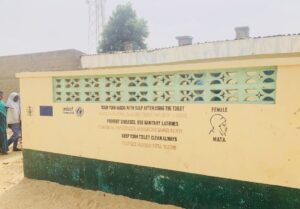
    A few years ago, an incident at Gadadin Primary School in Kachi Ward, Dutse Local Government Area of Jigawa exposed the grave risks children face when basic Water, Sanitation and Hygiene (WASH) facilities are lacking in schools.

    At the school, which has 1,084 pupils and 13 staff members, WASH conditions remain critically poor.

    All six toilets designated for pupils are non-functional; they had been destroyed by flooding and wild animals about seven years ago.

    Consequently, pupils resort to open defecation within and around the school premises.

    The headmaster, Malam Ali Alhaji, explained that the incident was formally reported to the Local Education Authority, which visited the school to assess the damage, yet no reconstruction or repairs followed.

    He added that the four staff toilets, though connected to a water system, were also non-functional due to lack of water and maintenance.

    Furthermore, the school has no functional water source, forcing pupils and staff to bring water from home.

    A nearby community well, previously used by pupils, is open and unprotected, becoming contaminated during the rainy season.

    The headmaster said a cholera outbreak occurred after pupils consumed water from the well, prompting authorities to ban its use.

    Concerned experts say the absence of water and functional toilets severely limits handwashing and hygiene practices.

    They note that the lack of disability-friendly sanitation facilities exposes pupils with physical challenges to heightened health and dignity risks.

    Community members recalled that during this period, a pupil died while attempting to fetch water during school hours.

    Residents said the tragedy left a lasting impact, highlighting that inadequate WASH facilities in schools are not merely an infrastructure gap but a serious child protection concern.

    In spite of these far-reaching implications, experts warn that the impact of poor WASH services in schools remains widely underestimated.

    Available data paints a troubling picture.

    In the foreword to the 2019 WHO/UNICEF baseline report on WASH in Health Care Facilities, the agencies warned that lack of water, sanitation, and hygiene exposes users to preventable health risks.

    Although the statement focused on health facilities, experts argue the same applies to schools, where children spend long hours and are equally vulnerable to infections and unsafe environments.

    Recently, UNICEF convened a two-day Media Tour and Dialogue on WASH Services and Facilities in schools, health care facilities, and public spaces in Jigawa.

    The initiative created a platform for duty bearers and the news media to interface with a focus on WASH standards and the current state of service provision.

    The dialogue aimed to inform duty bearers and media organisations  about minimum standards for WASH in schools and health care facilities, while also establishing the current status of WASH provision across the state.

    By creating a shared understanding of the benchmarks, the initiative sought to strengthen accountability, promote data-driven decision-making, and galvanise action towards improving access to safe water, sanitation, and hygiene.

    At the meeting, Mr Job Ominyi, UNICEF WASH Consultant, emphasised the need for clear and mutually agreed minimum standards.

    According to him, such standards help measure progress towards Sustainable Development Goal (SDG) 6, while high-quality WASH contributes greatly to achieving SDGs 3 and 4 on health and education.

    Data from the WHO/UNICEF Joint Monitoring Programme (JMP) shows that a significant proportion of schools in Nigeria lack basic WASH services.

    Nationally, only about 10 per cent of the population has access to complete basic water, sanitation, and hygiene services, with rural residents three times more disadvantaged than urban counterparts.

    In Jigawa, the challenge is pronounced; of 1,575 public schools assessed, only 2 per cent had access to basic WASH services, while fewer than 12 per cent met minimum standards across individual components.

    The performance lags behind neighbouring Kano State.

    Experts warn that these gaps increase children’s exposure to waterborne diseases, fuel absenteeism, and undermine learning outcomes.

    Globally, WHO and UNICEF define core WASH indicators to include reliable access to safe water on premises, usable sanitation facilities, functional hand hygiene points, trained personnel for environmental cleaning, and safe waste disposal.

    These benchmarks serve as minimum requirements for safety, dignity, and infection prevention.

    In Nigeria, these global standards are implemented through tools such as WASHNORM and WASHFIT, which adapt WHO/UNICEF indicators to local systems.

    WASHNORM provides data to guide planning at state and federal levels, while WASHFIT supports facility-level assessments and continuous improvement.

    Stakeholders note that aligning school and facility upgrades with these tools is critical for reducing disease risks and strengthening public health preparedness.

    At the meeting, Susan Akila, UNICEF Communication Specialist, described WASH in Schools as the foundation for safe, inclusive, and resilient learning environments.

    Drawing on her extensive experience in advocacy and policy, she highlighted that access to clean water, sanitation, and hygiene is not just a public health issue but a critical factor in educational attainment and social equity.

    She emphasised that WASH infrastructure directly influences school attendance, particularly for girls, as adolescent girls were more likely to miss school during menstruation if facilities were inadequate.

    Akila also stressed that beyond the physical infrastructure, WASH interventions must incorporate hygiene education, behavioural change, and community engagement.

    “Providing toilets and water points is not enough; children need to understand hygiene practices, and schools must ensure safe, private, and functional facilities.

    “When girls lack privacy during menstruation, it compromises both their dignity and education.

    “Similarly, children with disabilities must have access to facilities designed to meet their needs.”

    Highlighting Jigawa’s achievement as the first Open Defecation-Free state in Nigeria, Akila said the milestone demonstrated the government’s commitment to public health, particularly the health of children.
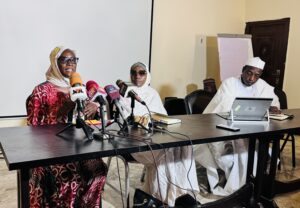
    However, she noted that such progress must extend into schools, where WASH deficiencies remained a critical challenge.

    “Many schools still rely on unimproved water sources or lack functional toilets, undermining hygiene education and behaviour change efforts.

    “To protect children and ensure inclusive education, WASH must be integrated into every school’s operations,” Akila said.

    At the same meeting, Prof. Haruna Musa, State Universal Basic Education Board (SUBEB) Chairman, outlined the state government’s strategic approach to tackling poor WASH conditions.

    He said Jigawa was prioritising WASH infrastructure because inadequate facilities directly affected school attendance, retention, and learning outcomes.

    “The government does not construct schools without toilets and currently manages 8,689 toilets across public schools.’’

    Musa explained that the goal was 100 per cent WASH coverage, including both new constructions and rehabilitation of existing facilities.

    He said that while implementation was phased and strategic, the government was committed to ensuring every school eventually had functional toilets, reliable water, and hygiene facilities.

    “Community involvement through School-Based Management Committees and Parent-Teacher Associations is key to ensuring ownership and proper use of facilities.’’

    He said that the state leveraged technology, with desk officers monitoring WASH facilities across schools to track usage and maintenance.

    “Hygiene education is central to the strategy, with teachers trained to instil proper handwashing, sanitation, and maintenance practices among pupils.’’

    Musa said that gender-sensitive infrastructure, including Menstrual Health Management-friendly toilets, was critical to supporting girls’ attendance and retention.

    “It is crucial that schools not only have WASH facilities, but that they are used responsibly and maintained. Water sources must be protected, toilets kept clean, and students taught how to use them properly.

    “Sustainability and co-ownership are key; investments must continue to benefit children long after initial construction,” he said.
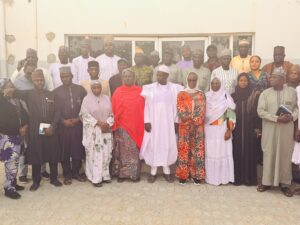
    Dr Hauwa Babura, Technical Advisor to Gov. Umar Namadi on Basic Education, added that ongoing collaboration with development partners was vital to addressing gaps, particularly in newly established rural schools.

    Babura noted that prioritising WASH was crucial.

    She said the state government was taking the matter very seriously to safeguard the health and wellbeing of the population.

    Overall, experts stress the need for sustained investment in school WASH, guided by data, regular monitoring, and adherence to JMP and WASHNORM standards.

    Key priorities include gender-segregated and MHM-friendly facilities, proper maintenance, and hygiene education.

    Development partners note that WASH must be central to education and child protection.

    For Jigawa and other states, providing schools with safe water and hygiene is a pillar of child safety and gender equality, making it vital for ensuring the right to a high-quality education. (NANFeatures)


    Source: NAN – https://nannews.ng/2026/02/03/wash-school-healthcare-facility-jigawa/
  • Closing WASH funding gap through domestic financing

    Closing WASH funding gap through domestic financing

    By Tosin Kolade, News Agency of Nigeria (NAN)

    Nigeria’s efforts to provide safe water and sanitation to millions of citizens have suffered a major setback following a broad suspension of United States Agency for International Development (USAID) programmes.

    Reports indicate that Nigeria’s access to a 602.95 million dollar grant for 2025 has become uncertain after a temporary freeze of USAID activities was instituted to review U.S. foreign assistance programmes.

    This freeze, ordered by U.S. leadership in January 2025, affects funding previously expected for a range of development initiatives, including health and basic services.

    While this figure refers to overall USAID funding and not water and sanitation alone, it reflects the scale of potential reductions in development assistance.

    Such cuts could indirectly affect the Water, Sanitation, and Hygiene (WASH) sector, especially when multi-sectoral programmes lose support.

    Historically, Nigeria has been one of the top recipients of USAID support in Africa, with total assistance reaching about 876 million dollars in 2024, covering health, water supply, and sanitation projects.

    Global reports have highlighted that cuts in U.S. foreign aid have left water and sanitation projects, including boreholes, irrigation schemes, and wells half-finished, forcing work to halt and leaving communities without promised infrastructure.

    Although these reports do not specifically mention Nigeria, they illustrate the real consequences of funding freezes on WASH initiatives worldwide.

    Moreover, local reports from northern Nigeria suggest that the 90-day suspension of humanitarian aid has led to job losses among volunteers and staff working on WASH, health, and other development interventions, underscoring the human cost of halted funding.

    This development comes as Nigeria’s WASH sector operates at just a quarter of the resources needed to save lives.

    With less than five years remaining to achieve the Sustainable Development Goals (SDGs), especially SDG 6, experts warn that urgent action is required.

    This urgency also aligns with the African Union’s 2026 theme, “Assuring Sustainable Water Availability and Safe Sanitation Systems to Achieve the Goals of Agenda 2063”.

    Experts emphasise that water and sanitation are more than technical or environmental issues; they are critical to economic stability, public health, and peace.

    At the opening of a two-day Stakeholders Forum on Developing a Resource Mobilisation Strategy for Nigeria’s WASH Sector, Mr Benson Attah, the National Coordinator of the Society for Water and Sanitation (NEWSAN) described the sector as being in a “state of emergency”.

    “Vision without funding is a hallucination; to meet SDG 6 targets by 2030, Nigeria requires an annual investment of approximately 1.30 per cent of GDP.

    “Yet, we are currently investing only 0.32 per cent. This means we are funding a mere quarter of what is needed to prevent the 250,000 preventable deaths each year due to poor hygiene, inadequate sanitation, and contaminated water.”

    He warned that the funding freeze has immediate consequences.

    According to him, ongoing rural water schemes have stalled, and technical gaps have emerged following the loss of international support for laboratory networks and supply chain management.

    He said that projects previously backed by external grants were currently struggling to secure operational and maintenance funds.

    The forum, convened by NEWSAN, seeks to chart a new path for domestic resource mobilisation, stronger public-private partnerships, and community-driven solutions.

    “If the treasury cannot fund it alone, we must look to the market and the community; no single agency can fix a dry tap. A whole-of-society approach is essential,” Attah said.

    The national coordinator urged government agencies, civil society, development partners, and the private sector to work together to ensure universal access to safe water and dignified sanitation.

    Speaking virtually at the forum, Mr Kevin Roussel, Head of the Country Engagement Team at Sanitation and Water for All (SWA), observed that the financial landscape for development in low- and middle-income countries was under unprecedented pressure.

    He noted that shrinking aid, mounting debt, and limited sector-specific funding are constraining development efforts.

    He stressed that while official development assistance remains critical, it is contracting across traditional donor countries, limiting resources available for sustainable development.

    “This is not something that will change overnight; even with leadership or policy shifts, the fundamental challenges to development financing remain,” Roussel said.

    He also pointed to a looming sovereign debt crisis, with many countries facing fiscal pressures amounting to approximately 1.4 trillion dollars in debt servicing, forcing governments to prioritise debt repayment over domestic investment in development.

    Roussel further highlighted that the water and sanitation sector has historically absorbed only 2–4 per cent of Official Development Assistance (ODA) allocations, in spite being critical for public health and sustainable development.

    He described the combination of diminishing aid, limited fiscal space, and low sector-specific absorption as a “triple challenge,” calling for strategic and coordinated action.

    Earlier, Ms Catarina Fonseca, Senior Finance Advisor at IRC WASH and SWA, urged civil society organisations (CSOs) to adopt a practical, context-sensitive approach to mobilising domestic resources.
    She said that while Nigeria had substantial internal resources, they were often not directed toward the water and sanitation sector.

    “Funding strategies cannot be ideological; it is about what is feasible in your context.

    “Services must be high-quality, affordable, and attractive for private or concessional finance.”

    She outlined a structured framework for domestic resource mobilisation.

    Fonseca, who also spoke virtually, explained that strategies could range from narrowly focused projects on urban water supply to broader, integrated approaches covering sanitation, solid waste, flood management, and water for agriculture, energy, and food security.

    She highlighted practical measures governments and utilities can take to maximise domestic resources, including improving efficiency, reducing non-revenue water, streamlining billing systems, and adjusting tariffs or taxes where feasible.

    “Leveraging cross-subsidies and sector-specific levies can also generate additional funds, while private sector and innovative financing mechanisms require greater coordination.’’

    Fonseca emphasised the critical role of CSOs in advocating for WASH financing, raising the sector’s profile, educating governments, mobilising communities, and ensuring funds were used effectively.

    She noted that private sector involvement ranges from small family-run maintenance businesses in peri-urban areas to large public-private companies.

    “Everywhere in the world, there has been a mix of private and public involvement for over 200 years.

    What matters is good services, credible maintenance, and affordability, not ideology,” she said.

    On domestic financing, Fonseca highlighted the importance of creditworthiness for utilities and service providers seeking loans, noting that rural projects could be pooled with larger urban utilities to reduce financial risk and attract funding.

    She cited examples where city councils supported small waste operators through business plans, leasing options, and dedicated credit lines.

    She urged CSOs to prioritise strategies that generate the highest financial returns and are realistically achievable within Nigeria’s economic context.

    The SWA finance advisor emphasised that evidence-based decision-making and strong stakeholder engagement are critical to mobilising resources effectively.

    Earlier, Secretary of NEWSAN’s Board, Dr Priscilla Achakpa, said the meeting showed that “it is not just about eligibility; it is about ranking partners.

    “From that ranking, we decide how to engage and what each partner can contribute; this is not about handouts; it’s about real partnership for the community”.

    She noted that the funding landscape is shifting, with the U.S scaling back support for UN initiatives in women, youth, and water.

    “Many partners no longer speak of grants; everything now is about interest and investment.

    “In the water sector, we must ask: where are the opportunities, and what can we realistically change?”

    Achakpa said that governments and organisations must define their own interests.

    “Africa has vast resources, but every country and organisation operates based on interest; converting a million pounds into naira is not trivial, that’s hundreds of millions, even over a billion naira.

    “What can that money do for us? Success in the water sector depends on power, investment, and strong partnerships,’’ Achakpa said.

    Overall, observers say that ensuring every Nigerian has access to safe water and proper sanitation will require coordinated action, robust domestic financing, and strong public-private collaboration.(NANFeatures)


    Source: NAN – https://nannews.ng/2026/02/05/closing-wash-funding-gap-through-domestic-financing/

  • FCT dilemma of waste in water bodies, Kubwa in focus

    FCT dilemma of waste in water bodies, Kubwa in focus

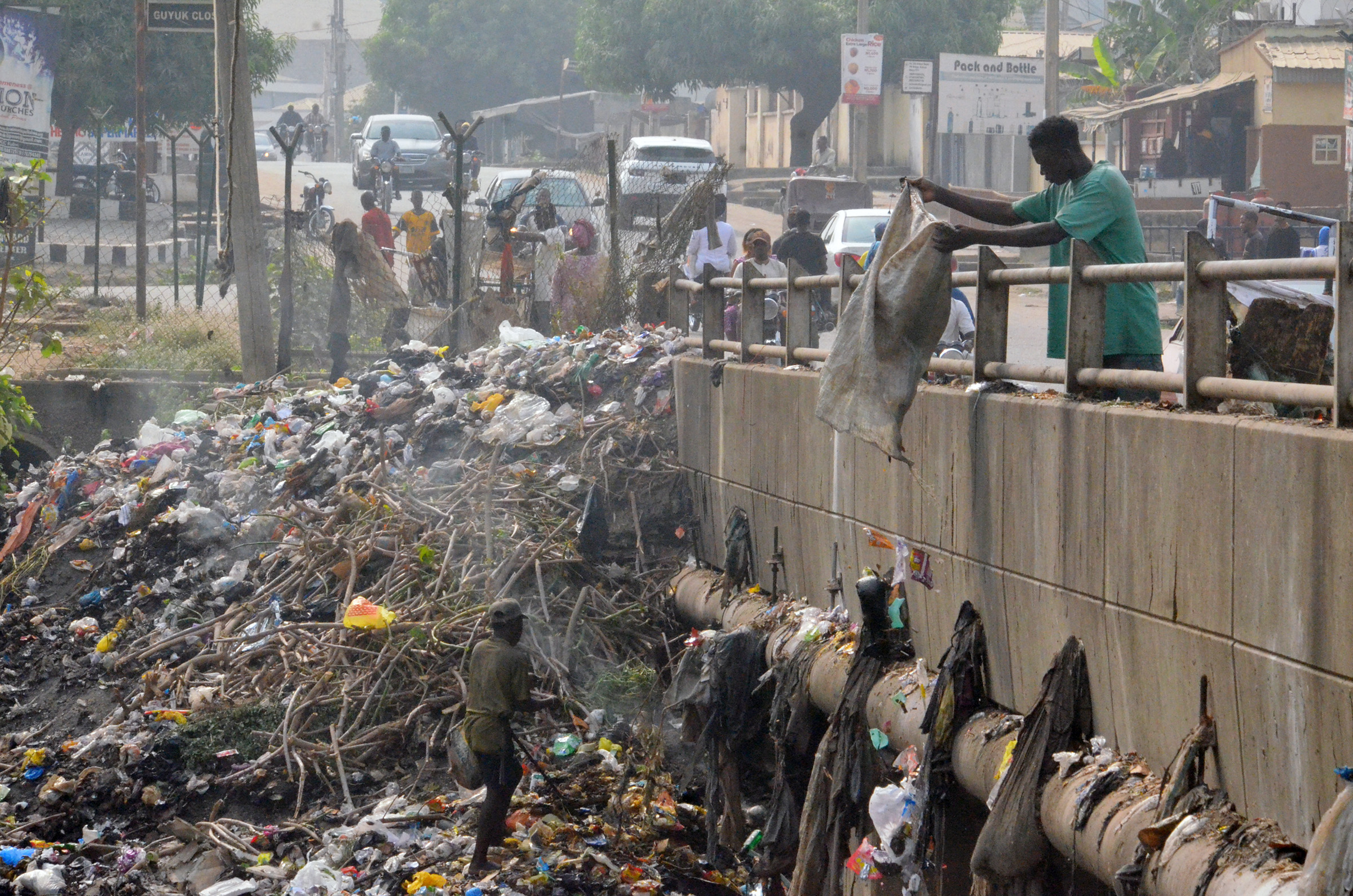
    Kubwa PW bridge: Baban Bola dumps waste in the stream Photo: NAN
    Kubwa PW bridge: Baban Bola dumps waste in the stream Photo: NAN


    By Chijioke Okoronkwo, News Agency of Nigeria(NAN)

    Daily, especially in morning and evening hours, shouts of ‘bola! bola! bola! rend the air in the streets of satellite towns in the Federal Capital Territory.

    These screeches signal the arrival or presence of informal refuse collectors known as ‘Mai Bola’ or ‘Baban Bola’ in the local parlance.

    Environmental commentators say the ‘Baban Bolas’ undoubtedly provide de facto essential services—compensating for lack of bin wagons from the local authorities—but, in turn, they constitute an inestimable ecological threat.

    Investigations indicate that most of the refuse collected by these informal collectors in the FCT end up in the rivers, streams and canals; making these water bodies polluted and hazardous.

    From Karu to Jikwoyi, Karimo, Gwagwalada, Zuba,  Kubwa, among others, the nuisance is blatant: canals, drains and streams are being choked by waste, resulting in clogged waterways, flooding, and water contamination.

    Experts say indiscriminate dumping of waste in water bodies directly exacerbates climate change by fueling a vicious circle of greenhouse gas (GHG) emissions and ecosystem degradation

    More so, health experts say the resultant health hazards include diseases such as cholera, typhoid, dysentery, Hepatitis A/E, Giardiasis, and E. coli infections, as well as the proliferation of vectors that breed in polluted water.

    In Kubwa, a stark and disturbing reality stares residents in the face: Baban Bolas bold-facedly park their carts by the bridges at PW, Phase 4, and Phase 3, among others, and empty their garbage into the streams, unfazed.

    Most of the time, efforts by passers-by or residents to confront them are met with strong resistance and violent threats.

    It is worth noting that security operatives on patrol also drive past them while perpetrating these acts without arrests or reprimands.

    The confines stink; whenever it drizzles, it gets worse–the rotting piles of garbage in the streams and the corners of the bridges release acrid smells that pollute the air and make it hard to breathe within the precincts.

    A resident of Kubwa, Mrs Aisha Danjuma, said it was regrettable that the Baban Bolas had become uncontrollable and above the law.

    “They are always violent and ready to stab any one at the slightest rebuke.

    “Any time it rains or the winds comes on strong, the stench from the stream and the garbage therein make breathing difficult,’’ she said.

    Danjuma appealed to the relevant authorities to rise to their responsibilities and stop the informal refuse collectors from dumping wastes into the streams and the slope paving of the bridges.

    Another resident, Mr Joseph Ude, said the problem created a sense of lawlessness.

    Ude said there used to be a dumpsite at the Kubwa Expressway but was regrettably shut down.

    “Sincerely, I do not think this situation is obtainable in any other clime; how can these boys collect wastes; get paid, only to pour everything into streams and their surroundings?

    “They are very defiant and do not hide while doing it; all classes of people walk and drive past but little or no challenge.

    “One day, I confronted one of them; querying him on why he is polluting the stream.

    “His reaction was terrible; he rained abuses on me; when I started taking photos of him, he picked bottle and dashed towards me; if not for passers-by that intervened, it would have resulted in something unpleasant,’’ he said.

    He said that something urgent must be done to stop the menace, as society should not be lawless regarding waste management.

    A Babanbola, Aminu Bello, said the dumpsite at Phase 3 Expressway had been taken over by a developer; hence, they (the informal refuse collectors) had no other choice to dispose in the nearest streams.

    “I used to go the site at Kubwa Phase 3 Expressway to dump waste but I cannot go there again; they are building houses there now,’’ he said.

    Another Babanbola, Abubakar Isah, said he was even happy that the dumpsite was taken over because it was far from where he operated.

    Isah said it was convenient for him to dispose waste in the streams within the town instead of pushing his cart all the way to the expressway.

    He said the dumping of waste into water bodies had persisted for years but was worsened by a developer’s takeover of the Phase 3 dumpsite.


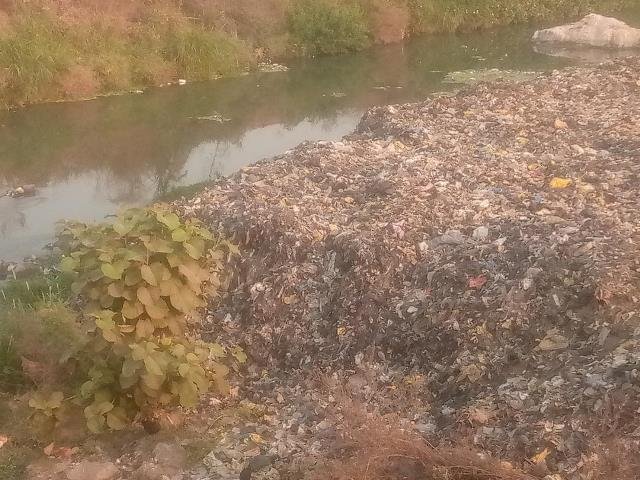
    Heap of refuse bestrides phase 3 stream by kubwa Expressway


    For Bello and Isah, all they see is the convenience of emptying their wastes in nearby streams; they are oblivious to the environmental havoc they are wreaking on the community.

    Perceptive stakeholders are worried over the apparent complicity and lukewarmness of the relevant local officials in the deteriorating waste situation in Kubwa.

    Memuna Mohammed, Inventory Officer, Chanja Datti Recycling Company, Abuja, said the firm was located at Kubwa Expressway by Phase 3 but had to relocate to Dutse in 2025.

    She said the company operated at Kubwa Expressway alongside Whitman Waste Disposal Company but both firms had to leave when the site was taken over by a developer.

    “We were with Whitman before at Kubwa Expressway by Phase 3; they collect wastes while we collect recyclables like plastic bottles and papers but the site has been sold to Urban Shelter, a developer, who is now building commercial mall on the site.

    “Now, in Kubwa, there is no approved dumpsite; why will the Baban Bolas not dump waste into the streams? Where else will they dump the waste? It is a very unfortunate situation.’’

    According to Mohammed, the challenge is not only in Kubwa as other parts of FCT face same problem.

    She said that when the firms operated at the site, Kubwa residents, aside the Babanbola, were bringing waste straight to the dumpsite and it was serving an out-and-out purpose.

    “Look at the streams and rivers in and around Kubwa; they are all polluted and foul-smelling; the concerned authorities need to do something urgent to address the menace,” she said.

    Recently, the Federal Capital Territory Administration (FCTA) announced it had begun the procurement processes for the award of contracts for waste collection and evacuation in FCT satellite towns.

    Mr Abdulkadir Zulkifku, Coordinator, Satellite Towns Development Department (STDD), said that the tenure of the previous contractors had elapsed.

    He said that in the interim, the FCT Minister, Nyesom Wike, had directed the STDD to clear all dump sites pending the finalisation of the procurement processes for the new contractors.

    Also recently, Mr Osilama Braimah, the immediate past Director, Abuja Environmental Protection Board (AEPB) said the board had engaged 40 contractors to keep the FCT clean.

    “In a nutshell, the AEPB is responsible for the enforcement of all environmental legislations and abatement of all forms of environmental degradation and nuisance.’’

    Braimah said that contractors had been fulfilling their obligations by keeping Abuja city clean through routine evacuation of refuse dump every two weeks.

    He said that the board noted the visible pile of refuse dumps in some parts of satellite towns and area councils.

    However, Braimah said that those areas were not under the jurisdiction of AEPB.

    Braimah said that except for Abuja Municipal Area Council, which AEPB was responsible for, the remaining five councils were not under its purview.

    Observers say, by the foregoing, the mandate of sanitation and waste management in Kubwa lies upon the Bwari Area Council.

    Regrettably, all efforts made to get input—or indeed any reactions—from the council were unsuccessful.

    On a general note, environmentalists warn that Nigerian rivers and streams continue to face serious pollution challenges.

    Dr Olabisi Awoniyi, an Environmentalist with the Lower Niger River Basin Authority (LNRBA), said rivers were synonymous with life and remained vital sources of sustenance for humans, animals, and plants.

    He said that Nigerian rivers suffered from significant pollution, mainly caused by industrial waste, poor sewage management, and agricultural runoff, among other factors.

    “Through the rivers, we have our drinking water, it supports agriculture through irrigation, and fisheries,” he said.

    According to Awoniyi, the result of introducing harming substances into water bodies is a negative effect on ecosystems and human health.

    “So when harmful substances such as industrial waste, human waste in form of sewage, chemicals and plastics are introduced into our rivers, they become polluted and the effects are better imagined,” he said.

    For Kubwa residents and conscious environmentalists, the situation currently offers only a sense of melancholy, as the Baban Bolas remain defiant and intractable.

    Essentially, stakeholders say the Bwari Area Council must shake off its seeming inertia and indifference by providing bin wagons, setting up waste collection points as well as a task force to monitor the activities of Baban Bolas.

    They say the area council should seek collaboration with the AEPB, STDD and other relevant authorities with a view to ridding Kubwa water bodies of wastes and promoting healthy environment. (NANFeatures)


    Source: NAN – https://nannews.ng/2026/02/06/fct-dilemma-of-waste-in-water-bodies-kubwa-in-focus/

  • Runsewe’s global honour draws attention to Africa’s Creative Economy

    Runsewe’s global honour draws attention to Africa’s Creative Economy


    By Victor Okoye, News Agency of Nigeria (NAN)


    As countries compete through ideas, culture is becoming an important tool for economic growth and international influence, not just raw materials.

    For Africa, long seen only for its resources, the question is now who is using its culture wisely and how governments support it.

    This makes the recent award for Otunba Olusegun Runsewe as Icon of Crafts, Culture and Hospitality in Africa even more important.

    The award, given at the 2nd World Crafts Forum in Kuwait, brought together policymakers, artisans, and cultural leaders from over 60 countries.

    It shows the world is starting to value Africa’s culture not just as heritage, but as a way to grow the economy.

    Globally, the shift is already well established.

    UNESCO estimates that the creative economy generates over $2.25 trillion annually, accounting for nearly three per cent of global GDP and employing close to 30 million people worldwide.

    Cultural tourism further reinforces this momentum, with the World Tourism Organisation estimating that tourism supports one in every ten jobs globally.

    Within this global context, Africa’s creative sector; though largely informal and underreported, already sustains millions through crafts, festivals, heritage tourism, fashion and performance.

    The African Development Bank projects that with coherent policy frameworks and sustained investment, Africa’s creative industries could generate over $20 billion annually, especially for youth and women.

    Nigeria mirrors both the promise and the paradox of this sector.

    Data shows that more than 4.2 million Nigerians are engaged in creative industries, with the potential to create an additional 2.7 million jobs if supported through targeted reforms.

    Yet, in spite this scale, the sector contributes only about 1.2 per cent of GDP, far below its potential and behind peer African economies.

    The Federal Government has since projected that Nigeria’s creative economy could contribute up to $100 billion to GDP by 2030, underscoring a growing recognition that culture is no longer peripheral to development planning.

    Cultural economist and development consultant, Dr Amina Lawal, argues that Africa’s challenge is not cultural scarcity but institutional neglect.

    “Cultural production across Africa is vibrant. What is missing are strong policy frameworks, financing mechanisms and institutional continuity.

    “Recognition like this matters because it reframes culture as an economic system, not merely identity expression,” she said.

    It is within this policy gap that Runsewe’s career acquires relevance beyond personal achievement.

    For more than three decades, he has advanced a consistent proposition; that African culture is not ceremonial alone, but a viable engine for employment, tourism, national branding and social cohesion when properly institutionalised.

    Rather than episodic showcases, his approach has emphasised continuity, building systems rather than staging spectacles.

    Over time, he has helped reframe African crafts from souvenirs into repositories of history, indigenous knowledge and economic dignity.

    From wood and clay to fabric and metal, crafts function as living archives of civilisation.

    President of the Federation of Tourism Associations of Nigeria (FTAN), Mr Nkereuwem Onung, describes Runsewe as one of the few cultural administrators who consciously linked policy with market outcomes.

    “He understood early that culture must pay its way. When artisans earn livelihoods, culture survives. When it depends only on festivals, it fades,” Onung said.

    As former Director-General of the Nigerian Tourism Development Corporation (NTDC), Runsewe pursued cultural tourism as a branding and economic strategy.

    His “Tourism is Life” campaign repositioned Nigeria at major global tourism platforms, including FITUR Madrid, ITB Berlin, World Travel Market London and the Arabian Travel Market in Dubai.

    Nigeria’s Tourism Village at the 2010 FIFA World Cup in South Africa and cultural showcases at the 2018 World Cup in Russia further demonstrated how soft power could be projected beyond traditional diplomatic channels.

    Tourism analyst, Mrs Lola Adeyemi, notes that such visibility mattered.

    “Those platforms countered narrow narratives about Nigeria and Africa. Culture humanises nations in ways statistics cannot,” she said.

    Yet, Nigeria’s experience also exposes a structural weakness.

    In spite abundant cultural assets, creative industries remain marginal in development planning, attracting limited public funding and weak private-sector investment.

    Consequently, culture continues to rank among Nigeria’s most underutilised economic resources.

    Runsewe’s tenure as Director-General of the National Council for Arts and Culture (NCAC) from 2017 sought to address this imbalance.

    Under his leadership, culture was repositioned as a tool for unity, peacebuilding and livelihoods.

    Participation in the National Festival of Arts and Culture (NAFEST) expanded nationwide, strengthening inter-cultural dialogue in a country often strained by identity divisions.

    Beyond festivals, NCAC scaled up skills acquisition programmes for youths and women, deliberately linking cultural practice to entrepreneurship.

    Thousands benefited from training in crafts, fashion, performance and cultural enterprise, shifting culture from performance to production.

    Community craft leader, Mrs Zainab Musa, said the impact was significant.

    “For many women, crafts became income, not hobby. That shift changed how families and communities value culture,” she noted.

    Runsewe also introduced the “37 Cultural Wonders of Nigeria,” encouraging states to identify and commercialise unique cultural assets.

    Policy experts describe the initiative as a decentralised development model, enabling sub-national identities to drive tourism and local economies.

    At the continental level, his election as President of the World Crafts Council, Africa Region positions African artisans within global policy and market conversations often dominated by Europe and Asia.

    His role as Chairman of the Africa–China Culture and Arts Exchange Society further reflects the expanding intersection between culture, diplomacy and South–South cooperation.

    Culture and diplomacy scholar, Prof. Emmanuel Ojo, emphasises the importance of such representation.

    “When Africans shape global cultural governance, it affects market access, pricing and narrative control,” he said.

    Beyond culture, Runsewe’s leadership extends into sports administration.

    As President of the Nigeria Golf Federation, he introduced the World Handicap System and convened Nigeria’s first National Stakeholders’ Conference on Golf within weeks of assuming office; reflecting a consistent institutional reform mindset.

    His recognitions, including the national honour of Officer of the Order of the Niger (OON), mirror the breadth of his engagement.

    Equally significant was his role in recovering and renovating the Abuja Arts and Culture Market, a 2.5-hectare facility valued at N9.8 billion, now evolving into a major cultural and tourism destination after years of encroachment.

    Urban development expert, Mr Tunde Balogun, describes such interventions as catalytic.

    “Cultural markets anchor tourism, jobs and small businesses. Preserving them is economic planning, not sentiment,” he said.

    Ultimately, his continental recognition therefore raises a wider policy challenge for Nigeria and Africa.

    If culture can generate jobs, foster unity and project influence, why does it remain peripheral in national planning? Why do artisans continue to operate informally despite their proven economic value?

    Stakeholders maintain that recognitions of this nature should catalyse renewed investment in cultural institutions, strengthen regulatory frameworks and deepen private-sector participation.

    Beyond policy and funding, they argue that such honours must also inspire African youth to see creativity not as a last resort, but as a viable and respected career path.

    Ultimately, Africa’s future will not be secured by extraction alone. It will be defined by creation, expression and the confidence to shape and project its own narratives. (NANFeatures)


    Source: NAN – https://nannews.ng/2026/02/11/runsewes-global-honour-draws-attention-to-africas-creative-economy/