Blog

  • UK, NAPTIP warn Nigerians against fraudulent overseas job offers

    UK, NAPTIP warn Nigerians against fraudulent overseas job offers

    By Sarafina Christopher

    The British High Commission and the National Agency for the Prohibition of Trafficking in Persons (NAPTIP) have warned Nigerians against deceptive overseas job offers.

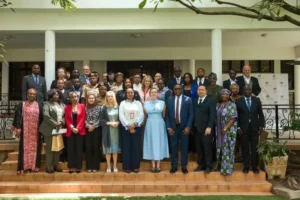
    They issued the warning on Monday in Abuja at a joint survivor-centred event with the theme: “Confronting the Global Scam Centre Crisis: Perspectives of Nigerian Survivors.”

    According to them, such job offers are being used to traffic unsuspecting victims into cyber-enabled scam centres across Southeast Asia.

    They disclosed that survivors are usually lured abroad with promises of lucrative employment but end up being trafficked to Myanmar, Laos, Cambodia and Thailand to carry out sophisticated cyber-fraud.

    The UK and NAPTIP officials also urged the public to beware of such scams, and note that legitimate employers neither recruit through social media platforms, demand upfront payments nor require travel on tourist visas for employment.

    British Deputy High Commissioner in Abuja, Gill Lever, said the UK was working closely with Nigerian authorities and partners to ensure survivors receive trauma-informed care and safe repatriation.

    “We are here to listen to survivors, who have shown remarkable bravery in sharing their experiences.

    “Their courage will help prevent others from being harmed, and we stand firmly with Nigeria and our African Commonwealth partners in confronting this rapidly evolving threat,” she said.

    Lever described the scam-centre phenomenon as a global security challenge.

    She noted that criminal networks defraud victims of more than 64 billion U.S. dollars annually, adding that British citizens lost an estimated 11.4 billion euros to scams in 2024.

    Mrs Kehinde Akomolafe, Director of Public Enlightenment, representing the Director-General of NAPTIP, said survivors’ testimonies exposed the brutal reality of trafficking into scam centres.

    “This is trafficking, whether it happens in a factory, a brothel or behind a computer screen, survivors are victims, not criminals,” she said.

    She reaffirmed NAPTIP’s commitment to protecting Nigerians.

    The News Agency of Nigeria (NAN) reports that the event follows a recent trafficking incident, which involved some Nigerian trafficking victims in Thailand.

    It took the joint efforts of NAPTIP, the Ministry of Foreign Affairs, the Nigerian Embassy in Bangkok and a British NGO, EDEN, to rescue the victims and safely return the 23 of them back to the country.

    The operation also included on-the-ground coordination at the Thai–Myanmar border and welfare visits to the victims held at Bangkok’s Immigration Detention Centre.

    Several survivors recounted being held in guarded compounds; forced to work up to 18 hours daily on online dating and investment scams; and subjected to physical abuse and psychological trauma.

    One survivor, who spoke to NAN at the event said victims were beaten, electrocuted and deprived of food, while another recounted the death of a fellow captive following repeated torture.

    “I was promised a good job and a better life but instead, I was trapped and forced to live in constant fear,” he narrated.

    The United Nations Office of the High Commissioner for Human Rights (OHCHR) 2026 report titled: “A Wicked Problem,” at least 120,000 people are currently being held in forced scam operations in Myanmar, with more than 300,000 affected across Southeast Asia.

    The report indicates that victims come from at least 66 countries, and that between 2020 and 2025, about 74 per cent of those trafficked into scam centres worldwide were promised high-paying jobs before being taken to the region.

    The officials further called for stronger international cooperation, increased public awareness and a shift in public narratives to protect survivors and hold traffickers accountable.(NAN)(nannews.ng)
    Edited by Mark Longyen 


    Source: NAN – https://nannews.ng/2026/02/23/uk-naptip-warn-nigerians-against-fraudulent-overseas-job-offers/

  • ECOWAS parliament urges member states to leverage AfCFTA, deepen regional integration

    ECOWAS parliament urges member states to leverage AfCFTA, deepen regional integration

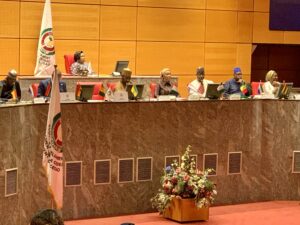
    ECOWAS Parliament Speaker, Hadja Mémounatou Ibrahima, sitting behind in the last row with others at the opening of the Parliament’s 2026 First Extraordinary Session and Seminar on Monday in Abuja.(NAN).

    By Mark Longyen

    Abuja, Feb. 23, 2026(NAN)ECOWAS Parliament Speaker, Mémounatou Ibrahima, has called on member states to leverage the African Continental Free Trade Area (AfCFTA), which has entered its operational phase, to deepen regional integration.


    She made the appeal on Monday in Abuja, while declaring open the ECOWAS Parliament‘s 2026 First Extraordinary Session and Seminar, which marks the beginning of the regional legislature’s work for the year.


    The News Agency of Nigeria (NAN) reports that the seminar is themed: “Deepening Regional Integration through the AfCFTA: Opportunities and Challenges for Expanding Intra-Community Trade.”


    Ibrahima urged all stakeholders, including member states, regional parliamentarians, the private sector, civil society, women, youth, and technical partners to seize the opportunities presented by  AfCFTA’s to deepen regional economic growth.


    “The African Continental Free Trade Area (AfCFTA) has now entered its operational phase. It aims to create one of the largest markets in the world by population. 


    “In this context, the AfCFTA represents a historic opportunity to make our region an integrated, prosperous, and resilient economic power.


    “However, it will only succeed if embraced by all — governments, private sector, civil society, women, youth, and technical partners,” she said.


    The speaker noted that regional parliamentarians must play the decisive role of harmonising legal frameworks, remove non-tariff barriers and obstacles to free movement, oversee the use of Community resources.


    According her, the lawmakers must also ensure that integration remains inclusive, equitable, and socially progressive.


    “Our responsibility is clear — to make this instrument a lever for structural transformation in West Africa.


    “With nearly fifty years of integration experience, ECOWAS cannot merely accompany this process. It must lead, coordinate, and harmonise it. 


    “This is a historic imperative, especially as our region hosts the Secretariat of this Agreement,” she said.


    She, however, noted that, in order to succeed, member states must devise a strategy that is grounded in a clear assessment of both ECOWAS’ strengths and challenges.


    The speaker said that ECOWAS should leverage its advantage of being Africa’s most dynamic regional economic community, with the highest continental average growth rate of 5 per cent. 


    She said that West Africa should also take advantage of its harmonised macroeconomic framework, a Common External Tariff, and experience in trade liberalisation. 


    Ibrahima urged the bloc to seize the opportunities of its youthful entrepreneurial population and innovative tools such as the Pan-African Payment and Settlement System (PAPSS) and the ECOWAS Brown Card scheme. 


    She listed the bloc’s weaknesses to include a low (10 per cent) intra-regional trade, underdeveloped industrial base, and the continuous export of mainly raw materials with little local processing. 


    “In global value chains, we largely occupy low value-added segments, and despite shared challenges, our economies often compete in similar export products rather than complement one another. 


    “Some Member States have yet to ratify the AfCFTA Agreement or define national strategies, slowing coordinated implementation and reducing our global influence,” she added.


    In a message of goodwill, Nigeria’s Senate President, Godswill Akpabio, said that deeper integration was critical for West Africa to compete in an increasingly competitive global economy.


    Akpabio, represented by his deputy, Sen. Jibrin Barau, described AfCFTA as a historic restoration of Africa’s traditional interconnected trade systems, adding that pre-colonial West Africa thrived through commerce and cooperation across borders.


    He warned that fragmentation and isolation could marginalise the region, urging member states to unite economically and politically to secure markets, defend democracy, and safeguard prosperity.


    The Senate President called for practical implementation of AfCFTA commitments, including harmonised standards, efficient ports, transparent customs systems, and digital trade infrastructure to reduce costs and empower entrepreneurs.


    He further stressed that insecurity and political instability remained major obstacles to integration, adding that economic cooperation and political stability are mutually reinforcing pillars that must be strengthened simultaneously.(NAN)(nannews.ng)

    Edited by Isaac Aregbesola


    Source: NAN – https://nannews.ng/2026/02/23/ecowas-parliament-urges-member-states-to-leverage-afcfta-deepen-regional-integration/

  • Group seeks urgent support for 70,000 malnourished children in Adamawa

    Group seeks urgent support for 70,000 malnourished children in Adamawa

    By Talatu Maiwada

    The Civil Society–Scaling Up Nutrition in Nigeria (CS-SUNN) says no fewer than 70,000 children in Adamawa are malnourished with urgent need of nutritional support.

    The Chairman, Steering Committee (CS-SUNN), Mr Sodangi Chindo, disclosed this during a state-level dialogue on nutrition financing and maternity protection on Wednesday, in Yola.

    He said the figure was based on findings from the 2023 National Demographic and Health Survey (NDHS).

    According to him, over 70,000 children in the state are in urgent need of nutrition intervention, adding that malnutrition remains a serious threat to child survival, growth and development.

    “The NDHS 2023, conducted every five years, showed that 19.1 per cent of children in Adamawa are underweight, 4.2 per cent are wasted, while 39.7 per cent are stunted.

    “The indices indicated improvement compared to the 2018 survey, which recorded 32.5 per cent underweight, seven per cent wasting and 48.1 per cent stunting,” he said.

    He attributed the progress to the state government’s commitment of N300 million for procurement of nutrition commodities, which was matched through counterpart funding to N600 million in 2025.

    The chairman, however, urged the government to increase funding, noting that only 3.5 per cent of the proposed 2026 budget, amounting to nine billion naira, would be required to tackle malnutrition in the state.

    He explained that through counterpart funding arrangements, the state could access double the value of its investment, reducing the financial requirement from N18 billion to nine billion naira.

    “In this regard, Adamawa State Government will need to invest only nine billion naira instead of the required N18 billion to address child malnutrition,” he said.

    Chindo described nutrition as critical to health and development, adding that it remained one of the world’s most pressing health and human development challenges.

    “Malnutrition is a major public health concern in Nigeria, with about 40 per cent of children affected nationwide.

    “According to the World Health Organisation (WHO), about 45 per cent of under-five deaths were linked to malnutrition.

    “Also according to WHO, Nigeria loses over 2,000 under-five children daily to malnutrition,” the chairman added.

    Chindo called for timely release and utilisation of 2025 nutrition allocations.

    He also advocated adequate budgetary provision for nutrition in the 2026 budget, based on evidence.

    He further urged development partners, philanthropists and corporate organisations to align with the state’s nutrition agenda to mobilise additional resources. (NAN)(www.nannews.ng)

    Edited by Esenvosa Izah/Folasade Akpan


    Source: NAN – https://nannews.ng/2026/02/18/group-seeks-urgent-support-for-70000-malnourished-children-in-adamawa/

  • Overcrowding, urban growth accelerating infectious diseases in Nigeria — UNILAG VC

    Overcrowding, urban growth accelerating infectious diseases in Nigeria — UNILAG VC

    By Victor Adeoti

    The Vice-Chancellor (VC) of the University of Lagos (UNILAG), Prof. Folasade Ogunsola, says overcrowded communities in Nigeria, like those in other African countries, are accelerating the transmission of infectious diseases.

    Ogunsola said this was due to limited access to clean water, sanitation, and proper waste disposal, particularly in urban centres.

    She made the statement while delivering the 1st Distinguished Lecture of the Federal University of Health Sciences (FUHSI), Ila-Orangun, Osun State.

    The News Agency of Nigeria (NAN) reports that the lecture was themed, “Climate Change, Cities and Infections: The Triple Nexus Shaping Urban Health.”

    Ogunsola said in many such settlements, families shared communal toilets, makeshift drainage systems, and polluted streams—conditions which turned minor infections into widespread public health threats.

    “African cities are transitioning into hotspots for climate-driven infections due to the sheer speed of their expansion and the fragility of the systems meant to support them.

    “As cities grow outward and upward, infrastructure such as sanitation, drainage, and healthcare services lag behind, creating environments where diseases can spread easily and rapidly.

    “Our cities are expanding faster than the systems designed to protect the health of the people living in them.

    “When entire communities share limited water, toilet facilities, and drainage systems, infections spread with remarkable speed,” she said.

    She added that rising temperatures recorded across the continent had a direct effect on the behaviour and survival of disease-carrying vectors.

    “Warmer climates allow mosquitoes, flies, and other vectors to breed faster, spread more widely, and live longer, enabling them to transmit diseases year-round rather than seasonally.

    “Mosquitoes, flies, and other vectors are thriving in warmer, stagnant environments created by rapid urban growth,” the VC said.

    Ogunsola also noted that air pollution had become one of the most dangerous and underestimated drivers of respiratory infections in African cities.

    “With millions relying on diesel generators, firewood, and fossil fuels, exposure to polluted air weakens immunity and aggravates chronic illnesses, especially among children and the elderly,” she said.

    She urged governments, institutions, and communities to collaborate and adopt proactive measures to safeguard the continent’s future.

    Ogunsola emphasised the importance of climate adaptation policies, expanded research, technological innovation, and robust public health surveillance systems.

    According to the VC, the way forward lies in informed planning, stronger climate policies, investment in research, and a united resolve to safeguard the health of African cities.

    Earlier, the Vice-Chancellor of FUHSI, Prof. Akeem Lasisi, emphasised that the maiden lecture was not only timely, but essential for a continent currently grappling with environmental and public health instability.

    Lasisi stressed that Nigeria, like many African nations, was already witnessing the consequences of shifting weather patterns, extreme heat, and overcrowding in emerging urban centres.

    “This topic is not just academic; it is a lived experience already unfolding around us,” he said. (NAN)(www.nannews.ng)

    Edited by Ayodeji Alabi


    Source: NAN – https://nannews.ng/2026/02/18/overcrowding-urban-growth-accelerating-infectious-diseases-in-nigeria-unilag-vc/

  • FG free cancer screening draws praise in Plateau

    FG free cancer screening draws praise in Plateau

    By Blessing Odega

    Some Plateau residents have commended the Federal Government for organising a free cancer screening to promote early detection and reduce cancer-related deaths.

    The commendation came on Wednesday in Jos during the official launch of the exercise under the national cancer prevention and control programme.

    The Federal Ministry of Health and Social Welfare conducted the screening at Jos University Teaching Hospital for 1,000 residents.

    Beneficiaries received free breast, cervical and prostate cancer checks.

    Mrs Patience Choji praised the initiative, saying it allowed indigent residents to know their health status without financial strain.

    “Most screening tests are costly for those struggling to feed. This exercise is timely, and I urge the government to sustain it,” she said.

    Mrs Susan Sokowa said the intervention enabled her to undergo screening at no cost and appealed for its continuity.

    Speaking at the event, Permanent Secretary, Kachollom Daju, said the programme was designed to improve access to early diagnosis.

    “Early detection is one of the most effective ways to reduce cancer deaths. This free screening allows especially the indigent to seek treatment early,” she said.

    Daju said free screening for 1,000 persons was ongoing in each geopolitical zone throughout February 2026.

    She added that those diagnosed would receive appropriate treatment support.

    Under the health sector renewal agenda, she said government was strengthening primary healthcare, expanding insurance coverage and improving diagnostic access.

    She said cancer control efforts included multidisciplinary tumour teams, approved treatment guidelines and implementation of the National Chemotherapy Safety Policy.

    According to her, the reforms are citizen-centred, aimed at reducing out-of-pocket spending and ensuring equitable access to quality care.

    “Cancer control is not only about machines and medicines, but about dignity, access, awareness and compassion.

    “At the ministry, our mandate is clear: to reduce physical and financial pain and improve health outcomes for all Nigerians,” she said.

    The Chief Medical Director of Jos University Teaching Hospital, Dr Pokop Bupwatda, described cancer as a leading global cause of death.

    He urged Nigerians to participate in screening programmes, noting that early detection significantly improves survival rates. (NAN)

    Edited by Kamal Tayo Oropo


    Source: NAN – https://nannews.ng/2026/02/19/fg-free-cancer-screening-draws-praise-in-plateau/

  • ABUTH: FG, Roche unveil Patient Navigation Programme to support cancer patients

    ABUTH: FG, Roche unveil Patient Navigation Programme to support cancer patients

    By Mustapha Yauri

    The National Health Insurance Authority (NHIA), in partnership with Roche Products Limited, on Thursday inaugurated an Oncology Patient Navigation Programme at the Ahmadu Bello University Teaching Hospital (ABUTH), Zaria.

    The News Agency of Nigeria (NAN) reports that the programme is aimed at strengthening cancer care and reduce mortality from breast cancer and other oncological conditions.

    It is also designed to provide a comprehensive, coordinated care, navigation and counselling services for cancer patients.

    Speaking at the event in Zaria, the Chief Medical Director, ABUTH, Prof. Ahmed-Hamidu Umdagas, said the hospital remained committed to its role as one of the Oncology Centres of Excellence in Nigeria.

    He said the navigation programme, sponsored by Roche, complements the financial protection already offered through the hospital’s partnership with the NHIA.

    “It allows us to provide a truly holistic experience for our patients, from diagnosis through full treatment coverage,” he said.

    Umdagas explained that the platform would also enable patients to track their drug regimens and treatment cycles, thereby reducing the risk of missed medications.

    According to him, the system supports patients from the point of entry into the hospital by helping them understand how to access services, manage appointments and adhere to prescribed medications.

    “It is very important because it helps patients navigate hospital services and also supports proper documentation and data gathering,” he said.

    He, therefore, urged Nigerians to key into NHIA packages to access quality healthcare services at subsidised rates.

    Similarly, Pharm. Funsho David, Breast Cancer Lead, Roche Nigeria, said the company’s goal was to ensure that innovative cancer care was not only available but also accessible.

    He added that by integrating patient navigation into the existing NHIA-Roche cost-sharing framework, the initiative would address the clinical and emotional challenges patients face and help them stay on their treatment path for better outcomes.

    NAN reports that the partnership between the NHIA and Roche evolved from a 2021 Memorandum of Understanding into a major expansion in 2025.

    The collaboration is aimed at bridging the gap in cancer care in Nigeria through a cost-sharing model between the NHIA and Roche. (NAN)(www.nannews.ng)

    Edited by Muhammad Lawal


    Source: NAN – https://nannews.ng/2026/02/19/abuth-fg-roche-unveil-patient-navigation-programme-to-support-cancer-patients/

  • Group seeks establishment of urban health units nationwide

    Group seeks establishment of urban health units nationwide

    By Martha Agas

    The Health Policy Research Group (HPRG), University of Nigeria, Nsukka, is seeking the establishment of urban health units nationwide to improve access to quality healthcare services in urban slums.

    The group made the call during a policy dialogue on Thursday in Abuja.

    The theme of the dialogue was: `Developing and Institutionalising Health Systems Linkages Between the Public and Informal Sectors to Improve Equitable Provision and Use of Appropriate Essential Health Services in Urban Slums in Nigeria’.

    Speaking at the event, HPRG Coordinator Prof. Obinna Onwujekwe, said urban slums were often neglected and perceived as needing less intervention than rural areas, in spite largely relying on Informal HealthCare Providers (IHP).

    Onwujekwe underscored the importance of the urban health units in linking the IHP with the formal health system.

    He said the move would guarantee the provision of quality health care services to urban slums, which he described as critical for their wellbeing and productivity.

    He said that the HPRG through the Community-Led Responsive and Effective Urban Health Systems (CHORUS) project in Nigeria conducted a study across eight slums in Enugu which revealed the dominance of IHPs, weak referral pathways and poor supervision.

    He said the project’s intervention showed that linking informal and formal providers significantly improved care quality, especially in diagnosis, follow-up advice, documentation and supervision.

    According to him, the intervention included the establishment of urban health units and the creation of community governance and accountability structures, which demonstrated the effectiveness of linking the two systems.

    “The study was prompted by investigations that revealed that the urban slums are usually neglected with focus on rural areas.

    “A lot are suffering in urban slums with a large concentration of informal providers there and they are not linked to the formal system.

    “So, nobody actually knows what they are doing.

    “They are like an ungoverned space but we know that if they are linked, we will be able to know what they are doing and to help them improve on what they are doing as services,” he said.

    He said the Enugu Government had adopted their recommendation to establish an urban health unit, recognising the importance of urban health

    “So, there is an urban health unit in the ministry of health and the state primary health care agency with urban desk officers.

    “The officers are to make sure that they sustain what we have done at the project and to keep improving the health system within urban slums and urban areas in general,” he said

    According to him, the aim of the policy dialogue is to share the evidence of the project at the national level for it to be adopted and scaled up in the country.

    He added that the dialogue aimed to explore ways to contextualise the urban health units and other parameters they deployed in their interventions that proved effective in improving health systems in different states.

    He emphasised linking informal health care providers with formal systems, noting that the informal sector delivers over 50 per cent of health services overall and more than 90 per cent in urban slums

    “These informal people will be there forever. They were there before the formal, they will still be there and they are quite important in providing services to poor people.

    “So, we must bring them into the formal sector, train them and support them for the well-being of all the people,” he said. (NAN)

    Edited by Bashir Rabe Mani


    Source: NAN – https://nannews.ng/2026/02/19/group-seeks-establishment-of-urban-health-units-nationwide/

  • Africa CDC updates on Lassa Fever vaccine development amid outbreaks in W/Africa

    Africa CDC updates on Lassa Fever vaccine development amid outbreaks in W/Africa

    By Abujah Racheal

    The Africa Centres for Disease Control and Prevention (Africa CDC) has highlighted ongoing efforts to develop a vaccine for Lassa fever.

    The disease, an acute viral hemorrhagic disease endemic in West Africa, is largely driven by poverty-related conditions, including poor housing, lack of rodent-proof food storage, and poor sanitation.

    The Director of Science and Innovation at Africa CDC, Dr Mosoka Papa Fallah, disclosed this during the bi-weekly high-level regional news conference on Thursday.

    Fallah explained that high mutation rates in viruses made permanent cures difficult and limited market incentives slow the development of treatments for diseases concentrated in smaller regions.

    The director noted that ribavirin has been used for Lassa fever for decades, but side effects and limited effectiveness highlight the urgent need for a vaccine.

    “Several countries and institutions, including The Coalition for Epidemic Preparedness Innovations (CEPI), and the Advancing Clinical Trials Excellence in Africa (AVAREF) have collaborated to develop candidate vaccines, and Phase 1 trials have been successfully conducted in Liberia.

    “The Phase 2A trials are now starting in Nigeria,” he said.

    He emphasised that the initiative represented a regional, collaborative approach, with African governments and partners contributing funding and expertise to advance vaccine development.

    “Whenever we have a successful vaccine, it is a breakthrough in public health, and this regional strategy is designed to ensure long-term success,” he said.

    Fallah said that the Africa CDC continued to closely monitor the vaccine pipeline while strengthening laboratory and epidemic response capacities across the continent to mitigate future Lassa fever outbreaks.

    The News Agency of Nigeria (NAN) reports that Nigeria has recorded at least 165 confirmed Lassa fever cases and 31 deaths over the past five weeks.

    Among those infected are nine are health workers, highlighting the risk to medical staff.

    In Kano State, a recent outbreak caused one death and two infections, but has now been brought under control.

    The Nigeria Centre for Disease Control (NCDC) is urging strict infection prevention and control measures in healthcare settings to protect workers.

    Some states are also enforcing sanitation rules for food handlers to reduce rodent-related transmission.

    Lassa fever is primarily spread through contact with rodents and can also be transmitted between humans when precautions are not followed. Cases typically peak during the dry season, from November to April. (NAN) (www.nannews.ng)

    Edited by Esenvosa Izah/Vivian Ihechu


    Source: NAN – https://nannews.ng/2026/02/19/africa-cdc-updates-on-lassa-fever-vaccine-development-amid-outbreaks-in-w-africa/

  • FG to empower 5m rural women businesses, launches Abia palm oil cluster

    FG to empower 5m rural women businesses, launches Abia palm oil cluster

    By Justina Auta
    The Federal Government has reaffirmed its commitment to empowering five million rural women-owned businesses with the commissioning of the Osusu Abaala Women Palm-Oil Collective in Isialangwa North Local Government Area of Abia.
    Hajiya Imaan Sulaiman-Ibrahim, Minister of Women Affairs made this known in a statement signed by Ahmed Danbazau, Head, Information, Press and Public Relations on Thursday in Abuja.
    The minister said that the initiative, launched under the Nigeria for Women Programme, is part of efforts to scale up women’s economic inclusion nationwide.
    She described the collective as a milestone in advancing rural productivity, inclusive economic development and structured women-led enterprise.
    “What we are witnessing today is not accidental; it is the result of deliberate policy, sustained partnerships, and the resilience of Nigerian women,” she said.
    According to her, the commissioning of the palm oil collective demonstrates how organised women, when supported with structure, skills and market linkages, can transition from fragmented informal activity to coordinated, market-oriented production.
    She noted that the Nigeria for Women Programme was designed to address structural barriers limiting women’s access to finance, markets, skills and social capital.
    The minister said Phase I of the programme, implemented between 2018 and 2024 across the six geo-political zones, recorded measurable improvements in income, savings, enterprise development and collective action.
    Building on the gains, she said the Federal Government had commenced a national scale-up phase launched by President Bola Tinubu, aimed at reaching at least five million women across the 36 states and the FCT.
    She explained that the expansion aligned with the Renewed Hope Social Impact Interventions 774 (RH-SII 774), a framework integrating women’s economic empowerment, food security, social protection and family resilience across all local government areas.
    “Within this architecture, initiatives like the Nigeria for Women Project Collectives serve as practical entry points for economic inclusion at the community level,” she said.
    Sulaiman-Ibrahim said the commissioning aligned with the Renewed Hope Agenda of President Tinubu, who has positioned women’s economic empowerment as central to national productivity, rural development and social stability.
    She also referenced the President’s declaration of 2026 as the Year of Social Development and Families.
    Addressing beneficiaries, the minister urged the women of Osusu Abaala to manage the facility with transparency and discipline.
    “This facility is an economic asset and a collective responsibility. It must be governed transparently, managed efficiently, and sustained through accountability, reinvestment and disciplined group leadership.
    “With improved processing capacity and stronger market linkages, your productivity, bargaining power and incomes should increase significantly,” she said.
    She commended President Tinubu for his leadership and acknowledged the advocacy of the First Lady, Sen. Oluremi Tinubu, for promoting the visibility and economic agency of Nigerian women.
    The minister also commended the Governor of Abia, Alex Otti, and his wife, Priscilla Chidinma Otti, for providing an enabling environment for women-focused economic initiatives in the state.
    She further appreciated the World Bank and other development partners for their technical and financial support.
    “It is my prayer that the Osusu Abaala Women Palm-Oil Collective will stand as a replicable model of organised women’s enterprise, local value addition and inclusive agribusiness development,” she said. (NAN) (www.nannews.ng)
    Edited by Folasade Akpan

    Source: NAN – https://nannews.ng/2026/02/19/fg-to-empower-5m-rural-women-businesses-launches-abia-palm-oil-cluster/

  • NiDCOM announces diaspora health initiative nationwide

    NiDCOM announces diaspora health initiative nationwide

    By Maureen Okon

    Dr Abike Dabiri-Erewa, the Chairman/Chief Executive Officer of the Nigerians in Diaspora Commission (NiDCOM), has formally announced the Diaspora Health Impact Initiative (DHII) 2026.

    Dabiri-Erewa made the announcement during a news conference in Abuja.

    The News Agency of Nigeria (NAN) reports that DHII is a nationwide health intervention programme designed to harness the expertise of Nigerian medical professionals in diaspora to strengthen local health systems.

    She said the initiative would run in the week preceding the 2026 National Diaspora Day, observed annually on July 25, under the theme: “Harnessing Global Diaspora Medical Expertise to Strengthen Local Health Systems for National Development.”

    She described DHII 2026 as a structured national platform aimed at improving healthcare delivery and outcomes across Nigeria’s six geo-political zones.

    The NiDCOM boss said that Nigeria’s diaspora health professionals represent a strategic asset beyond their annual remittances of over 20billion dollars.

    She said that the knowledge transfer, specialist skills, mentorship and systems expertise could significantly transform the country’s health sector.

    According to her, DHII 2026 will provide a coordinated framework aligning diaspora capabilities with priority to federal and state health needs, particularly in underserved communities.

    She said that through the National Diaspora Policy and structured engagement mechanisms, diaspora professionals were already contributing to medical outreaches, capacity building, policy advisory and health education.

    The chairman said that DHII 2026 would consolidate these efforts into a sustainable impact-driven framework.

    Dabiri-Erewa said that the initiative would be implemented in collaboration with key stakeholders.

    She listed the stakeholders to include the Federal Ministry of Health and Social Welfare, the Federal Ministry of Education, the Nigerian Medical Association and the Medical and Dental Council of Nigeria.

    She outlined participating diaspora associations and their areas of intervention, like the Association of Nigerian Physicians in the Americas covering Imo, Abia and Enugu States.

    Others are the Canadian Association of Nigerian Physicians and Dentists in the Federal Capital Territory (FCT), the Medical Association of Nigerians Across Great Britain in Kano, Kaduna and Sokoto States.

    “There is also Concerned Medics Foundation in Borno State; the Nigerian Medical Association Germany in the FCT and Nasarawa State; and the Nigerian-Australian Medical and Dental Association in Bayelsa, Edo, Akwa Ibom and Rivers States.

    “The Nigerian Doctors Forum South Africa in Lagos State is also not left out.

    “The interventions, scheduled for July 20 to July 23, will focus on specialist services, maternal and newborn care, women’s health screening, interventional radiology, neurosurgery, sickle cell management, health governance and advanced diagnostics,” she said.

    She said that DHII 2026 would be officially flagged off in Abuja at the beginning of Diaspora Week, after which participating associations would deploy to designated states.

    She said that this would be in partnership with state governments and local institutions.

    According to Dabiri-Erewa, expected outcomes include improved access to specialist services, enhanced clinical competence of local professionals through hands-on mentorship, strengthened institutional capacity and measurable health impact data to guide national policy.

    She said that at the conclusion of the state-level interventions, all associations were expected to return to Abuja on July 24 to present impact reports during the National Diaspora Day celebrations on July 26.

    Also speaking via Zoom was Dr Jide Menakaya, President of the Medical Association of Nigerians Across Great Britain.

    Menakaya commended NiDCOM for the innovative and inclusive initiative.

    He said that DHII 2026 was a national project involving doctors, nurses, midwives, pharmacists and other health professionals, particularly in maternal and newborn care in Northern Nigeria.

    According to her, although logistical considerations limited physical coverage, professionals nationwide can engage through relevant clinical platforms and the NMA.

    He said that the collaboration among the seven diaspora associations would extend beyond 2026, building sustainable partnerships and long-term expertise transfer in Nigeria’s healthcare sector. (NAN)(www.nannews.ng)

    Edited by Modupe Adeloye/Kadiri Abdulrahman


    Source: NAN – https://nannews.ng/2026/02/19/nidcom-announces-diaspora-health-initiative-nationwide/