Blog

  • Pension advocacy group lauds Abia’s monthly stipend for senior citizens

    Pension advocacy group lauds Abia’s monthly stipend for senior citizens

    By Nana Musa

    The Contributory Pension and Happy Retirement Advocacy (COPEHRA), has commended the Abia State Government for instituting a monthly stipend and other welfare services for elderly citizens in the state.


    The chairman of COPEHRA, Mr Sani Mustapha, who made this known in a statement in Abuja on Monday, lauded Gov. Alex Otti, the state house of assembly and other stakeholders for making the initiative a reality.


    He described the move as another model comprehensive social protection programmes by the state government to cater to all segments of the society, particularly the vulnerable.


    The chairman said that while the provision of social amenities remained commendable, sustainable social safety net programmes were critical to addressing the needs of underage children and the elderly population.


    According to him, COPEHRA has consistently advocated viable and sustainable pension schemes and the enrolment of eligible citizens as part of efforts to ensure dignity in retirement.


    “It is against this backdrop that COPEHRA hails the laudable provision of a monthly stipend and other support services for elderly people of Abia State,” Mustapha said.


    He said that Abia had joined the league of states implementing structured elderly support schemes.


    He added that Ekiti State pioneered a similar initiative during the tenure of former governor Kayode Fayemi.


    Mustapha said that through the endorsement of the Senior Citizens Bill in Abia, indigenes aged 60 years and above were entitled to monthly stipends, free medical care and priority access to government services.


    “For too long, the elderly have been the forgotten demographic invisible in policy and overlooked in budgets. Abia is changing that narrative.


    “By placing cash in the hands of its seniors and guaranteeing them free healthcare, this government is re-iterating the saying: ‘You raised this state, now this state will raise you.


    “It is emotional, it is economic, it is essential,” he said.


    Mustapha said that the monthly stipend, though modest, was a lifeline for thousands of elderly persons who had exited the workforce but remained relevant to society.


    “For many, it means three square meals. For others, it means access to medication. For all, it means visibility,” he added.


    The chairman urged all the governors to initiate similar elderly support schemes in their states, urging State Houses of Assembly to fast-track the passage of the Senior Citizens Bills.


    Mustapha also appealed to local government chairmen to complement their states government effort through community-level interventions targeted at senior citizens.


    The chairman similarly disclosed the appointment of Mr Seyi Awe, an expert in the pension industry, as the Programme Director of COPEHRA.(NAN)(www.nannews.ng)

    Edited by Ismail Abdulaziz


    Source: NAN – https://nannews.ng/2026/02/23/pension-advocacy-group-lauds-abias-monthly-stipend-for-senior-citizens/

  • Kaigama urges leaders to prioritise accountability, tackle youth unemployment

    Kaigama urges leaders to prioritise accountability, tackle youth unemployment

    By Philomina Attah

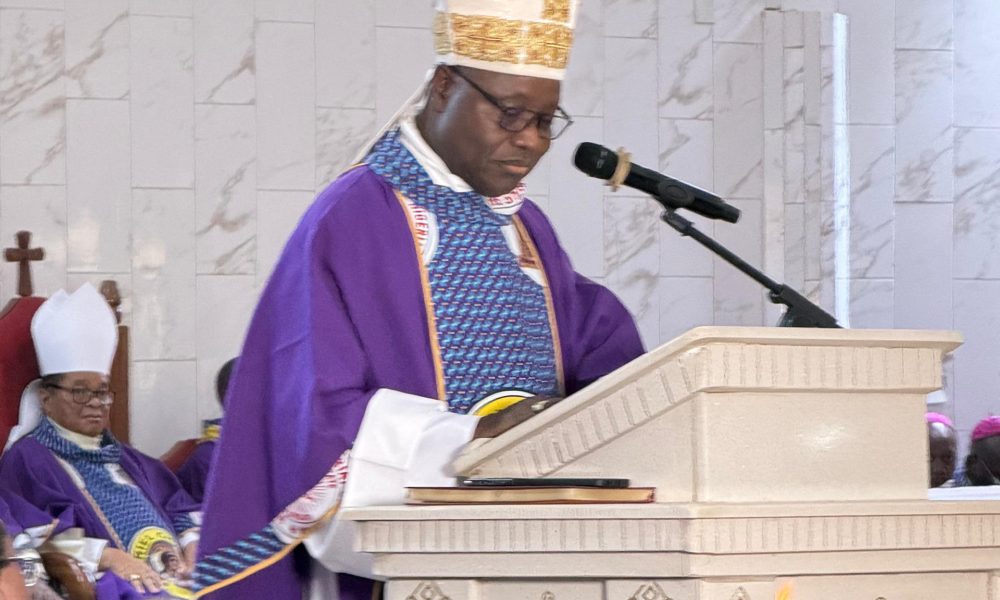
    The Catholic Archbishop of Abuja, Most Rev. Ignatius Kaigama, has urged Nigerian leaders to place the common good above personal and partisan interests.

    Kaigama made the call during his homily at the opening Mass of the first 2026 Plenary Assembly of the (CBCN) on Sunday in Abuja.

    Speaking on the theme, “The Common Good and Leadership in Nigeria,” he decried what he described as the quest for power without responsibility, transparency and accountability.

    “In our country, we have seen leaders who desire power but not responsibility; titles and positions but not service.

    “Over the years, many have complained that elections have been manipulated, justice hijacked, and truth buried,” he said.

    Archbishop Kaigama expressed deep concern over the desperation of the Nigerian youth, noting that he frequently receives messages from highly qualified graduates seeking employment.


    ​He advised youths to channel their demands to elected political leaders, noting that religious authorities lacked the constitutional power to provide jobs.

    He expressed hope that the 2027 general elections would be free from past irregularities.

    The cleric advocated full deployment of modern electronic systems to ensure that votes reflected the genuine will of the people.

    Kaigama said the Church monitored the recent local government elections in the Federal Capital Territory (FCT) and was prepared to share its observations with relevant authorities to improve governance.

    He called for Christian-Muslim unity, noting that the overlap of Lent and Ramadan underscored shared values and collective responsibility.

    The archbishop urged Nigerians to avoid unhealthy rivalry and focus on issues that promote development and poverty reduction.

    Quoting from the 2026 Lenten message of Pope Leo XIV’s, he called for restraint in public discourse, particularly on social media and in political debates.

    The Secretary General of the Catholic Secretariat of Nigeria (CSN), Rev. Fr. Michael Banjo, described the plenary as a significant moment for the Church to discern pathways for national advancement.

    Sen. Osita Izunaso, who spoke with newsmen, said good governance required responsibility from both leaders and citizens, and urged the Church to continue engaging on electoral matters.

    The Director of Catholic Television, Rev. Fr. Patrick Alumuk, announced a 40-day Lenten pop-up channel on DSTV Channel 197, describing it as a step towards digital evangelisation.

    The plenary, which drew bishops from across the country, is expected to end on Feb. 25 with a communiqué on the state of the Church and the nation. (NAN)(www.nannews.ng)

    Edited by Joan Nwagwu and Funmilayo Adeyemi


    Source: NAN – https://nannews.ng/2026/02/23/kaigama-urges-leaders-to-prioritise-accountability-tackle-youth-unemployment/

  • NiMet Issues Alert on Incoming Dust Plume in Northern Nigeria

    NiMet Issues Alert on Incoming Dust Plume in Northern Nigeria

    Nigerian Meteorological Agency, NiMET, warns that a dust plume currently observed over parts of Chad and the Niger Republic is expected to move into northern Nigeria.

    NiMet disclosed that strong northeasterly winds, with speeds ranging between 40 and 45 knots, are forecast to transport the dust into the northern parts of the country in the coming days.

    In its forecast outlook, the agency predicted thick dust haze with horizontal visibility of less than or equal to 1,000 metres across most parts of the North-East, as well as Kano, Katsina, Kaduna and Plateau states during the forecast period.

    The agency warned that dust particles are already in suspension over the northern region and urged members of the public to take necessary precautions.

    Individuals with asthma and other respiratory conditions were specifically advised to exercise extra caution due to the prevailing weather conditions.

    NiMet also advised airline operators to obtain airport-specific weather reports and flight documentation from the agency to ensure effective operational planning and safety.

    Residents are encouraged to stay informed through regular weather updates from NiMet, including information available on its official website, as the situation develops.


    Source: VON – https://von.gov.ng/nimet-issues-alert-on-incoming-dust-plume-in-northern-nigeria/

  • Al-Habbiyyah Urges Tax Review on Zakat, Waqf

    Al-Habbiyyah Urges Tax Review on Zakat, Waqf

    The Al-Habbiyyah Islamic Society has appealed to the Federal Government to review aspects of the new tax laws affecting Zakat and Waqf (Islamic endowment), noting that both are already compulsory charitable obligations under Islamic law.

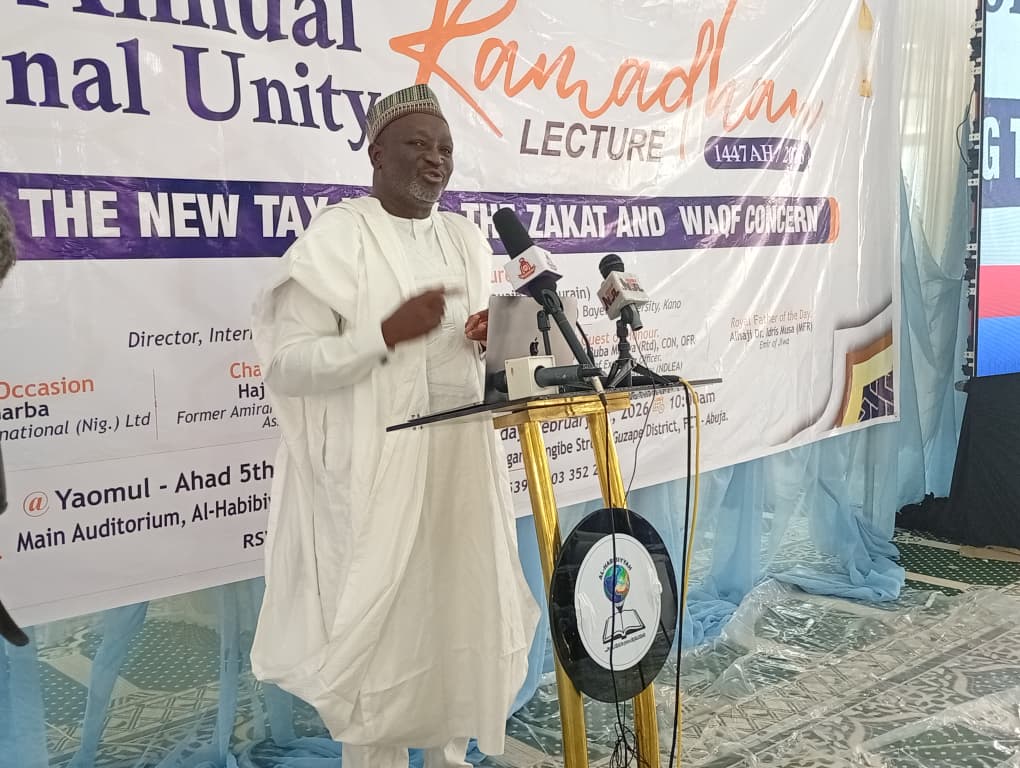
    The appeal was made during the Society’s 23rd Annual National Unity Ramadan Lecture held at its headquarters in Abuja.

    The lecture, themed “Making the New Tax Work: The Zakat and Waqf Concern,” focused on the implications of the new tax regime on Islamic charitable practices.

    Zakat is one of the five pillars of Islam. It is a mandatory form of charity that every financially capable Muslim is required to give annually. Beyond purifying wealth, it is intended to promote social equity and compassion. Zakat is typically calculated as 2.5 per cent of savings and certain assets held for one lunar year and is distributed to specific categories of beneficiaries outlined in the Qur’an, including the poor, the needy and those in debt.

    Waqf, on the other hand, refers to a permanent charitable endowment in Islam. It involves donating property, land, money or other assets for the sake of Allah. The endowed asset is neither sold nor inherited, while the proceeds or benefits generated from it are channelled towards charitable causes such as the construction of mosques, schools, hospitals and water facilities.

    Responding to questions from journalists, Chairman of the Ramadan Lecture Committee, Mallam Sulaiman Ali, said taxing Zakat and Waqf would amount to double taxation, as they are already obligatory charitable contributions for Muslims. He added that some advanced countries exempt religious and charitable contributions from taxation in recognition of their social value.

    In his remarks, the Chief Imam of Al-Habbiyyah Mosque, Imam Fuad Adeyemi, explained that the essence of the lecture was to draw the government’s attention to the new tax reforms introduced by President Bola Tinubu, urging the authorities to consider exempting Zakat and Waqf from taxation.

    According to him, these charitable obligations are structured to support both Muslims and non-Muslims, particularly the less privileged, thereby contributing to poverty eradication and national development.

    “Paying tax on Zakat and Waqf amounts to double taxation because they are already contributions meant to support vulnerable members of society. That is why we organised this lecture — to educate and sensitise the administration to either adopt a flexible approach in taxing them or remove them from the list of taxable items,” he said.

    Guest speaker, Professor Usman Shu’aib, underscored that the primary objective of Zakat and Waqf is poverty alleviation and social welfare. He cautioned that imposing tax on them could undermine their effectiveness and overall impact.

    “This is why we consider it necessary to call the attention of the government to review the process by consulting tax experts to either exempt them from taxation or reduce the burden, as these are funds willingly contributed by Muslims to help eradicate poverty,” he added.

    The new tax laws, signed in June 2025, came into effect on 1 January 2026. The legislation includes the Nigeria Tax Act, Nigeria Tax Administration Act, Nigeria Revenue Service (Establishment) Act and Joint Revenue Board (Establishment) Act, which collectively seek to reform and strengthen Nigeria’s tax administration system in line with global best practices.


    Source: VON – https://von.gov.ng/al-habbiyyah-urges-tax-review-on-zakat-waqf/