Blog

  • Minister Seeks Strategic Partnership to Boost Agricultural Insurance Growth

    Minister Seeks Strategic Partnership to Boost Agricultural Insurance Growth

    Nigeria’s Minister of State for Agriculture and Food Security, Dr. Aliyu Sabi Abdullahi, has underscored the need for strategic partnerships to accelerate growth in the country’s agricultural insurance ecosystem.

    Dr Abdullahi said that stronger collaboration would drive policy alignment, deepen reforms, promote inclusivity, and create an enabling environment for enhanced productivity and economic opportunities.

    The Minister made this disclosure during the courtesy visit by the National Insurance Commission (NAICOM) delegation led by the Chief Executive Officer, Mr Olusegun Omosehin, held in Abuja, Nigeria’s capital.

    Dr Abdullahi stated that “the collaboration aims to accelerate reforms, particularly by leveraging the Nigerian Insurance Industry Reform Act (NIIRA) 2025 to modernise the sector and provide an enabling environment for economic opportunities and productivity in the agricultural sector.’

    He said that the partnership would facilitate data-driven solutions through the Ministry’s Data Analytics to support index insurance and enhance food security.

    READ ALSO: NAICOM Unveils Inclusive Insurance Innovation Challenge Nigeria 2025

    Dr Abdullahi also said; “insurance for cooperative societies was essential, in line with global best practices, this must be done without losing the cooperative identity regarding its value in terms of integrity, governance, among others.”

    The Minister explained that “Studies have shown that most of the countries that have stable economic performance actually have very viable cooperatives’’.

    He said that “the Renewal Hope Agenda of President Tinubu is clear- to improve governance, every sector should harmonise policies.’’

    Dr Abdullahi stated that the meeting was a milestone event and that it would strengthen collaboration with the commission.

    According to him ‘’ the ministry required a strong technical working relationship with NAICOM to transform the food system, we are looking at having a Memorandum of Understanding between the Ministry and NAICOM regarding Nigerian Agricultural Insurance Corporation (NAIC) and cooperative reform.’’

    In his remarks, NAICOM, the Chief Executive Officer, Mr Olusegun Omosehin stated that the initiative aligned with the administration’s agenda on peace, security and economic stability.

    Omosehin pointed out that NAIC is the country’s specialised agricultural insurer and is under the ministry’s purview.

    According to him, ‘’NAIC plays a fundamental role in protecting smallholder farmers and strengthening food security resilience.

    He stressed that “the visit is basically to reveal our partnership to align policies in the agricultural space, such that we can jointly elevate NAIC to a level that it can deliver on its mandate.”


    Source: VON – https://von.gov.ng/minister-seeks-strategic-partnership-to-boost-agricultural-insurance-growth/

  • NDPC Partners Education Ministry to Boost Data Privacy Compliance

    NDPC Partners Education Ministry to Boost Data Privacy Compliance

    The National Commissioner and Chief Executive Officer of the Nigeria Data Protection Commission (NDPC), Dr Vincent Olatunji, has called for urgent compliance with data privacy regulations across Nigeria’s education sector to safeguard personal information and strengthen the nation’s digital ecosystem.

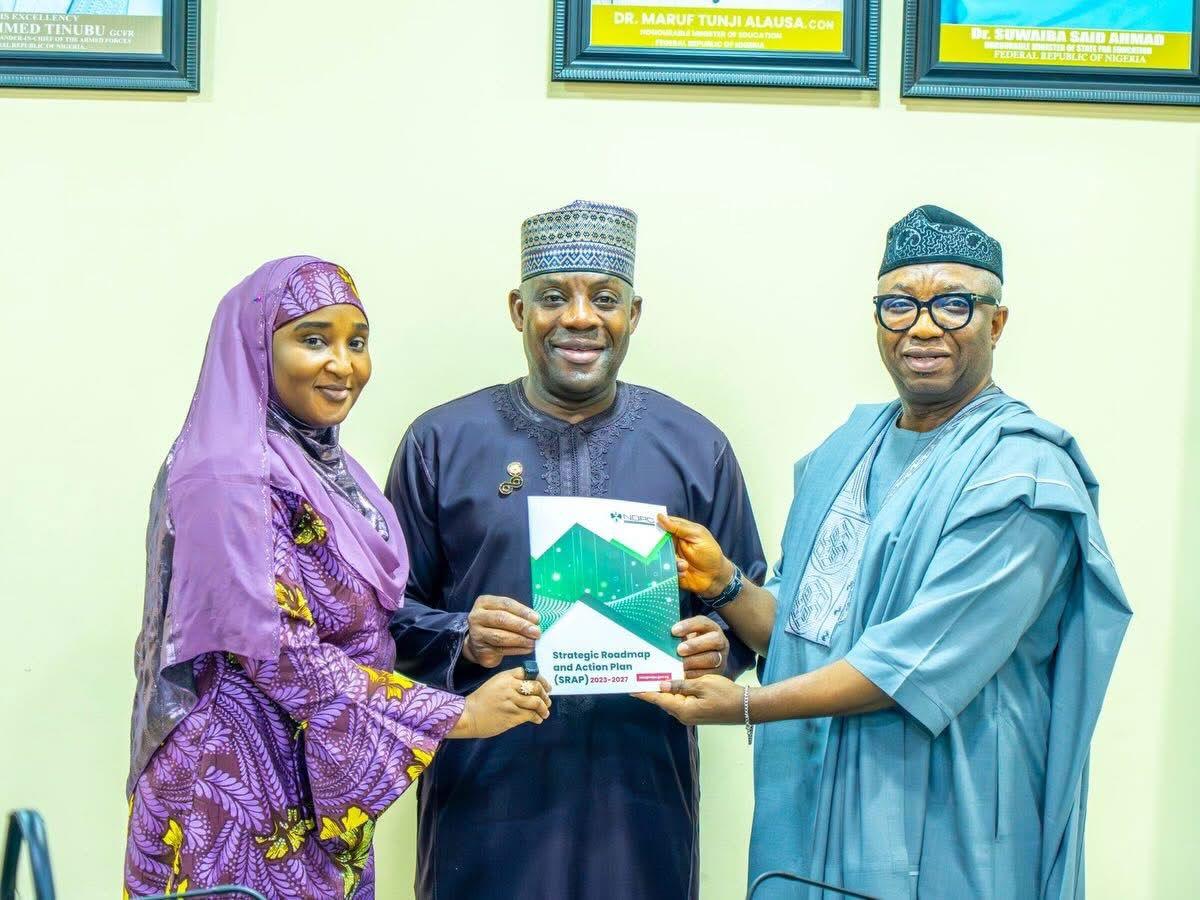
    During a working visit to the Minister of Education, Dr Tunji Alausa, and the Minister of State, Dr Suwaiba Said Ahmad, the NDPC chief highlighted a critical gap in how educational institutions handle sensitive information.

    Bridging the Compliance Gap

    Dr Olatunji noted that while data is the backbone of President Bola Ahmed Tinubu’s Renewed Hope Agenda, the education sector currently shows a low level of adherence to data protection laws.

    “The significance of data protection cannot be overemphasised as Nigeria moves toward an economy powered by digital technologies,” Dr Olatunji stated, urging the Ministry to lead the charge in regulatory compliance.

    Dr Olatunji emphasised that the level of compliance in the educational sector is low. He highlighted some of the initiatives of the Commission aimed at creating awareness in the sector, including the Digital Privacy Awareness Campaign, Data Privacy Clubs in universities, the Secondary School Data Challenge, and reaching about 8,000 students through the Adopt-A-School initiative during National Privacy Week. He urged the Honourable Minister to use his good office to ensure compliance in the sector.

    Dr Olatunji, on behalf of the NDPC, offered free induction training for staff of the Ministry, as well as Virtual Privacy Academy (VPA) vouchers and consideration for the free certification programme, and a working group was formed to implement the next steps.

    READ ALSO: NUJ, NDPC Partner to Strengthen Data Protection

    Responding to the call, Dr Tunji Alausa admitted that data protection has historically been treated with “levity.” He emphasised that the Commission’s goals align perfectly with the Federal Government’s target to produce 50 million digitally literate citizens.

    “It is high time all Ministries, Departments, and Agencies prioritised data protection,” Alausa remarked, pledging his Ministry’s commitment to ensuring schools and educational bodies meet global standards.


    Source: VON – https://von.gov.ng/__trashed-6/

  • No parallel ward/LG congresses in Benue-Committee

    No parallel ward/LG congresses in Benue-Committee


    By Emmanuel Antswen


    The All Progressives Congress (APC) national committee in charge of conducting Ward/Local Government (LG) congresses in Benue said there were no parallel congresses in the state.


    The Chairman, Ward/LG Congress in Benue, Mr Usman Musa, told newsmen in Makurdi that the congresses were peaceful, transparent and hitch-free.


    Usman stated that there was only one committee authenticated by the APC National Working Committee (NWC) to conduct the exercise, and it was their committee.


    “We are the only group sent to come and conduct congresses for all local government areas for Benue.


    “As far as we are concerned, we are within the mandate. We are here; we gave materials to whoever that is concerned, and the results were perfectly returned, and we have collected same.


    “So I gladly tell you, this committee is the only genuine committee for Benue State.


    “But if you want to confirm, you can go to our website, the APC website, to confirm the names of the committee,” they said.


    Commenting on the mode of the congresses, they opined that the ward and local government congresses were elective.


    “In the constitution of our great party, APC, there is provision for consensus. And where there is consensus, affirmation confirms consensus.


    “So, this is why you hear from the returning officers; there is affirmation, there is consensus. They are all within the rules and guidelines of our constitution of the APC.


    “We went for monitoring, and we were in three local governments: Makurdi, Tarka and Gboko.


    “Yes, I can tell you without mincing words that we are really satisfied with all that we have seen there,” they said.


    Benue APC Chairman, Mr Benjamin Omale, who commended members of the committee for their integrity and professionalism, also acknowledged their sacrifice and dedication for the national assignment.


    Omale also thanked party supporters for their cooperation, adding that the exercise was a milestone in the history of Benue politics. (NAN) www.nannews.ng


    AEB/PAT


    ========


    Edited by Peter Amine


    Source: NAN – https://nannews.ng/2026/02/23/congresses/

  • Tinubu urges winners of FCT, Kano, Rivers polls to serve with dedication

    By Muhyideen Jimoh

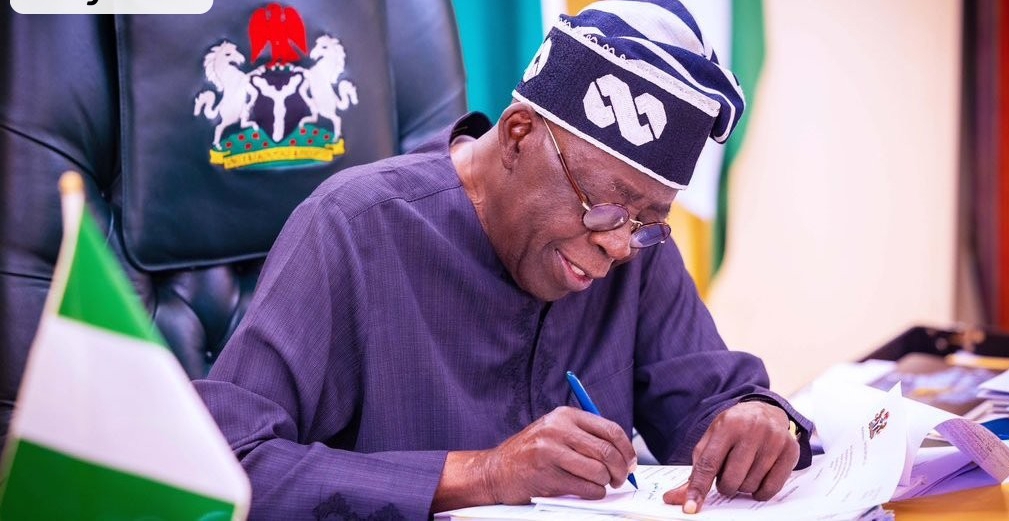
    President Bola Tinubu has congratulated winners of Saturday’s elections in the Federal Capital Territory (FCT), Kano and Rivers states, urging them to serve with dedication.

    The president’s message is contained in a statement issued by his Spokesperson, Mr Bayo Onanuga, on Sunday in Abuja.

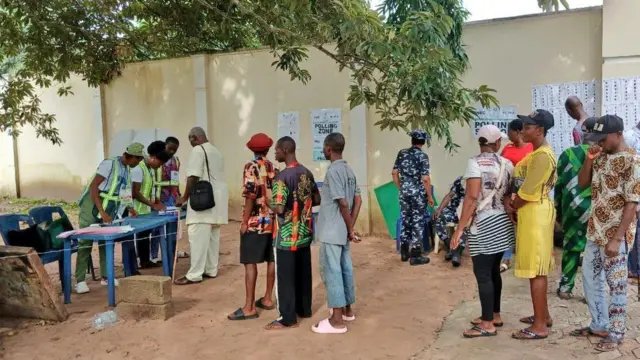
    The Independent National Electoral Commission (INEC) conducted area council elections in the FCT and by-elections in Ahoada East II and Khana II constituencies in Rivers State, as well as Kano Municipal and Ungogo constituencies in Kano State.

    Tinubu urged the winners to serve with humility, patriotism and dedication.

    He advised them to regard the mandate given by the electorate as a sacred trust.

    The president commended the FCT Minister, Nyesom Wike, for what he described as remarkable achievements in the territory.

    He said the achievements had yielded political dividends for the governing All Progressives Congress (APC).

    Tinubu congratulated the APC national leadership, as well as the party’s Kano and Rivers chapters, on the victories recorded at the polls.

    He lauded INEC, security agencies and voters for the peaceful and successful conduct of the elections.

    The president also commended the courage and discipline displayed by all contestants, saying, “democracy is enriched by active participation and healthy competition.”

    Tinubu said the successful conduct of the elections further strengthened democratic culture and institutions.

    He urged INEC to continue improving its processes to deliver even more credible and exemplary elections. (NAN)(www.nannews.ng)

    Edited by Muhammad Lawal


    Source: NAN – https://nannews.ng/2026/02/23/tinubu-urges-winners-of-fct-kano-rivers-polls-to-serve-with-dedication/

  • FCT Elections Affirm Tinubu’s Reform Agenda

    FCT Elections Affirm Tinubu’s Reform Agenda

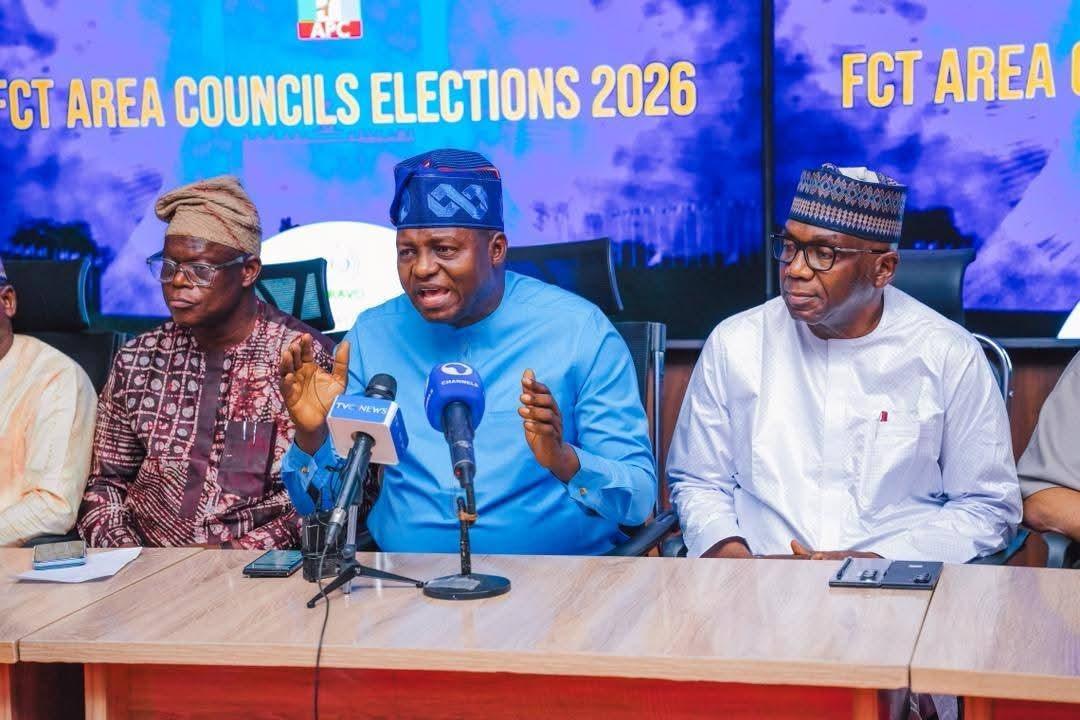
    The National Chairman of the All Progressives Congress (APC), Prof. Nentawe Yilwatda, has described Saturday’s Federal Capital Territory (FCT) Area Council elections as a strong endorsement of President Bola Ahmed Tinubu’s reform agenda.

    In a statement issued by his media adviser, Abimbola Tooki, Yilwatda said the party’s performance in the FCT reflects public confidence in the Renewed Hope Agenda and signals belief that the administration’s reforms will deliver sustainable national progress.

    He congratulated APC supporters in the FCT, Kano State and Rivers State for what he described as a peaceful and credible electoral process. According to him, the outcome demonstrates the party’s resilience, unity and grassroots strength.

    The APC secured chairmanship victories in Abuja Municipal Area Council (AMAC), Kuje, Abaji, Bwari and Kwali, while the Peoples Democratic Party (PDP) won in Gwagwalada — a development Yilwatda said underscores the credibility of the democratic process.

    He also noted that the party recorded four State Assembly victories in Kano and Rivers States.

    The APC chairman commended party leaders, stakeholders, security agencies and electoral officials for their discipline and professionalism throughout the exercise.

    Urging members to remain united, Yilwatda stressed the need for continued commitment to good governance, accountability and the effective implementation of reforms under the Renewed Hope Agenda, noting that Nigerians expect tangible results from elected leaders.


    NAN /Patience otobotekere


    Source: VON – https://von.gov.ng/fct-elections-affirm-tinubus-reform-agenda/

  • FCT Council Polls: APC Wins 5 of 6 Area Councils

    FCT Council Polls: APC Wins 5 of 6 Area Councils

    The Federal Capital Territory FCT Area Council elections held on Saturday, February 21, 2026, saw the All Progressives Congress (APC) winning five of the six councils, including Abuja Municipal Area Council (AMAC), Kwali, Kuje, Bwari, and Abaji. The Peoples Democratic Party (PDP) secured victory in Gwagwalada.

    The Independent National Electoral Commission INEC, on Sunday morning, declared Mohammed Kasim of the PDP the winner of the Gwagwalada Area Council chairmanship election. INEC Returning Officer, Philip Akpen, announced that Mohammed scored 22,165 votes, defeating APC’s Yahaya Shehu, who garnered 17,788 votes.

    Akpen affirmed that Mohammed “met the legal requirements to be returned as the duly elected chairman” and described the electoral process as “peaceful and smooth,” despite the high stakes.

    In Kwali, Daniel Nuhu of APC was declared the winner with 17,032 votes, defeating PDP’s Haruna Pai, who scored 8,575 votes. Joshua Ishaku of APC won Bwari with 18,466 votes, while Zakka Christopher of APC secured AMAC with 40,295 votes, defeating ADC’s 12,109 votes and PDP’s 3,398 votes.

    Hon. Abdullahi Abubakar of APC emerged victorious in Abaji, polling 15,535 votes to defeat the Young Progressives Party (YPP) candidate’s 5,357 votes. The PDP candidate trailed with 4,547 votes, followed by the New Nigeria Peoples Party (NNPP) with 53 votes and ADC with 37 votes. Hon. Samuel Shekwolo of APC also won the Kuje Area Council.

    With the outcome, APC and President Bola Tinubu are seen to have strengthened their grip on Abuja ahead of the 2027 general election, although the FCT election was an off-season exercise that may not serve as a full indicator.

    Tinubu: Successful Conduct of Polls Strengthens Democracy
    President Bola Tinubu commended the successful conduct of elections in FCT, Rivers, and Kano, saying they “further strengthened democratic culture and institutions.”

    He called on INEC to continue improving its efforts to deliver “even more exemplary electoral processes” and urged winners to serve “with humility, patriotism, and dedication” while viewing their mandates as “a sacred trust.”

    In a statement released by his Adviser on Information and Strategy, Bayo Onanuga, the president lauded INEC, security agencies, and voters for ensuring a peaceful process. He also praised the courage and discipline of all contestants, noting that “democracy is enriched with the vibrancy of participation and competition.”

    APC: Victories Reflect Grassroots Strength

    APC National Chairman, Professor Nentawe Yilwatda, described the party’s victories in FCT and the by-elections in Kano and Rivers as “a clear testament to the resilience, unity, and grassroots strength of the party .”

    In a post on X, Yilwatda said, “I heartily congratulate our teeming supporters of the All Progressives Congress (APC) in the Federal Capital Territory, Kano, and Rivers States on the successful and peaceful conduct of the Saturday, 21st February 2026 polls. The victories recorded are a clear testament to the resilience, unity, and grassroots strength of our great party .”

    He also congratulated “the five APC chairmanship candidates who emerged victorious in AMAC, Kuje, Abaji, Bwari and Kwali, as well as the PDP chairmanship candidate who won in Gwagwalada. The people have spoken through the ballot, and democracy has prevailed.”
    Wike: Poll Outcome Exposes ‘Emergency Democrats’

    Minister of FCT, Nyesom Wike, congratulated President Tinubu on the peaceful conduct of the elections, saying the results “have exposed emergency democrats, who see nothing good in the country and its government.”

    “The residents of FCT demonstrated that they cannot be deceived by emergency democrats,” Wike said. He described the election as a reflection of Tinubu’s vision and the Renewed Hope Agenda, which he said “has brought optimism and confidence to the people of FCT.”

    Wike added, “I commend the president for standing firm in his defence of democracy, particularly in ensuring the amendment of the Electoral Act to strengthen the conduct of credible elections. At this juncture, I also congratulate the Independent National Electoral Commission (INEC) for conducting a free, fair, and credible election .”

    Southern Governors, Lagos APC Praise Results

    The Southern Governors’ Forum, led by Ogun State Governor Dapo Abiodun, applauded APC’s performance in the FCT, describing it as an endorsement of Tinubu’s Renewed Hope Agenda. Abiodun said, “No doubt, the outcome of the area council polls at the FCT has shown clearly that Nigerians are fully aligned with President Bola Tinubu and the APC, and will again demonstrate this during the 2027 general election .”

    Lagos State APC also described the results as a “referendum on Tinubu’s legacy.” Spokesperson Seye Oladejo said, “The resounding victories recorded by our candidates reaffirm the confidence of the electorate in the Renewed Hope Agenda and the transformative policies being implemented at both the federal and state levels.”
    Opposition Reactions

    ADC AMAC chairmanship candidate, Dr Moses Paul, vowed to continue the fight for the people’s mandate despite alleging poll irregularities. “Today, I stand before you not as a man diminished by an outcome, but as a man enlarged by a movement,” he said.

    PDP leadership called on INEC to release results from two Kuje wards, citing concerns of manipulation due to the party’s marginal leads. National Publicity Secretary Ini Ememobong said, “Election results must remain a true reflection of the votes of the people; anything less invalidates the entire process.”

    PDP presidential hopeful Gbenga Olawepo-Hashim described the FCT results as evidence that the party is regaining momentum ahead of the 2027 general election. “The PDP is a resurgent party. Despite leadership disputes at the national level and deliberate efforts to weaken our structure in the FCT, the people stood firmly by the party,” he said.

    Conference of Professionals in PDP (CP-PDP) also claimed APC tried to manipulate results in Kuje using security forces, calling for police intervention. CP-PDP Chairman Obinna Nwachukwu said, “The manifest popularity and performance of the PDP in the FCT election, despite the serial attacks, threats, intimidation, propaganda, lies and extensive shenanigans by the APC, further underscore the undisputed strength and potency of the PDP at the grassroots level across the country.”

    INEC Responds to Allegations

    INEC denied migrating voters to different polling units, clarifying that “split polling units” were created in large units to reduce congestion. Acting Director, Wilfred Ifogah, explained, “Contrary to claims in some quarters, voters were not migrated. The split units are located a few meters away from the original polling units within the same premises.”
    He added that voter registers were displayed four days before the election, and reminders were sent via text and email to ensure voters knew their designated polling units. According to INEC’s Election Operations Dashboard, 45% of polling units opened by 8:30 a.m., and all were confirmed open by 10 a.m.


    Source: VON – https://von.gov.ng/fct-council-polls-apc-wins-5-of-6-area-councils/

  • Africa needs its own credit rating agency

    Africa needs its own credit rating agency


    **How and on what basis the continent’s governments can secure financing should not be based on external discretion


    By Bola Ahmed Tinubu

    Africa is paying too much to borrow.

    Calls to end the “Africa premium” — the gap between how Africa is assessed and the reality of its economies — can no longer be ignored.

    Fitch, Moody’s and S&P Global Ratings, the three dominant global credit rating agencies, wield outsized influence over Africa’s access to international capital.

    Their judgments shape investor behaviour, yet they consistently misjudge African risk. Just three African countries are rated investment grade, even as the IMF projects the continent to be the world’s fastest-growing region this year.

    Africa is now establishing its own credit rating agency; it is a necessary corrective.

    Detractors claim Africa wants to mark its own homework. The evidence suggests otherwise: a 2023 UN Development Programme report notes that “idiosyncrasies” in credit ratings cost Africa $75bn annually in excess interest and foregone lending.

    An African credit rating agency would address the greatest weakness of the “Big Three”: limited on-the-ground presence.

    In their models, quantitative data is weighed against subjective judgments on political risk, institutional strength and policy durability. How those judgments are reached — and how much they count — is left to opaque “analyst discretion”.

    Conclusions drawn from afar fail to capture local realities. Relying on such judgments means global market cycles trump individual states’ economic fundamentals.

    Many countries across the continent have export-led economies based on commodities. When prices fall or markets tighten, African nations are downgraded swiftly and broadly — even when their reserves are strong, fiscal buffers are intact and debt profiles remain manageable.

    Downgrades then become self-fulfilling, raising borrowing costs and straining public finances.

    But an African credit rating agency will not suffice on its own. The agency must earn the confidence of global capital with assessments anchored in the sort of timely, comprehensive data to which international markets respond.

    Better data has been partly responsible for Nigeria’s recent upgrades: improving the timeliness and breadth of economic statistics; bringing previously off-balance-sheet central bank lending on to the official public debt register; rebasing GDP to reflect economic reality more accurately; publishing more budget documents to strengthen fiscal transparency.

    The rest reflects hard policy choices, such as the removal of a wasteful fuel subsidy and the liberalisation of the exchange rate.

    Non-oil growth has helped diversify the economy as the Naira, for the first time, decouples from global crude prices.

    Even so, Nigeria’s ratings still lag behind reforms and market sentiment. Our November dollar-denominated bonds were oversubscribed 5.5 times.

    Slow upward adjustments are commonplace across Africa, especially when set against the speed of downgrades. Smaller countries, lacking Nigeria’s scale and analyst coverage, bear the cost of this delay most.

    A continent-wide credit rating agency will capture reform momentum in real time.

    Delayed upgrades cost money: African countries cannot afford to wait years to access markets after implementing hard reforms.

    Nations must stand on their own feet — especially in the wake of aid cuts. But they should be able to do so on a level playing field.

    We understand that global capital will still look to the established agencies for validation. However, if an African agency can identify progress earlier, later corroborated by the Big Three, it will gain credibility while serving as an early signal to both markets and those agencies.

    It is not a replacement, but a complement.

    Affordable access to credit will determine whether Africa becomes the growth engine that its demographic boom promises.

    By mid-century, the continent will account for a quarter of the world’s working-age population. Africa’s success is not a regional concern, but a global opportunity.(FT/NAN)

    Tinubu is the President of the Federal Republic of Nigeria

    Credit: Financial Times


    Source: NAN – https://nannews.ng/2026/02/16/africa-needs-its-own-credit-rating-agency/

  • How smuggling, policy lapses threaten Nigeria’s oilseed ecosystem   

    How smuggling, policy lapses threaten Nigeria’s oilseed ecosystem  


    By Rukayat Moisemhe, News Agency of Nigeria (NAN)


    For decades, the Nigerian oilseed industry has quietly sustained rural livelihoods, supplied factories and supported household food security across the country.


    The oil ecosystem, woven around palm oil, soybean and other oilseeds, links smallholder farmers, processors, transporters, refiners and traders in one long value chain.


    Today, that ecosystem is experiencing growing challenges, as policy inconsistency and unchecked smuggling have caused the Nigerian market to be flooded with cheap imports, crashing local prices and threatening long-term investment.


    Toward the end of last year, operators and stakeholders across the vegetable oil industry revealed that they began to notice a sharp increase in imported oils entering the country.


    The timing, they stated, could not have been worse as indigenous producers, already affected by high energy costs, poor infrastructure and rising input prices, began to experience distortions in market prices from cheap importations.


    The stakeholders said that from palm oil plantations to soybean farms, Nigeria’s oilseed value chain was under pressure as policy reversals and porous borders flood the market with cheap imports, crashing prices and shaking investor confidence.


    According to them, these issues have begun crippling local production, threatening billions of dollars in investment and endangering millions of livelihoods across the value chain.


    Chairman of the Plantation Owners’ Forum of Nigeria (POFON), Mr Emmanuel Ibru, said the industry had witnessed a sharp influx of imported vegetable oil toward the end of 2025.


    This, he said was at a time when local producers were already grappling with high production costs.


    According to him, the situation has had severe ripple effects on vegetable oil manufacturers and palm oil producers


    He noted that palm oil remained a critical input in vegetable oil production.


    Ibru recalled that earlier policy interventions, particularly during the President Olusegun Obasanjo administration, helped stabilise the sector through the imposition of duties on palm oil imports and a ban on refined vegetable oil imports.


    He noted that since that time, billions of dollars had been invested by indigenous companies across plantations, processing and logistics, investments he said were now under threat due to cheap imports.


    “When you are pushing down food prices, what is the point if the people meant to benefit no longer have jobs or income?” Ibru asked.


    President of the National Palm Produce Association of Nigeria (NPPAN), Mr Alphonsus Inyang, said recent government interventions across agricultural commodities had largely impoverished primary producers, with oil palm farmers among the hardest hit.


    Inyang said palm oil prices had fallen by about 50 per cent in less than two months, even as the country approached the peak production season.


    “Palm oil is currently selling for less than N2,000, which is not sustainable for smallholder farmers who depend on it for school fees, healthcare and household survival,” he said.


    He attributed the price crash largely to rampant smuggling through Nigeria’s porous land and sea borders, noting that the country had over 300 illegal entry points for palm oil across five states and more than 30 maritime routes.


    “Every night and morning, oil comes in through waterways and land borders, flooding markets across the country.


    “Government is losing revenue, and local producers are being forced to sell at prices dictated by smuggled products,” Inyang said.


    He urged government to treat oil palm as a strategic commodity, citing Ghana’s recent 100 million dollars budgetary allocation to oil palm development under a dedicated national programme.


    “In Malaysia and Indonesia, oil palm is called the ‘tree of life’. In Nigeria, we are yet to see it that way,” he said.


    Chairman of the Vegetable Oil Sub-Sector of the Manufacturers’ Association of Nigeria (MAN), Mr Mohammed Tahir, criticised what he described as policy reversals and poor enforcement.


    He urged Nigeria to learn from countries such as China, India, Indonesia and Brazil, while protect domestic agricultural industries while building competitive advantage.


    Similarly, President of the Soyabean Association of Nigeria, Dr Christopher Uwala, said unchecked imports and poor data had distorted the market and discouraged farmers.


    “If Nigeria consumes 1.6 million tonnes and produces 1.2 million, only 400,000 tonnes should be imported. But there are no reliable statistics, and people import far beyond shortfalls,” he said.


    Uwala added that falling prices and lack of access to equipment and quality inputs were pushing farmers out of production, with long-term implications on health and food security.


    Chairman of the Vegetable and Edible Oil Producers Association of Nigeria (VEOPAN), Chief Okey Ikoro, warned that frequent policy changes were destabilising an industry with long gestation periods and high capital requirements.


    He noted that the issue of smuggling further complicates matters as unbranded vegetable oil, often transported in yellow jerry cans, had become common in markets across the country.


    Ikoro warned that aside from economic damage, the influx poses quality and public health risks, as such products fall outside regulatory oversight.


    “Plantations take years to mature. You cannot encourage investors to borrow and invest, then suddenly reduce tariffs to allow cheap imports.


    “It will lead to debt, unemployment and increased foreign exchange pressure,” Ikoro said.


    He also raised concerns about product quality and public health risks associated with unregulated imports.


    He argued that regional trade agreements such as the African Continental Free Trade Area (AfCFTA) allows countries to protect sensitive and strategic products, including food commodities.


    “I call on government to retain edible oil on the import prohibition list, strengthen border controls, enforce existing policies, and introduce targeted incentives and intervention funds to support local production,” he said.


    The industry stakeholders maintained that with the right policies and support, the oil palm sector alone could generate a N20 trillion annual economy, drive rural development and significantly reduce poverty.


    They insist the oilseed ecosystem could still be stabilised only if the government chooses consistency, enforcement and long-term productivity, positioning it as the country’s quiet strength for economic development. (NANFeatures)


    ***If used, please credit the writer and the News Agency of Nigeria.


    Source: NAN – https://nannews.ng/2026/02/17/how-smuggling-policy-lapses-threaten-nigerias-oilseed-ecosystem/
  • Nigeria Offers Legal Safeguards To Mining Investors

    Nigeria Offers Legal Safeguards To Mining Investors

    Nigeria’s Minister of Solid Minerals Development, Dele Alake has assured foreign investors in the country’s mining sector of robust legal protections under the internationally recognised Cape Town Convention on International Interests in Mobile Equipment.

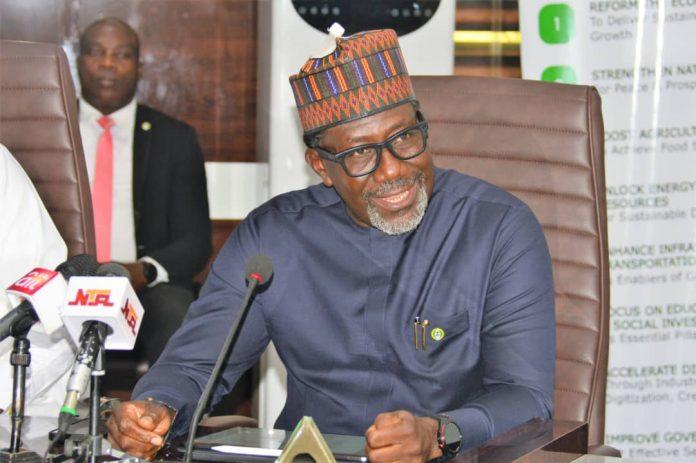
    The Minister gave this assurance in Cape Town, South Africa, during the signing of a Memorandum of Understanding between Dukia Gold & Precious Metals Refining Company Limited and SGS Bateman.

    The agreement was executed on the sidelines of the Investing in African Mining Indaba, one of the continent’s foremost mining investment gatherings.

    Dr Alake emphasized that Nigeria’s status as a signatory to the Cape Town Convention provides international lenders, equipment financiers, leasing companies, and technical partners with clear legal safeguards.

    He said; “It is important to note that Nigeria is a signatory to the Cape Town Convention on International Interests in Mobile Equipment. This provides a robust assurance framework for international financiers and service providers. It strengthens confidence that mining equipment and mobile assets deployed into Nigeria can enjoy internationally recognized protections, a key factor for project finance, asset leasing, and structured equipment procurement.”

    The treaty standardizes transactions involving movable assets and offers strong protections, including asset registration, security interests, and repossession rights in cases of default.

    According to the Minister, “this legal framework strengthens investor confidence in deploying high-value mining equipment and mobile assets into Nigeria, particularly for project financing and structured procurement arrangements.”

    Describing the Dukia–Arinola Mineral Resources Development Project as a landmark initiative, Dr. Alake noted that it reflected Nigeria’s broader strategy of transforming the mining sector into a major driver of economic diversification.

    He said; “the ongoing reforms including improved regulatory clarity, streamlined licensing, investor-friendly fiscal incentives, and infrastructure prioritization  are already yielding measurable growth, with mining contributing more significantly to national GDP.’

    The Dukia–Arinola project, located in Ose and Owo Local Government Areas of Ondo State within the Igarra Schist Belt, is structured as a scalable polymetallic Mine-to-Market initiative. It prioritizes local value addition, beneficiation, and phased industrial expansion.

    The Minister highlighted that the private-sector-led project aligned with Nigeria’s ambition of building a one-trillion-dollar economy by 2036, noting that it is expected to stimulate economic activity, create jobs across skilled and semi-skilled levels, deepen local procurement, and strengthen mineral export competitiveness through improved connectivity by road, rail, air, and sea.

    According to him, these measures are already yielding measurable results.
    “These reforms include improved regulatory clarity, streamlined licensing processes, investor-friendly fiscal incentives, and prioritization of infrastructure to support mineral development and beneficiation. The sector has been recording growth, with mining contributing more significantly to GDP, reinforcing the momentum of the reforms and our commitment to sustained sector expansion,” he said.

    Dr. Alake also invited world-class mining contractors, engineering firms, equipment manufacturers, and service providers to participate in upcoming Requests for Proposals and Expressions of Interest tied to the project’s execution phase.

    He encouraged partnerships that incorporate capable Nigerian firms to enhance local content and domestic value retention.

    Reaffirming Nigeria’s growing reputation as an emerging hub for critical and strategic minerals, the Minister stressed the importance of responsible sourcing, traceability, and global best practices.

    Also speaking at the ceremony, the  Chairman of Dukia Gold, Mr. Tunde Fagbemi, described the MoU as ‘a strategic step toward feasibility-driven execution and long-term mineral beneficiation.’

    “This MoU marks the beginning of a structured EPCM partnership to advance the Dukia–Arinola Project toward feasibility and disciplined execution,” Fagbemi said.

    The Dukia–Arinola project spans approximately 184 square kilometres and has undergone extensive geological mapping, geophysical surveys, trenching, and diamond drilling as part of its technical development.

    The Nigerian Government continues to position the mining sector as a strategic pillar for foreign exchange earnings, industrial growth, and sustainable economic transformation


    Source: VON – https://von.gov.ng/nigeria-offers-legal-safeguards-to-mining-investors/

  • First Lady Lauds UNICEF for Boosting Nigeria’s Birth Registration

    First Lady Lauds UNICEF for Boosting Nigeria’s Birth Registration

    Nigeria’s First Lady has expressed her gratitude to the United Nations Children’s Fund (UNICEF,) for bringing to bear the success recorded in birth registration by Nigeria.

    In a message she issued on Monday, the First Lady appreciated UNICEF and other development partners for their support to the country.

    She said, “On Friday, February 20, 2026, I had the honour of receiving the Country Representative of United Nations Children’s Fund (UNICEF), Ms. Wafaa Elfadil Saeed Abdelatef, and her team. During our meeting, they shared encouraging news regarding progress made in birth registration across Nigeria.

    “UNICEF announced that in the past two years, the number of children whose births have been officially registered in Nigeria has risen significantly to 14 million. This remarkable achievement reflects our collective commitment to safeguarding the identity and rights of every Nigerian child.

    “I extend my sincere appreciation to our valued partners and to all the 36 State First Ladies and RHI Coordinators, as well as the FCT Coordinator, for their dedication and hard work in advancing this cause.”

    Mrs Tinubu also appreciated all those who have assisted the country in the fight against HIV/AIDS and other diseases.

    She stressed that team work pays at all times and enjoined all stakeholders to continue to collaborate, in order to eliminate the diseases that are causing a lot of deaths.

    She said; “I also commend you for the significant strides recorded in the elimination efforts against HIV/AIDS, tuberculosis, cervical cancer, syphilis, hepatitis B, Female Genital Mutilation, other Neglected Tropical Diseases (NTDs), and vaccine-preventable diseases. These milestones demonstrate what we can accomplish through collaboration, commitment, and sustained action.

    “Let us not relent. This commendation is an indication that when we work together with renewed determination, we can eliminate many of these diseases even before the 2030 global target. God bless the Federal Republic of Nigeria.”


    Source: VON – https://von.gov.ng/first-lady-lauds-unicef-for-boosting-nigerias-birth-registration/