Blog

  • Experts urge media, CSOs to monitor implementation of new tax laws

    Experts urge media, CSOs to monitor implementation of new tax laws

    By Taiye Agbaje

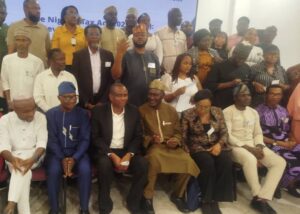
    Participants at a two-day training on the Nigeria Tax Act (NTA), 2025, organised by Konrad Adenauer Stiftung (KAS), a German foundation, in conjunction with Civil Society Legislative Advocacy Centre (CISLAC) in Abuja.


    Experts in the economic field have called on members of the media and Civil Society Organisations (CSOs) to monitor the implementation of the Nigeria Tax Act (NTA), 2025, which fully takes effect from January 2026.

    They made the call at a two-day training organised for some journalists and members of CSOs by Konrad Adenauer Stiftung (KAS), a German foundation, in conjunction with Civil Society Legislative Advocacy Centre (CISLAC) in Abuja.

    The News Agency of Nigeria (NAN) reports that the workshop has the theme  “The Nigeria Tax Act (NTA) 2025: An Early Review and Recommendations for the Media and Civil Society Organisations.”

    Dr Christopher Kaka, the Executive Director of Trade Network Initiative, said as the fourth estate, the media should continue to act as watchdogs and champion accountability in the implementation of NTA.

    Kaka urged the media practitioners to engage in independent research, analysis and monitor tax exemptions to see if they are beneficial to the public or only social interest.

    He also tasked them to engage in investigative reporting with a view to expose tax evasion, fraud and corruption in the system.

    Kaka equally urged the CSOs to engage with government and use the services of the courts to challenge anti-citizen’s actions and policies.

    He advised the media and CSOs to initiate public debate and amplify citizen’s voices.

    Mr Simeon Olatunde, who is the Coordinator, Tax Justice & Governance Platform, addressed issues surrounding misinformation and half-truths circulating on social media about the evolving tax regime.

    On his part, Prof. Adetunji Ogunyemi, in one of his presentations, took participants through the history of taxation in the country and examined the impacts of various tax reforms by past administrations.

    Ogunyemi, a lawyer and professor of Economic History, Obafemi Awolowo University, stated that the current administration took the most revolutionary steps on tax reforms and modernisation since 1961.

    He said this happened with its enactment of the four new tax laws – the Nigeria Tax Act, 2025; the Nigeria Tax Administration Act, 2025; the Nigeria Revenue Service (Establishment) Act, 2025, and the Joint Revenue Board (Establishment) Act, 2025.

    He observed that government’s bold tax reform initiatives have transformed the country’s tax regime.

    Besides, he said its aggressive approach to the issue of taxation has significantly increased public revenue and the sharable pool in the Federation Account.

    Ogunyemi enumerated the impacts of current tax reforms to include the creation of a single statute book for the country’s public revenue, provision of a uniform procedure for enforcement and compliance to tax laws, and the simplification of the tax systems on rate, charges, structures and liability.

    He said the reforms has led to improvement on the jurisprudence of taxation by clarifying powers and functions of tax authorities, through the establishment of the Nigerian Revenue Service (NRS), formerly Federal Inland Revenue Service (FIRS).

    He said it has covered the field in all tax matters in the country, consisting of the jurisdictions of the federal, states and local government councils.

    He added that the reforms have also brought about the standardisation of the processes for tax administration in the areas of assessment, collection, auditing and penalties.

    Ogunyemi observed that the country’s tax spaces are large and significantly untapped.

    He said that the problem remains in the fact that most of the tax jurisdictions lie with the sub-nationals, that have remain indolent owing to the prevailing culture of sharing and not growing revenue, which the Federation Account Allocation Committee (FAAC) has encouraged.

    Earleir in his welcome address, Resident Representative of KAS in Nigeria, Dr Tobias Ruettershoff, said the objectives of the gathering included the need to familiarise the media and CSOs with the new tax laws and their roles in educating the citizens on what are expected of them.

    Represented by the Programme Manager of the organisation, Mr Samson Adeniran, Ruettershoff drew examples from Germany on the importance of tax to the life of a nation and how tax issues are dealt with.

    He said it was the duty of every responsible citizen to pay his or her tax without waiting to be compelled by the authorities.

    CISLAC’s Executive Director, Auwal Musa Rafsanjani, said the enactment of the NTA, 2025 represents a significant milestone in the country’s ongoing tax reform process.

    He equally observed that the country has continued to grapple with persistent challenges in its tax system, which includes inequitable tax burdens, weak enforcement, limited transparency and the marginalisation of actors in the informal sector.

    Rafsanjani, however, argued that legislation alone does not guarantee justice, equity and development, but that what matters is how existing flaws are understood, monitored, addressed and communicated to the citizens.

    He explained that the workshop aligns with the objectives of the Tax Justice and Governance Platform (TJGP), a broad based coalition of civil society organisations, tax experts, media professionals, informal sector representatives and advocacy groups.

    He said the platform allows for collective efforts in the promotion of fair, equitable, transparent and progressive tax systems in the country .

    “The platform seeks to ensure that taxation serves as a tool for sustainable development, social inclusion and improved public service delivery, rather than an additional burden on the most vulnerable,” he said.(NAN)(www.nannews.ng)
    TOA/SH
    ========

    Edited by Sadiya Hamza


    Source: NAN – https://nannews.ng/2026/02/22/tax-law/
  • AVM Eyekosi seeks collective efforts in disaster prevention, management

    AVM Eyekosi seeks collective efforts in disaster prevention, management

    By Francis Onyeukwu

    A Nigerian Air Force officer, AVM Samson Eyekosi, has called for collective action in mitigation, prevention and management of disasters in the country.

    Eyekosi, one of the recently-promoted Air Vice Marshalls, said that collective actions involving the federal, states, local governments, individuals and corporate bodies were needed in tackling disasters.

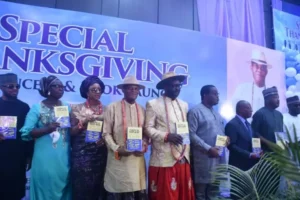
    He made the call in an interview with newsmen shortly after a special thanksgiving and unveiling of his book in Abuja on Sunday.

    According to him, a paradigm shift in disaster management requires joint actions by all stakeholders irrespective of gender, class and creed.

    Eyekosi, whose book is titled: “A Guide for Effective Management of Displaced Persons During Emergencies,” said he wrote the book as his contribution to helping humanity.

    “This book attempts to identify within our localities, Nigeria, Africa and the world at large what should be done when disasters occur to people.

    “I was inspired to write the book from the flash floods that occurred in Mokwa, Niger State in 2025.

    “It looked like nothing but people were suffering and we responded very well, but it could be better.

    “There were gaps, it is those gaps I noticed, that we need to articulate and document them so that we try to learn from them and be proactive, and not just reactive,” he said.

    He called on individuals to sacrifice money, time, skills and knowledge to assist victims of disasters.

    Eyekosi also urged the media to pay more attention to the people who are in distressed, traumatised or displaced.

    He stressed the need for adequate coordination amongst government agencies, especially Ministry of Humanitarian Affairs, National Emergency Management Agency and State Emergency Management Agencies, among others.

    The military officer noted with dissatisfaction lack of required capacity, saying that capacity building, structures and organisation were seriously needed in the area.

    In order to fast track growth in the management of disasters, Eyekosi called for accountability and checks and balances from the people involved in disaster management.

    Earlier in his remarks, the Olu of Warri, Ogiame Atuwatse lll, expressed his admiration for the book, saying it contains measures needed by both the federal and state governments to solve the plethora of disasters being faced in the country.

    The royal father, represented by Mr Missan Okuboyinje, noted the perennial flooding being experienced in the country, stating that how they could be solved was captured in the book.

    “We are faced with the problem of insurgency, banditry and terrorism which have affected many communities as well as other disasters. This book can serve as a guide to government and individuals.

    “So, the book is important to all government agencies, NEMA, state emergency agencies that deal with disasters because it covers
    all the areas of disaster management,” he said.

    Chairman of the occasion, Mr Sam Oburoh, lauded Eyekosi for his new rank as well as the putting together of the book.

    Oburoh, who said he had known the military officer since his childhood days, described him as an easy going person who is always handy to assist people in distress.

    Mr Henry Nwawuba (Jnr), who reviewed the book, said it has 205 pages and 20 chapters, containing all aspects of disaster management and solutions to crisis situation.

    Nwawuba urged governments at all levels as well as private individuals and corporate organisations to avail themselves of the book, as it would aid them in disaster management.(NAN)(www.nannews.ng)
    Edited by ‘Wale Sadeeq


    Source: NAN – https://nannews.ng/2026/02/22/avm-eyekosi-seeks-collective-efforts-in-disaster-prevention-management/

  • Obasanjo calls for reform, return of law programme at NOUN

    Obasanjo calls for reform, return of law programme at NOUN

    By Emmanuel Afonne

    Former President, Olusegun Obasanjo, has called for reforms at the National Open University of Nigeria (NOUN), urging the restoration of its law programme, and the integration of artificial intelligence (AI) into its academic system.

    Obasanjo, who made the call in Abeokuta, Ogun, when he received the newly appointed Vice-Chancellor of NOUN, Prof. Uduma Uduma, and members of his management team, also called for increased student enrolment.

    A statement issued by Ibrahim Sheme, Director, Media and Publicity, NOUN, on Sunday in Abuja, quoted Obasanjo as stressing the need for innovation and technology-driven academic advancement.

    “I urge the university’s leadership to prioritise modernisation and expand access to quality education,” Obasanjo said.

    The immediate past Vice-Chancellor, Prof. Olufemi Peters, said the institution had taken significant steps to integrate artificial intelligence into its academic content.

    Peters added that the efforts had earned the university recognition from international educational bodies.

    On enrolment, he disclosed that NOUN had no fewer than 300,000 registered students, with approximately 190,000 currently active, noting that the difference reflected varying levels of participation.

    He expressed confidence in the new vice-chancellor’s capacity to sustain innovation and promote institutional development.

    In his remarks, Uduma pledged to prioritise the revival of the Law programme and consolidate ongoing reforms in the university.

    He also expressed appreciation to Obasanjo for his continued support and contributions to the growth of the institution.

    The vice-chancellor later visited the Abeokuta Study Centre of the university, where the Centre Director, Mr Oyekunle Adegboyega, conducted him and his team round the facility. (NAN)(www.nannews.ng)

    Edited by Chijioke Okoronkwo


    Source: NAN – https://nannews.ng/2026/02/22/obasanjo-calls-for-reform-return-of-law-programme-at-noun/

  • Argungu Fishing Festival: winner smiles home with Toyota cars, N1m

    Argungu Fishing Festival: winner smiles home with Toyota cars, N1m

    By Muhammad Lawal

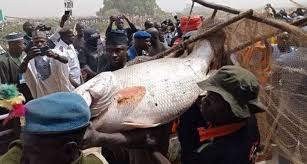
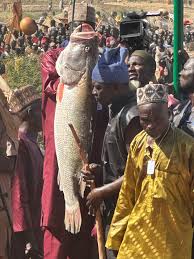
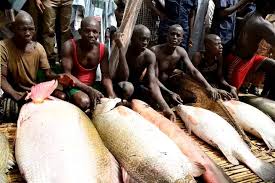
    Mr Abubakar Usman from Maiyama Local Government Area of Kebbi on Saturday claimed the iconic award in the famous Argungu International Fishing Festival with the biggest fish-catch weighing 59 kilogrammes.

    The News Agency of Nigeria (NAN) reports that the winner smiled home with two brand new Toyota vehicles donated by Sokoto State Government and N1million cash.

    NAN also reports that the second position went to Abdullahi Garba from Argungu Local Government Area of Kebbi, who caught a fish weighing 40kg and was rewarded with one brand new Toyota saloon car donated by WACOTT Rice Miles Limited and N1million.

    The third position went to Danlansu Dankani from Jega with one other person who tallied by presenting two fishes weighing 34kg each and went home with N1million and a motorcycle each.

    Speaking at the grand finale of the event, the Special Guest of Honour, President Bola Tinubu, described the event as a remarkable history and a festival that remained a powerful symbol of unity, resilience and peaceful coexistence amongst Nigerians.

    “It reflects the richness of our culture, the strength of our tradition and the opportunities that lie in harnessing our natural resources for national development.

    “Let me once again commend the government and the people of Kebbi for successfully hosting this year’s festival, the organisation, security arrangements and internal outlook of the event demonstrate what is possible when leadership is purposeful and inclusive.

    “Thank you Mr Governor, you are a team leader and you are demonstrating it. A socio-cultural event like this can only thrive and becomes a tourist attraction when the security atmosphere is conducive.

    “I am pleased to note that significant progress has been made in combating insecurity across Kebbi and other parts of our nation.

    “We are still working hard through coordinated efforts between the Federal Government, state government, and security agencies,” he said.

    The President eulogised Gov. Nasir Idris for the landmark achievements recorded and appreciated him for naming the Ultra-Modern State Secretariat after him.

    Tinubu assured that the fight against insecurity would be won so that people would go about their normal businesses peacefully without hindrance.

    “This festival is a testament to the return of stability and normalcy, we will continue to support it and encourage it,” he assured.

    In his speech, Kebbi Governor appreciated Tinubu for honouring his invitation to not only witness the Argungu International Fishing Festival but also his benevolence to commission some developmental projects in the state.

    He said the present administration had recorded giant strides across key sectors of Kebbi development in just less than three years, adding that his administration had fulfilled over 80 per cent of its campaign promises.

    He listed some of the achievements to include 25,000 capacity Bola Ahmed Tinubu Ultra-Modern State Secretariat, construction of three lane Super Highway on Emir Haruna Way, reconstruction of three lane dual carriageway from Abdullahi Fodio Roundabout to City Gate, and construction of carriageway from Ambursa to Sir Ahmad Bello International Airport.

    Others, according to him, are reconstruction of 87-kilometre Koko-Dabai-Zuru Road, total renovation and upgrade of 16 general hospitals, construction of the biggest veterinary hospital in Nigeria, provision of 50,000 tones of fertiliser to farmers free, provision of power tillers, CNG pumping machines and other farming inputs, among others.

    He noted that the state government was up to date in the payment of salaries, gratuity, pension and death benefits to all categories of workers.

    Responding, the Emir of Argungu, Alhaji Muhammad Sama’ila-Mera, apologised to Tinubu and other distinguished personalities for the breech of protocol that happened before the President’s arrival.

    NAN recalls that more than 50,000 fishermen surged into the historic Matan Fada River in Argungu ahead of the scheduled arrival of the President.

    Some of the competing fishermen had been anxiously waiting at a stipulated competition standpoint since 5:00a.m.

    The Emir said the fishing festival was not just a fishing celebration but an event that showcases the rich cultural heritage of Kebbi people.

    He reminded the president that the Federal Government had, in 2020, commenced the construction of a permanent fishing centre, being a centre recognised by UNESCO.

    The Emir, however, lamented that the construction work had been abandoned since 2022. (NAN)(www.nannews.ng)

    Edited by Magdalene Ukuedojor


    Source: NAN – https://nannews.ng/2026/02/14/argungu-fishing-festival-winner-smiles-home-with-toyota-cars-n1m/

  • Consultant advocates stronger Nigeria-Belgium business forum for Nigeria’s economic growth

    Consultant advocates stronger Nigeria-Belgium business forum for Nigeria’s economic growth

    By Fortune Abang

    Senior International Trade Consultant Collins Nweke has called on the Federal Government to strengthen cooperation with the Nigeria Belgium Luxembourg Business Forum (NBLBF) for Nigeria’s economic growth.

    Nweke, the author of the soon-to-be-launched book, “Economic Diplomacy of the Diaspora”, disclosed this in a telephone interview with the News Agency of Nigeria (NAN).

    Nweke spoke as a follow up to a meeting by Thomas De Beule, Commercial Director of the CBL-ACP Chamber of Commerce, with Hannatu Musawa, Nigeria’s Minister of Arts, Culture, Tourism, and the Creative Economy.

    Following their meeting, De Beule sees Musawa as a top-level official with so much confidence in Nigeria’s creative industry, which has earned global attention.

    According to him, such a reality presents a profound strategic opportunity to advance the nation’s economic growth.

    He said that positioning the creative economy at the centre of the business forum indicates that Nigeria was serious about narrative-driven diplomacy that resonates with investors and other stakeholders.

    Nweke said, “National influence is no longer driven solely by trade volumes or political alliances; it is increasingly defined by identity, storytelling, and the cultural capital a nation projects.

    “As preparations intensify for the 2026 NBLBF in Brussels, the message is clear: Nigeria’s creative economy should not arrive as a supporting act. It should headline the conversation.

    “The forum’s evolution from traditional posture – infrastructure and agriculture – to culture and tourism aligns perfectly with Nigeria’s strengths, and with the minister’s vision of culture.

    “This evolution has made the sector an active instrument of economic diplomacy, rather than a symbolic one.”

    He commended the discussion with the Commercial Director and Head, Bilateral Section for Nigeria at the Chamber of Commerce, Industry, and Agriculture for Belgium, Luxembourg, Africa, the Caribbean and Pacific (CBL-ACP), saying it has reshaped global diplomacy.

    Nweke, the Diaspora thought leader and Chair Emeritus of Nigerians in Diaspora (NiDO) – Europe, described culture as currency in soft power and economic diplomacy.

    This, according to him, is culture as a strategic asset in global influence, a currency that converts influence into jobs, exports, and lasting partnerships.

    “Nigeria’s cultural exports, including Afrobeats, Nollywood, fashion, festivals, have become defining features of its global presence. They are not just expressions of identity; they are measurable engines of economic value.

    “They open markets, draw tourism, build partnerships and shape how the world imagines and engages with the country. This is soft power in its most productive form: culture acting as currency.

    “When deployed intentionally, it converts visibility into opportunity and connection into commerce.

    “For Belgium and Luxembourg, nations with rich cultural traditions and thriving creative ecosystems, Nigeria’s dynamism offers fertile ground for cocreation, from film-coproductions, design exchanges to festival circuits and heritage showcases.”

    Nweke affirmed that NBLBF had been a bridge between Nigeria and the Belux region, as it had created a conduit for investment flows and focused dialogue.

    He added that a lot could be achieved through technical agreements and sector-driven negotiations.

    “Today, global economic diplomacy demands more than technical agreements and sector-driven negotiation. It requires trust, shared narratives, and cultural understanding.

    “For good reasons, these are the very foundations of lasting partnerships. Belgium has long understood this.

    “This is why cultural diplomacy is woven into its international engagement. The 2026 Forum offers a chance to build a new model of partnership rooted in authenticity, connectivity, and inclusive growth,” he said. (NAN)(www.nannews.ng)

    Edited by Maureen Ojinaka/Emmanuel Yashim


    Source: NAN – https://nannews.ng/2026/02/17/consultant-advocates-stronger-nigeria-belgium-business-forum-for-nigerias-economic-growth/

  • Int’l Mother Language Day: Experts, parents decry Nigeria’s disappearing tongues

    Int’l Mother Language Day: Experts, parents decry Nigeria’s disappearing tongues


    By Joshua Olomu

    Linguists, cultural experts and parents have expressed concerns over the gradual erosion of Nigerian indigenous languages as younger generations abandon them for English and Pidgin English.

    They spoke with the News Agency of Nigeria (NAN) on Saturday in Abuja as Nigeria joins the rest of the world to mark the 2026 International Mother Language Day.

    The day is observed annually on Feb.21 as part of UNESCO’s broader initiative to promote the preservation and protection of all languages used by people across the world.

    According to the stakeholders, it is increasingly common, especially in urban centres, to find children and youths who cannot speak their parents’ native dialects.

    They lamented that this cultural shift has resulted in young people growing up with limited knowledge of their culture, creating a generational disconnect.

    They noted that the silent erosion of these languages, if left unchecked, poses a serious danger not only to cultural identity but also to Nigeria’s rich cultural heritage   and history.

    Dr Immanuel Ugwu, an educationist and culture enthusiast, said the problem could be traced to inadequacies of modern parenting.

    According to him, a child’s mother tongue is supposed to be the  first tool of understanding, shaping early cognition and identity before formal schooling begins.

    He, however, noted that many modern families prefer to communicate in English and Pigin English  at home, and schools often discourage the use of local languages, branding them as ‘local’ or ‘uncivilised.’

    “Imagine situations where parents  take pride in their children being unable to speak their dialects, thinking that stamps their children’s  elite upbringing.

    “There are even  many instances where parents intentionally speak only English to their children at home, fearing that introducing a local language would  hinder their mastery of good English.

    “This is the situation where many young Nigerians, especially those from an elite home, find themselves, and they end up  distancing themselves from their native languages  to appear civilised, “ he said.

    Ugwu added that English remains a dominant language of instruction in schools across Nigeria, noting that major indigenous languages such as Yoruba, Igbo, and Hausa were often taught merely as academic subjects.

    According to him, the recent decision of the Federal Government to   scrap the 2022 National Language Policy which had mandated using indigenous languages as the medium of instruction in early childhood and primary education needs to be reconsidered.

    Mr Adams Yakubu, a linguist and media consultant, identified the ‘Vernacular Stigma’   in schools and elite circles as a critical part of the problem.

    According to him, the inability to speak local languages is not merely a preference but a survival strategy in a system that rewards English.

    He  said young persons who were not fluent in English but spoke local languages very well  were considered ‘local’ or ‘primitive’, noting  that while the development boosts English proficiency, it threatened the survival of  indigenous languages.

    “Imagine a child being punished for speaking mother tongue in school in the name of vernacular ;that was how it used to be in the primary and secondary schools I attended.

    “How do you expect someone who grew up with that orientation to be proud to speak his mother tongue even in the larger society?

    “Today, many young Nigerians cannot hold conversations in their mother tongue.

    “Even in formal sectors such as banking, technology, and government, indigenous languages are not given the right place, which further reduces their perceived relevance among younger generations,” he said.

    Mrs. Gloria Oguchi, a parent and businesswoman, said Many younger Nigerians were unable to speak their mother tongues because their parents choosed to raise them with English in urban environments.

    According to her, many parents, particularly in urban areas, opt to speak only English to their children believing that English proficiency guarantees better opportunities.

    “I would say that parents caused it because they say everything in life starts with the foundation, and from my own experience, I have that problem.

    “We have not been able to start from day one to teach these children our language and they will just grow with it, and now it is a very serious case.

    “My children cannot speak  Igbo, even though they have Igbo parents,  and I don’t see them teaching their children how to speak it as well,” she said.

    Miss Adeoye Ebunoluwa , a corps member, serving in the FCT, said:  “ I cannot speak my mother tongue , and the first problem was that  my parents did not speak to  me when I was growing up.

    “It would be encouraging for parents to raise their children with their language because it is always difficult to learn when you are grown.

    Mr Michael  Adejoh, an ICT expert and cultural advocate, said the  loss of  an age-long  indigenous language was more than just the loss of words; but  an extinction of   traditional wisdom and folklores

    According to him, when a language dies, the unique history of that culture often dies with it, leading to cultural erosion that leaves the younger generation without a sense of identity.

    He therefore called on policy makers, parents and educators to take appropriate actions, adding that without deliberate intervention, several dialects may disappear within a generation.

    “It is important for us to realise that language is not just a medium of communication; it is a vehicle for transmitting cultural values and traditions across generations.

    “So when a language dies, it also carries with it the stories, wisdom and identities of its speakers, which can never be fully recovered,” he said.

    According to him, for  meaningful change to occur, indigenous languages must be elevated beyond cultural symbolism  and should be incorporated into technology, business, education and the media.

    He called for the development of software, mobile applications and other digital platforms for local languages to make them appealing to younger Nigerians (NAN)


    Edited by Ekemini Ladejobi


    Source: NAN – https://nannews.ng/2026/02/23/intl-mother-language-day-experts-parents-decry-nigerias-disappearing-tongues/

  • Spotify posts 163.5% streaming growth in Nigeria in 5 years

    Spotify posts 163.5% streaming growth in Nigeria in 5 years


    By Joan Odafe

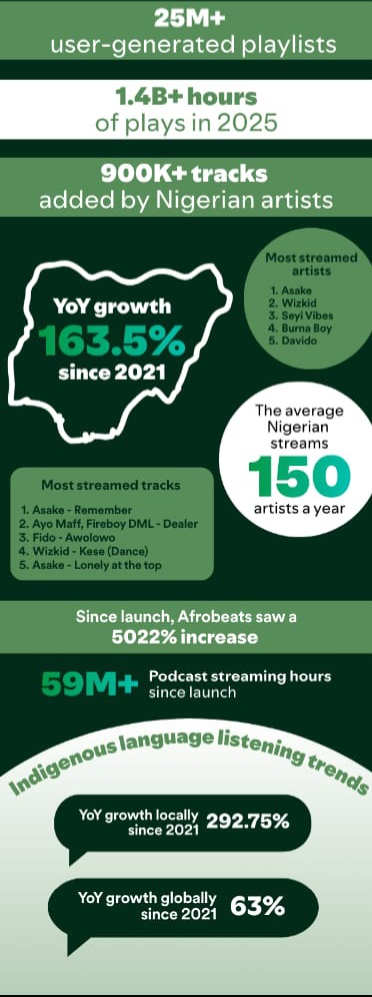
    Five years after its inauguration in Nigeria, Spotify says music listening in Nigeria has grown at an average rate of 163.5 per cent, underscoring the speed at which the country has emerged as a global streaming force.


    In a statement made available to the News Agency of Nigeria (NAN) on Monday in Lagos, Spotify reported triple-digit year-on-year surges in its early years and sustained momentum through 2025.


    The platform, which entered the market in February 2021, described the journey as one marked by rapid cultural acceleration.


    Spotify said at the heart of that growth was Afrobeats, which recorded a +5,022 per cent increase in streams locally between 2021 and 2025.


    The platform said other genres also witnessed remarkable expansion.


    According to Spotify, Amapiano surged by +10,330 per cent, Gospel and Praise grew by +5,499 per cent, Hip-hop and Rap rose by +3,020 per cent while R&B climbed +2,602 per cent.


    The platform further said language had become another growth engine with indigenous language listening at +554 per cent in 2024 and +87 per cent in 2025 within Nigeria.


    Globally, the platform said indigenous language streams rose +141 per cent in 2024 and +41 per cent in 2025, reflecting what it described as a growing appetite for local-language storytelling and sound.


    Spotify said that from day one, listening habits reflected global curiosity.


    The first track streamed in Nigeria at launch was “到此為止” by Shiga Lin, reinforcing Spotify’s view that Nigerian users are curious, eclectic and always open to discovery.


    The platform noted that across five years, the most-streamed artistes in Nigeria include Burna Boy, Davido, Asake, Wizkid and Seyi Vibez.


    It said among the most replayed songs are ‘Remember’ and ‘Lonely At The Top’ by Asake, ‘Kese (Dance)’ by Wizkid, ‘Doha’ by Seyi Vibez, and ‘With You’ by Davido featuring Omah Lay.


    The platform said the number of Nigerian artistes on the platform had grown by +158 per cent since its launch while users have created more than 25 million playlists over the period.


    According to Spotify, in 2025 alone, Nigeria recorded over 1.4 million play hours on the platform.


    It said podcast consumption was also expanding with more than 59 billion total podcast hours streamed since its launch.


    The platform also noted that user behaviour revealed a young and adventurous market with the average listener aged 26.a


    Spotify said that in recent months, Nigerians streamed an average of 150 different artistes, evidence of what the platform called a young, discovery-driven audience.


    Industry observers say the figures confirm Nigeria’s cultural influence but warned that rapid consumption growth must translate into sustainable earnings for creators.


    They noted that while streams were rising sharply, questions remained around royalty transparency, equitable revenue distribution and whether emerging and regional acts benefit sufficiently from algorithm-driven visibility.


    Stakeholders recommend stronger monetisation systems, clearer royalty frameworks and improved access to data analytics to help artistes better understand and grow their audiences.


    Analysts also view the surge in indigenous language streams as a major export opportunity, urging structured global playlist placements, improved metadata tagging and strategic branding support to sustain momentum.


    On podcasts, they called for deeper investment in local advertising frameworks, training and creator tools to ensure that the 59 billion streaming hours convert into viable careers. (NAN) (www.nannews.ng)

    Edited by Folasade Adeniran


    Source: NAN – https://nannews.ng/2026/02/23/spotify-posts-163-5-streaming-growth-in-nigeria-in-5-years/

  • Sierra Leone Honours Nigeria’s General Agwai for Continental Peace Legacy

    Sierra Leone Honours Nigeria’s General Agwai for Continental Peace Legacy

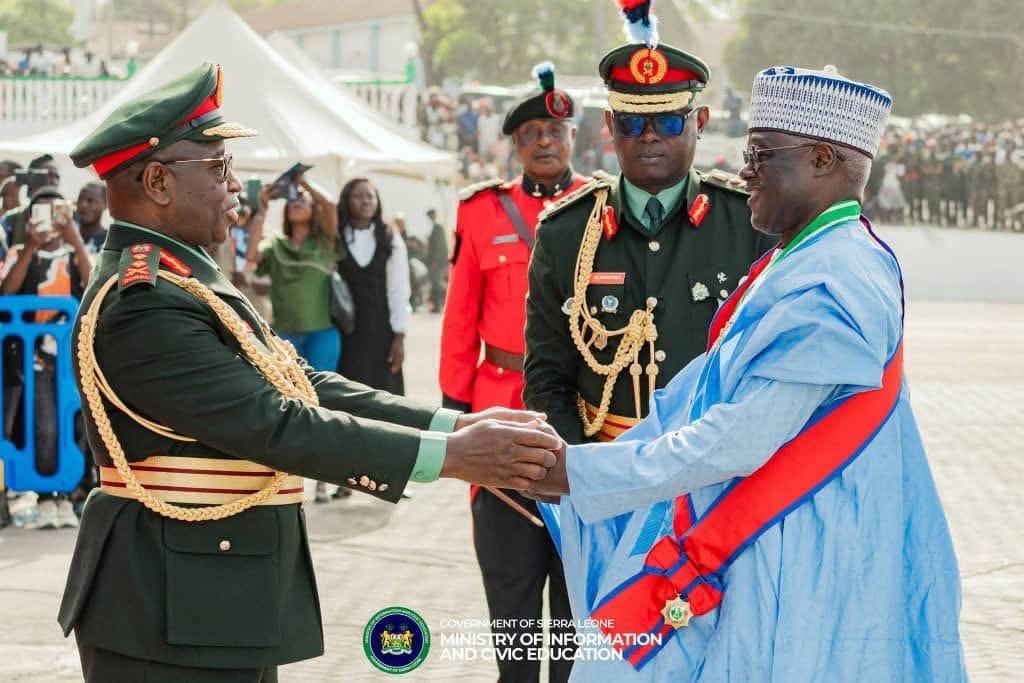
    Sierra Leone has conferred one of its highest national honours on retired Nigerian General Martin Luther Agwai in a ceremony underscoring the importance of regional military cooperation.

    President Julius Maada Bio presented the award to General Agwai in Freetown, recognising the former Chief of Defence Staff of Nigeria for his outstanding contributions to peacekeeping and conflict resolution across the African continent.

    General Agwai, who also previously served as the Chief of Army Staff of the Nigerian Army, was celebrated for his distinguished track record in leading complex peace support operations.
    His career, which includes commanding the United Nations Peacekeeping Force and the African Union Mission in Sudan (Darfur), has earned him widespread international acclaim for his professionalism and dedication to collective security.

    During the investiture, President Bio praised the Nigerian military icon for fostering stronger ties between African nations.

    He described General Agwai as an embodiment of the ideals of “service, integrity, and unity”, values he stated are crucial for achieving sustainable peace and development on the continent.

    The national honour serves as a formal recognition of General Agwai’s enduring legacy as a military leader and statesman, highlighting the critical role of Nigerian expertise in shaping peace and stability architecture in Africa.


    Source: VON – https://von.gov.ng/sierra-leone-honours-nigerias-general-agwai-for-continental-peace-legacy/

  • Nigerian Artist Iniama Takes Afro-Fusion to UK Stages

    Nigerian Artist Iniama Takes Afro-Fusion to UK Stages

    Dance artist, Inimfon Iniama, is steadily carving out a dynamic presence across performance spaces in the United Kingdom, blending African movement traditions with contemporary styles while expanding her creative and cultural impact.

    A graduate of Theatre and Media Studies from the University of Calabar, Iniama began her professional journey in Nigeria, where she developed a strong foundation as a dancer, choreographer and stage performer.

    Drawing from Afro-fusion, contemporary technique, hip-hop and theatrical storytelling, her movement vocabulary reflects a hybrid artistic voice that continues to evolve across borders.

    Her early rise in the performance industry was marked by her victory at the Dare2Dream talent competition, a milestone that earned her the opportunity to represent Nigeria in Zurich at Energy Fashion Night.

    The international exposure proved transformative, broadening her artistic confidence and professional outlook.

    She later secured another major win at the AYKO African Talent Discovery Competition, further solidifying her reputation among a new generation of Nigerian performance artists.

    Since relocating to the UK, Iniama has expanded her practice beyond performance into choreography, mentorship and arts education.

    Among her notable stage credits is a performance at the BRIT Awards, one of Britain’s most prestigious music events.

    She has also performed at Diaspora Wonderland, a culturally significant live showcase within the African diaspora community in Britain, and at the African Heads of Mission Gala hosted by the Embassy of the Kingdom of Morocco at the Mayfair Hotel in London.

    Beyond the spotlight, Iniama has increasingly embraced creative leadership roles.

    Through choreography development, dancer mentorship and collaborative arts projects, she has helped create professional opportunities for emerging performers while promoting artistic excellence and cultural authenticity on stage.


    Source: VON – https://von.gov.ng/nigerian-artist-iniama-takes-afro-fusion-to-uk-stages/

  • Nigeria’s Cancer Crisis and Call for Urgent Government Action

    Nigeria’s Cancer Crisis and Call for Urgent Government Action

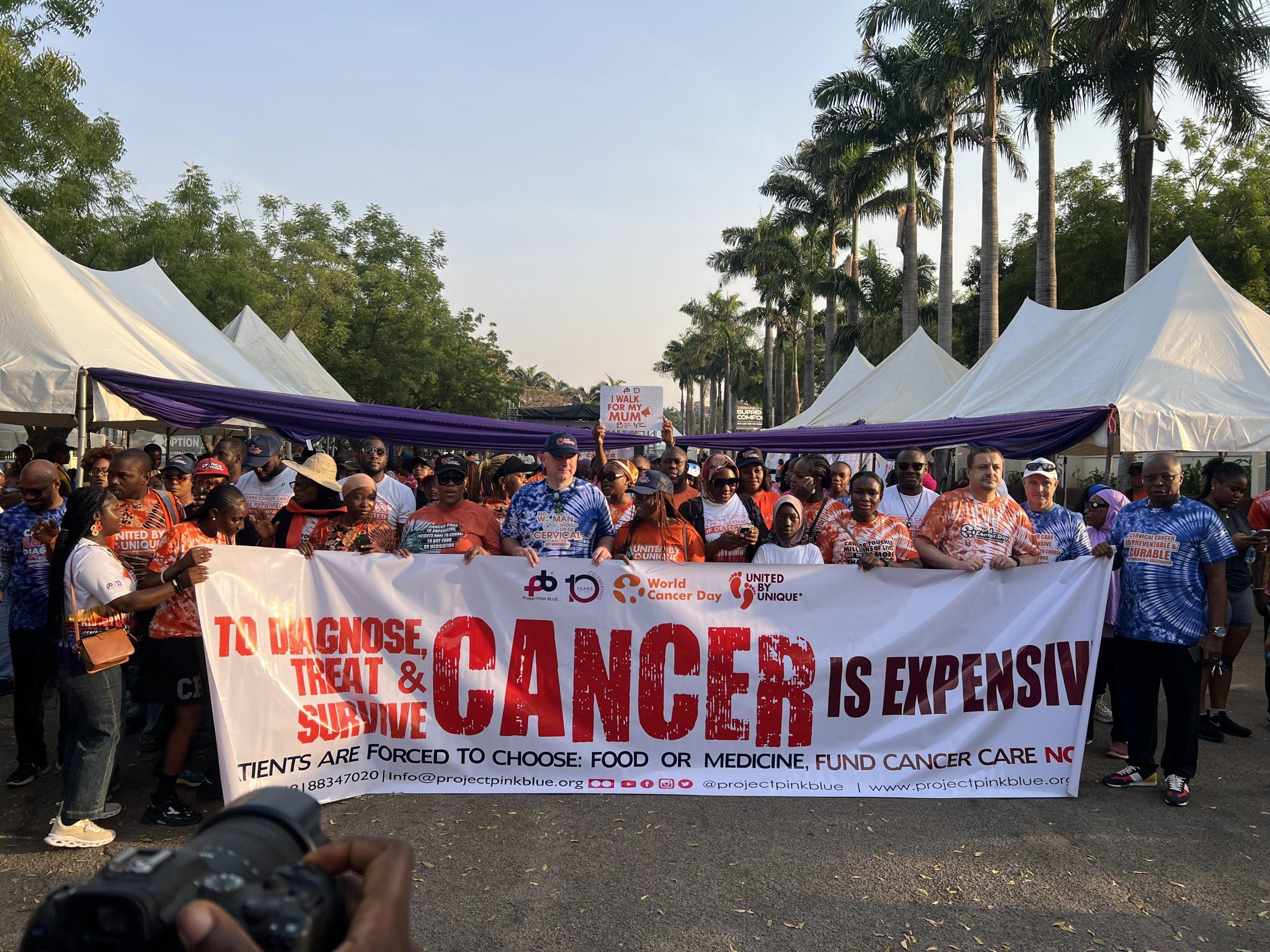
    As Nigeria joined the global community in marking World Cancer Day 2026 on 4 February, under the theme “United by Unique”, renewed attention was drawn to the urgent need for collective action, strengthened awareness, and improved care to address the impact of cancer across the country.

    Project PINK BLUE – Health & Psychological Trust Centre, a leading cancer advocacy organisation, organised a series of events today at Transcorp Hilton Abuja.

    The programme featured a 5km walk, a 20km cycle, and a 10km run against cancer, bringing communities together to promote awareness and collective responsibility.


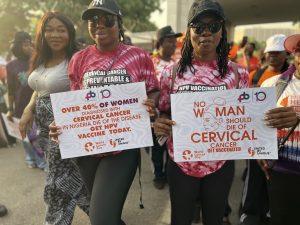
    Cancer survivors, family members, and supporters walked side by side in a powerful show of unity, calling for increased investment and intervention in cancer prevention, diagnosis, and treatment for Nigerians. Data from Project PINK BLUE indicate that Nigeria recorded 127,763 new cancer cases and 79,542 deaths in 2022, highlighting the scale of the challenge and the urgency of coordinated action to improve outcomes.

    The figures further emphasise the importance of strengthening early detection and access to quality care. Currently, a significant proportion of cancer cases in Nigeria are diagnosed at advanced stages, which complicates treatment and reduces survival chances. Expanding screening, improving access to affordable treatment, and addressing systemic barriers present an opportunity to save more lives and improve the quality of care nationwide.

    Breast and prostate cancers are prevalent, with breast cancer being the leading cause of cancer-related deaths among women. Diagnostic delays are exacerbated by a shortage of infrastructure, particularly in rural areas, and financial constraints.

    The financial burden is perhaps the most excruciating aspect of Nigeria’s cancer epidemic. Nearly 90% of healthcare expenditures are paid out-of-pocket, turning diagnostic tests, chemotherapy, radiotherapy, and medications into financially catastrophic events for families.

    Programme Associate at Project PINK BLUE, Ms Faridah M. Banwo, highlighted that: “Several patients are considering whether to buy food and eat or to buy their cancer medication. Cancer patients are borrowing money to purchase their chemotherapy, and family caregivers are selling properties to access radiotherapy.”

    The high costs of healthcare in Nigeria stem from several factors, including the exit of pharmaceutical companies, drug inflation, and reliance on imported medications. Project PINK BLUE’s advocacy efforts, such as the 2024 World Cancer Day symposium titled “Economy, Taxation & Cancer Control: The Exit of Pharmaceutical Companies from Nigeria,” played a crucial role in President Bola Tinubu signing an executive order on June 28, 2024. This order introduced a zero tax on imported pharmaceutical products.

    Additionally, as of January 17, 2026, certain tariff benefits have been extended to non-commercial medical supplies, but current economic conditions persist. However, despite these positive developments, the organisation emphasises the need for further action to ensure that treatments remain accessible to all.

    Runcie C.W. Chidebe, Executive Director of Project PINK BLUE, emphasised the need to shift blame from cancer patients to the healthcare system. He called for the Federal Government to implement an organised national cancer screening program, like Nigeria’s successful HIV/AIDS screening initiatives.

    State governments should establish cancer health funds and trusts to support indigent patients. Increased budgetary allocation for the National Cancer Health Fund is essential to subsidise treatments and medications.

    Government intervention is urgently needed to address Nigeria’s cancer crisis through investments in screening, cost subsidies, and healthcare infrastructure.

    Project PINK BLUE will host a high-level policy makers and government engagement symposium on National Cancer Control on Tuesday, February 10, 2026, at Transcorp Hilton Abuja.


    Source: VON – https://von.gov.ng/nigerias-cancer-crisis-and-the-call-for-urgent-government-action/