Blog

  • A new dawn in Nigerian Technical Aid Corps

    A new dawn in Nigerian Technical Aid Corps

    By Maureen Okon, News Agency of Nigeria(NAN)


    Established in 1987, the Nigerian Technical Aid Corps (NTAC) serves as a key foreign policy tool under the Ministry of Foreign Affairs.

    It was designed to provide technical assistance to African, Caribbean, and Pacific (ACP) countries as a strategic alternative to direct monetary aid.

    Foreign affairs analysts say the scheme has creditably acquitted itself ever since, fostering bilateral and triangular relations and understanding between Nigeria and ACP countries.

    NTAC sends professionals such as doctors, engineers, teachers to ACP countries.

    A critical part of NTAC’s mandate is the deployment of skilled volunteers to ACP countries for the South-South cooperation in strengthening ties through the deployment exercise.

    The Technical Aid Corps (TAC) is used to bridge both the educational and professional gaps of these countries and their people.

    The corps focuses on capacity building, human resources development as well as filling critical manpower gaps in the health and education sectors which directly support the sustainable development through the partnership with these countries.

    Since inception, NTAC had deployed more than 10, 000 volunteers to ACP countries.

    In 2025, NTAC deployed TAC volunteers to 12 ACP countries: Jamaica, Republic of Benin, Rwanda, Equatorial Guinea, Zanzibar, Grenada,

    The Gambia, Liberia, Uganda, Sierra Leone, Seychelles and St. Kitts and Nevis; the corps also opened up new relations with Equatorial Guinea, Grenada and St. Kitts and Nevis last year.

    Also in 2025, NTAC recorded a significant milestone and met targets in spite of challenges.

    Observers say that NTAC, under the leadership of Director-General Dr Yusuf Yakub, is experiencing a new dawn.

    On Strategic Alignment, NTAC has been repositioned to align with the 4D Foreign Policy–Democracy, Development, Demography, and Diaspora to bolster Nigeria’s soft power diplomacy and international influence.

    The corps has strengthened ties with countries such as Jamaica, Republic of Benin, Rwanda and others through capacity building and human resources development.

    Foreign affairs analysts say the corps’ efforts align with President Bola Tinubu’s Renewed Hope Agenda, focusing on democracy, development, and diaspora engagement.

    It is worth noting that NTAC has received accolades from some countries that were impacted through its interventions.

    The Gambian Government recently applauded Nigeria’s educational interventions in the country.

    Prof. Pierre Gomez, the Minister of Higher Education praised the impact of Nigerian professors on their educational sector.

    Gomez said the Gambian President was pleased with the impact of Nigeria professors from NTAC at the University of Applied Science, Engineering and Technology (USET).

    Also, Yakub’s courtesy visit to Ms Eléonore Yayi Ladekan, the Beninese Minister of Higher Education and Scientific Research, elicited applause NTAC).

    The visit was to bridge the communication gap, strengthen diplomatic ties and to facilitate trade between Nigeria and Benin.

    Yakub said that the visit was aimed at mitigating the barriers of communication in order to enhance trade development and other bilateral ties between both countries.

    On her part, Ladekan extended her country’s gratitude to President Tinubu for his continuous dedication and commitment to the development of ACP countries through NTAC.

    She expressed the country’s desire to partner with NTAC to explore more opportunities, and also affirmed the Benin’s commitment to sustaining and expending cooperation with Nigeria for mutual benefits.

    In addition, NTAC opened new relations with Equatorial Guinea, Grenada, and St. Kitts and Nevis, and is set to deploy more volunteers to address manpower gaps in health and education sectors.

    In April 2025, the corps sent 35 medical professionals to Zanzibar, Tanzania, comprising nurses and doctors to enhance the Nigeria foreign policy to bridge the gaps in countries that are in need of professionals.

    Providing further insights, Yakub said the Jamaican Government sought for 400 workers from Nigeria, and they were ready to pay 100 per cent salary to bridge the manpower gap in the North American country.

    He said that the Jamaican deployment was done to fulfil Nigerian “big brother’’ role to the ACP countries and strengthen diplomatic and cultural ties.

    According to him, it is in tandem with President Tinubu’s Renewed Hope Agenda, which hinges on the core pillars of democracy, development, demographic, and diaspora engagement.

    Analysts say that under the leadership of Yakub, NTAC has strengthened ties with countries like Jamaica, Republic of Benin, Rwanda, and others through capacity building and human resources development.

    “Some notable achievements include: New Partnerships formed which made NTAC to opened new relations with Equatorial Guinea, Grenada, and St. Kitts and Nevis.

    “Volunteer deployments, 35 medical professionals were sent to Zanzibar, Tanzania, and 16 TAC volunteers were deployed to Jamaica,’’ a foreign affairs analyst said.

    More recently, NTAC received one of its deployed volunteers from the Republic of Uganda at the expiration of his two years stay in the country.

    The returning volunteer, Professor Joseph Tanko Apagu, was received at the NTAC Complex by the Director (Programmes), Ambassador Zakari Usman, who subsequently presented him to the director-general.

    In his remarks, Yakub expressed appreciation for Apagu’s dedication and exemplary service while on assignment in Uganda.

    The director-general commended him for representing Nigeria positively and contributing meaningfully to development efforts in the host country, in line with the objectives of the TAC scheme.

    He urged the returnee to sustain the values of professionalism, discipline, and patriotism which the corps upheld, and to continue serving as a worthy ambassador of Nigeria in all future endeavours.

    In an increasingly polarised world, foreign affairs commentators say the ongoing repositioning of NTAC operations should be sustained.

    In spite of challenges, stakeholders say they are upbeat about Yakub’s ability to continue leveraging ICT in enhancing strategic partnerships, as well as updating the legal framework to boost Nigeria’s soft power and development leadership in the Global South.(NAN)


    ***If used, please credit the writer and the News Agency of Nigeria.


    Source: NAN – https://nannews.ng/2026/02/14/a-new-dawn-in-nigerian-technical-aid-corps/
  • Strengthening AU frameworks to deepen cooperation among member states

    Strengthening AU frameworks to deepen cooperation among member states

    By Fortune Abang, News Agency of Nigeria (NAN)

    At a time when Africa is confronting complex development, governance and security challenges, Ministers of Foreign Affairs from across the African Union (AU) have called for renewed commitment to strengthening the organisation’s institutional frameworks.

    They emphasised that a more sustainable, united and responsive Union is essential to addressing the continent’s evolving priorities through shared responsibility and deeper cooperation.

    This position formed the centrepiece of deliberations at the 48th Ordinary Session of the AU Executive Council, held in Addis Ababa, Ethiopia, from Feb. 11 to Feb. 12, 2026.

    As one of the AU’s principal policy organs, the AU Executive Council, comprising foreign ministers and designated representatives of member states, provides a strategic platform for aligning continental policies with Africa’s long-term aspirations.

    Against this backdrop, the session underscored the Union’s continued resolve to strengthen continental governance, advance peace and security, and accelerate implementation of Africa’s shared development blueprint under Agenda 2063.

    With the theme, “Assuring sustainable water availability and safe sanitation systems to achieve the goals of Agenda 2063”, discussions placed water security and sanitation firmly at the centre of Africa’s socio-economic transformation.

    In practical terms, ministers reviewed the report of the Permanent Representative’s Committee (PRC), examined AU participation in the G20, and considered elections, legal instruments and institutional governance reforms.

    While acknowledging progress recorded in 2025, delegates nevertheless stressed that deeper coordination would be required to consolidate achievements, especially in advancing regional integration through the African Continental Free Trade Area (AfCFTA).

    Furthermore, participants observed that although previous Executive Council resolutions had largely been implemented, the current session must lay solid foundations for subsequent stages of collective continental action.

    Opening the meeting, Angola’s Foreign Minister and Chair of Council, Tete Antonio, said the gathering was a defining moment not only to assess progress, but also to project the future of the Union.

    He said: “During this 48th Ordinary Session, the Council will consider key agenda items, examine the reports of the 51st Ordinary Session of the Permanent Representatives’ Committee and the participation of the AU in the G20, reflecting on the strategic positioning of our continent in global governance fora.

    “We reaffirm firm commitment to strengthening the institutional framework of the Organisation and to building a more sustainable, united, and responsive African Union capable of addressing the continent’s priorities, in a spirit of shared responsibility and cooperation among Member States.

    “In this context, I call for the active engagement, constructive collaboration, and sense of responsibility of all Member States to ensure the smooth conduct of our work and the fulfilment of the tasks entrusted to us”.

    He, therefore, highlighted structural reform, strengthened multilateral engagement, and sustained peace and security efforts as essential pathways towards realising the aspirations of Agenda 2063, popularly framed as “The Africa We Want.”

    In addition, António referenced mediation and facilitation roles assigned to regional leaders, including Évariste Ndayishimiye and Faure Gnassingbé, as part of AU’s efforts to stabilise conflict-affected regions.

    Similarly, Ethiopia’s Foreign Minister, Gedion Timothewos, warned that unconstitutional changes of government and weakening multilateral cooperation continue to threaten Africa’s normative foundations.

    “African unity must be real and the African Union must be strong if we are to defend our continent from predatory moves that might come from all corners.

    “What we need is not mere charity or goodwill of others, but true partnership, and that more than anything requires true strength which emanates from unity.

    “Therefore, I hope that this session of the Executive Council will contribute to bolstering our unity and revitalising our commitment to our shared objectives,” he said.

    From a development perspective, the Chairperson of the AU Commission, Mahmoud Youssouf, linked the session’s sanitation theme directly to climate resilience, noting that water must be treated as a shared continental asset and a catalyst for peace.

    “In the face of observed climate disruptions, the prudent use of water in all aspects of daily life is a major imperative.

    “This vital resource must be perceived as a collective good to be preserved at all costs and as a vector for bringing our States closer together and for peace,” he added.

    Supporting this position, the Executive Secretary of the United Nations Economic Commission for Africa, Claver Gatete, highlighted the need for coordinated economic strategies to sustain environmental and development gains.

    Meanwhile, Nigeria’s Foreign Affairs Minister, Yusuf Tuggar, called for stricter fiscal discipline, institutional accountability and timely implementation of audit recommendations across AU organs.

    According to him, expanding personnel without measurable output risks weakening institutional efficiency.

    He expressed concern over procurement irregularities and slow recovery of advances, urging clear timelines to implement outstanding audit decisions.

    Taken together, interventions by member states reiterated the importance of African ownership of African solutions, anchored on constitutional order, peace and sovereignty.

    They also renewed demands for fairer representation in global governance, including reform of the United Nations Security Council, stronger influence in international economic decision-making, and equitable access to climate finance and debt relief mechanisms.

    In addition, greater participation in global health governance, especially during public health crises, was identified as essential to safeguarding Africa’s interests.

    Ultimately, deliberations at the 48th Executive Council session reflected a shared recognition that institutional strength, financial accountability and collective action will determine the AU’s ability to respond effectively to contemporary challenges.

    As Africa navigates geopolitical uncertainty, climate pressures and development demands, ministers agreed that deeper cooperation among member states remains the surest path to a resilient and self-reliant continent. (NANFeatures)

    *****If used, please credit the writer and the News Agency of Nigeria (NAN).


    Source: NAN – https://nannews.ng/2026/02/16/strengthening-au-frameworks-to-deepen-cooperation-among-member-states/

  • India’s Indigenous Defence Surge: Lessons for Nigeria from public-private innovation

    India’s Indigenous Defence Surge: Lessons for Nigeria from public-private innovation

    By Sumaila Ogbaje, News Agency of Nigeria (NAN)

    India’s indigenous military industrial base is steadily emerging as a global benchmark, combining decades of public-sector expertise with private-sector agility and cutting-edge innovation.

    For countries like Nigeria, still in the early stages of local defence production, India’s trajectory offers a powerful case study in strategic planning, technological self-reliance, and industrial ecosystem development.

    For decades, India relied heavily on imported military hardware. Today, however, deliberate government policy, sustained research and development, and strong public-private collaboration are transforming the country into a producer and exporter of advanced defence technology.

    The result is a sophisticated ecosystem that is reducing import dependence, enhancing operational capability, and positioning India as a credible player in the global defence market.

    These developments were on full display to a delegation of foreign defence journalists currently in India on a Familiarisation Capsule organised by the Ministries of Defence and External Affairs.

    Bengaluru, India’s technology hub, provided the perfect vantage point to observe how indigenous military industrial complexes are evolving in scale, sophistication, and global relevance.

    At Bharat Electronics Limited (BEL), one of India’s flagship defence electronics companies, the delegation was briefed on a journey of sustained growth, diversification, and technological mastery.

    Executive Director, retired Navy Commander K. Kumar, described BEL as both a strategic partner of the Indian Armed Forces and a national asset.

    He attributed the company’s growth to a business model rooted in structured technology transfer partnerships with foreign firms, dependable production collaborators, and strong in-house research and development.

    “Our growth story is anchored on continuous innovation and trusted partnerships,” Kumar told journalists.

    He stressed that while BEL collaborates extensively with academic institutions, the company consistently seeks emerging technologies and acquisition opportunities, ensuring that it does not remain complacent.

    Industry analysts note that BEL’s most valuable asset may be intangible: the institutional trust it has earned from the government, armed forces, and international customers. This credibility has enabled the company to scale production, diversify product lines, and compete globally.

    Key defence platforms and systems produced by BEL include: Akash Weapon System radar and control systems; advanced naval combat management systems; electronic warfare suites for land, air, and sea platforms; as well as coastal surveillance radar systems.

    Others are, air defence fire control radars; software-defined radios for tactical communications; electro-optical fire control systems; battlefield surveillance radars; IFF (Identification Friend or Foe) systems; and integrated air command and control systems (IACCS components).

    BEL’s model demonstrates the strategic value of combining public-sector resources with innovation and disciplined partnerships, a lesson Nigeria could emulate through sustained support for Defence Industries Corporation of Nigeria (DICON) and complementary private-sector initiatives.

    The delegation then visited NewSpace Research and Technologies, an emerging private-sector defence technology firm representing India’s new-age military innovation ecosystem.

    At the firm, retired Navy Commander Ashwin Shastry, AVP (Alliances and Partnerships), explained that NewSpace focuses on disruptive technologies, rapid prototyping, and scalable unmanned systems tailored to modern warfare requirements.

    Notable platforms and capabilities include: High-altitude long-endurance (HALE) unmanned aerial systems; Tactical loitering munitions (kamikaze drones); Autonomous swarm drone systems; AI-enabled surveillance UAVs; Maritime unmanned systems for coastal security; Counter-drone solutions; Multi-domain unmanned teaming technologies; and Advanced mission planning and autonomy software

    It is observed that firms like NewSpace inject speed, innovation, and venture-style agility into India’s defence ecosystem, complementing traditional public-sector giants like BEL.

    At SSS Defence, India’s private-sector defence story extends beyond electronics and unmanned systems.

    SSS Defence is the country’s first private original equipment manufacturer (OEM) of small arms, showcasing homegrown capability in infantry weapons.

    CEO Vivek Krishnan told the News Agency of Nigeria (NAN) that SSS Defence designs, manufactures, tests, and certifies its weapon systems entirely in-house, maintaining full ownership of intellectual property.

    He said the firm had produced: Sniper rifles: 338 Saber (1,500 m range), Viper (7.62x51mm); Assault rifles and carbines: P72 (7.62x39mm), M72 (5.56x45mm), Raptor (.300 Blackout); Submachine guns: G72 SMG/CSMG (9x19mm); Upgraded AK rifles, ammunition, and weapon optics.

    Krishnan highlighted that India historically lacked a strong private gun-making culture, unlike the United States or Brazil, where civilian shooting traditions nurtured private manufacturers.

    According to him, policy reforms since 2016 have opened the door for private-sector participation, and SSS Defence is already exporting to Armenia while exploring technology transfer and licensed production agreements.

    “By controlling both weapons and ammunition supply, we strengthen operational reliability for our customers,” Krishnan said, underscoring the strategic value of vertically integrated indigenous production.

    The delegation also visited Astrome Technologies Pvt. Ltd., a start-up engineering next-generation wireless connectivity for both terrestrial and satellite systems.

    Founded in 2015 and incubated at the Indian Institute of Science, Astro focuses on millimetre-wave E-band (70–80 GHz) communications and electronically steerable phased-array antennas.

    Astrome has developed: GigaMesh wireless fibre backhaul systems; Software-defined satellite modems for secure communications; ZetaSat flat-panel multi-orbit satellite terminals; S- and X-band video transceivers; Space-to-space inter-satellite links; and 150-kg class satellite bus (under development).

    The company’s President, Venkatech Kumaran, emphasised India-first technology development, claiming patents in phased-array antennas and communication constellation optimisation. Astro’s vision is to provide global communication solutions, particularly for the Global South, while maintaining end-to-end design and manufacturing within India.

    Nigeria has made notable strides through DICON and local innovation by armed forces and private firms, yet its defence industrial base is at an early stage of maturity.

    However, the industry is still faced with the challenges of limited scale of local production, dependence on foreign technology, fragmented research and development pipelines, weak industry-academia integration and inconsistent long-term funding.

    India’s experience offers actionable lessons. Policy consistency over decades to support indigenisation; structured technology transfer to build local capacity; civil-military-academic integration for continuous innovation; trust and quality assurance to secure adoption by the armed forces; and space for private innovators to accelerate technology adoption.

    India’s story demonstrates that indigenous defence capability is built not overnight but through patient institution-building, sustained investment, and ecosystem thinking.

    Public sector giants provide scale and credibility, while private start-ups inject agility, innovation, and niche technological expertise.

    For Nigeria, the Indian model underscores both the possibilities and urgency: with the right policy discipline, funding stability, and industry coordination, Africa’s largest economy could gradually replicate elements of India’s success.

    The Familiarisation Capsule in Bengaluru has provided not just a window into India’s defence industrial rise, but a strategic blueprint for countries aiming to secure their future through indigenous military capability, fostering self-reliance, technological innovation, and global competitiveness. (NANFeatures)


    Source: NAN – https://nannews.ng/2026/02/23/indias-indigenous-defence-surge-lessons-for-nigeria-from-public-private-innovation/

  • SON awards MANCAP certificates to 13 aluminum manufacturers in Imo

    SON awards MANCAP certificates to 13 aluminum manufacturers in Imo

    By Peter Okolie

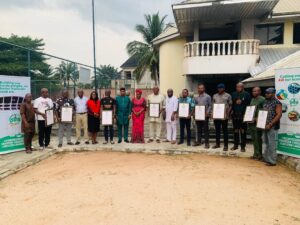
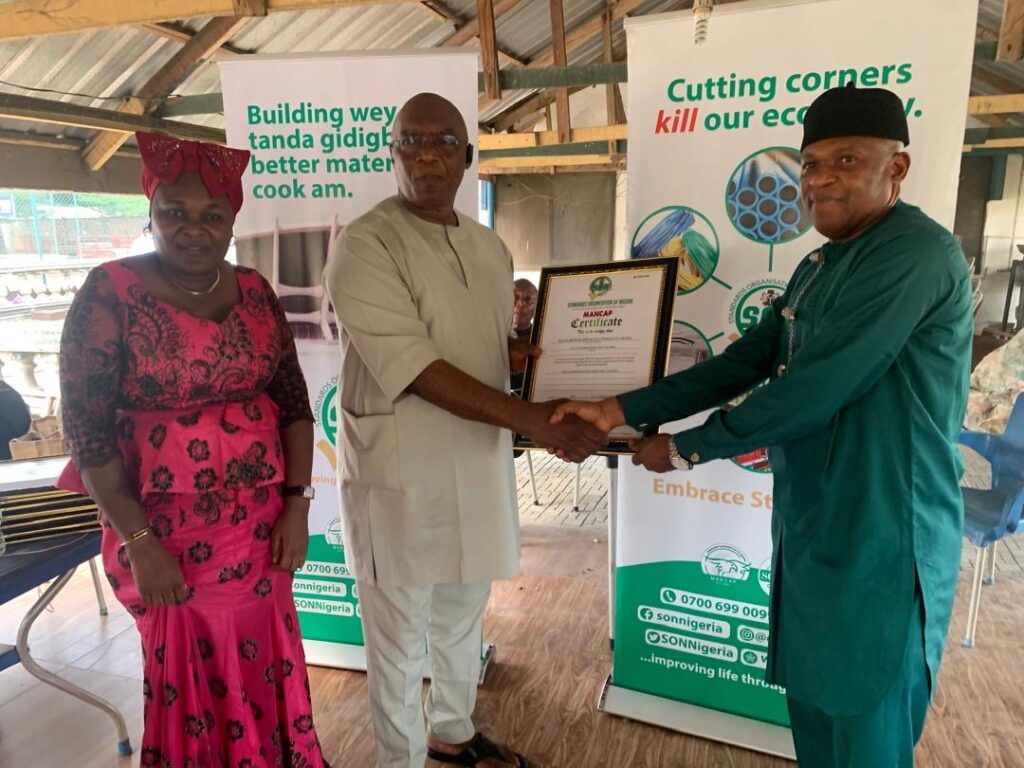
    The Standards Organisation of Nigeria (SON) has awarded the Mandatory Conformity Assessment Programme (MANCAP) Certificates and Logos to 13 manufacturers of aluminum roofing sheets in Imo.

    The Director-General of SON, Dr Ifeanyi Okeke, presented the certificates and logos to the beneficiaries on Thursday in Owerri.

    Okeke, represented by the agency’s Director, South-East Regional Operations, Mr Chukwuma Aharanwa, said the award was designed to bolster the industrial sector.

    He also described the initiative as part of a strategic national roadmap to sanitise the construction industry and position Nigerian-made products for global competitiveness.

    He highlighted the critical economic weight of Nigeria’s aluminum sector, saying that the sector was projected to reach an annual valuation of 700 million US Dollars by 2030.

    Okeke further said that the growth was anticipated by a compound annual growth rate of 5.7 per cent.

    “This is driven by rapid urbanisation and a housing deficit, estimated at over 16 million to 17 million units.

    “By ensuring these products meet the Nigerian industrial standard, we are not just protecting buildings, we are safeguarding an industry that drives employment and infrastructure development across the federation,” he said.

    Okeke said that SON’s current initiatives were strictly aligned with the Federal Government’s “Nigeria First Policy” for the growth of micro, small, and medium enterprises by making quality certification more accessible.

    The SON boss outlined several subsidised interventions currently offered by the agency to support local manufacturers, including subsidised laboratory testing and sale of standards and certification charges, among others.

    While congratulating the certified companies, Okeke warned against complacency.

    According to him, the MANCAP certificate is not a permanent shield but a trust-based licence that must be revalidated every three years.

    “We will undertake periodic factory inspections, sampling, and laboratory testing to ensure standards are maintained.

    “The certificates issued today shall be withdrawn or suspended, if products fail to meet minimum requirements,” he warned.

    Okeke urged other manufacturers in the South-East and across Nigeria to formalise their operations.

    “The benefits of the MANCAP logo goes beyond regulatory compliance, offering a global passport for Made-in-Nigeria goods to enter international markets and provide consumers with the value for money, confident that their roofs will withstand the elements,” he said.

    He reaffirmed the agency’s commitment to using the “full weight of the law” against producers of sub-standard products, who sabotage the economy by flooding the market with inferior, life-threatening building materials.

    In her speech, the state Coordinator of SON, Mrs Comfort Echebiri, described the MANCAP certificate and logo as a “prestigious achievement” and lauded the companies for successfully attaining the status.

    Echebiri emphasised that the award promotes the “competitiveness of Made-in-Nigeria products” in global markets, ensuring local goods met the highest standards for the nation’s “teeming population”.

    She restated SON’s commitment towards “achieving sustainable development for the nation” and commended the manufacturers for satisfying the “stringent conditions” required to earn the certification.

    In their separate responses, the state Chairman of Aluminum Corrugators Association, Mr Marcel Odunze, and the Managing Director, AIFY Global Aluminum Ltd., Mr Ifeanyi Nwagu, expressed delight over the certification of their products.

    Odunze, who is the Managing Director, Max Aluminum and Allied Product Ltd., praised SON’s resilience towards ensuring standards.

    He assured the agency of sustained cooperation from the association to enable it to serve Nigerians with good and quality products.

    He described the certificate and logo as a “big challenge” to the beneficiaries to maintain credibility and quality.

    On his part, Nwagu described the certificate and logo as an “acceptance and encouragement from SON on the impact of our aluminum roofing sheets in the construction industry”.

    “We know there’s so much competition, and we know the standards, but as much as possible, we will minimise our margin, yet will not lower the gauge,” Nwagu said.

    The News Agency of Nigeria (NAN) reports that of the 13 companies certified by the agency, five were awarded new certificates, while eight others had theirs revalidated.

    The companies awarded certificates were Max Aluminum and Allied Product Ltd., Ebony Shelters Trading Nig. Ventures, Ugotex Roof & Shelters Enterprise, Romark Aluminum Company Nig. Ltd., and U2 Aluminum System Enterprise.

    Those whose certificates were revalidated included AIFY Global Aluminum Ltd., Vinal Aluminum Products Ltd., Agunwa Aluminum Industry Big. Ltd., and Ejims Akirika Aluminum Ltd.

    Others were Manchuks Aluminum Products Ltd., SICO Global Enterprises, Divine Gate Aluminum Products Ltd., and Sky Aluminum Manufacturing Company Ltd. (NAN)(www.nannews.ng)
    Edited by Sam Oditah


    Source: NAN – https://nannews.ng/2026/02/19/son-awards-mancap-certificates-to-13-aluminum-manufacturers-in-imo-2/

  • COFI Scholarships marks decade of transforming deserving lives

    COFI Scholarships marks decade of transforming deserving lives


    By Millicent Ifeanyichukwu

    The Chris Oyakhilome Foundation International (COFI) Scholarships Initiative has marked 10 years of documented impact in expanding access to quality education for deserving students across communities and borders.

    Addressing journalists at a news conference on Wednesday in Ikeja, Tom Amenkhienan, Chairman, Board of Trustees, COFI, said the decade’s milestones reflected accountability, strategic growth and transparency.

    Amenkhienan highlighted the Foundation’s achievements through an impact report detailing outcomes, governance structures, sustainability mechanisms, and future expansion plans for the organisation across Nigeria and beyond in Africa.

    He said, “Ten years ago, we launched a vision; today we present verifiable impact, documented outcomes, and a clear roadmap proving education remains the strongest instrument for generational transformation.

    “Our scholarship beneficiaries were enrolled as young children, sponsored through primary, secondary, and university education.

    “Today, they are graduates, gainfully employed, and meaningfully contributing to society and national development,” he said.

    Similarly, Dr Ifeoma Chiemeka, Director, Corporate Affairs of COFI, explained that the foundation was faith-based and committed to giving back to society by empowering individuals to reach their full potential through quality education and opportunities.

    She noted that beneficiaries received exceptional education and are encouraged to apply their creativity, proving their capacity to achieve extraordinary feats, including building a locally assembled vehicle in spite of limited manufacturing structures.

    “They went from kids to kings, demonstrating that with faith, opportunity and determination, dreams are achievable. Over the past decade, graduates across disciplines have excelled, proving greater accomplishments remain ahead,” she added.

    The News Agency of Nigeria (NAN) reports that a public lecture delivered at the event had the theme, “Reshaping the Educational Ecosystem: Reforming Curricula and Empowering Educators to Build our Societies and Nation”.

    Prof. Chukwuemeka Eke, the Guest Speaker, described education as not merely a sector but the engine of national destiny, emphasising that discussions about curriculum and teachers ultimately concern the future architecture of society.

    Eke noted that Africa’s education systems remain structured for an industrial era, producing certificates in a labour market demanding competence, while disruption, automation, and digital transformation accelerated global change.

    He added that curriculum reform and teacher empowerment are inseparable, urging investment in digital fluency, critical thinking, and professional dignity to transform classrooms into innovation laboratories driving sustainable national development.

    “Education is the engine of national destiny; when we align curriculum with reality and empower educators with competence and dignity, we unlock innovation, reduce unemployment, and secure sustainable prosperity,” he said.

    Similarly, Prof. Ngozi Imaga, Nutritional and Pharmacological Biochemist at the University of Lagos, emphasised the urgent need to improve the learning environment through intentional study approaches and a dynamic shift in classroom engagement strategies.

    “True learning thrives when students intentionally pursue courses that align with their passions, transforming classrooms into vibrant spaces of engagement, critical thinking, and meaningful academic and personal growth,” she added. (NAN)(www.nannews.ng)


    Edited by Christiana Fadare


    Source: NAN – https://nannews.ng/2026/02/19/cofi-scholarships-marks-decade-of-transforming-deserving-lives-across-communities/

  • Yuguda, scholars laud Sogolo’s legacy on African Philosophy

    Yuguda, scholars laud Sogolo’s legacy on African Philosophy

    By Emmanuel Afonne

    Malam Isa Yuguda, former governor of Bauchi, and Pro-Chancellor, National Open University of Nigeria (NOUN), has described Emeritus Prof. Godwin Sogolo as a national asset whose scholarship has elevated African philosophy globally.

    Yuguda, who was represented by Prof. Vincent Tenebe, former Vice-Chancellor of NOUN, spoke at the presentation of a book titled: “Philosophy, Human Values and Development in Africa”, in honour of Sogolo.

    He said Sogolo’s contributions to NOUN, the University of Ibadan, the University of Benin and other institutions, across the country were worthy of emulation and mentioning.

    “Sogolo is an academic to the core and a teacher by excellence, whose life and work exemplify integrity, scholarship and service.

    “One thing I have learned from Sogolo is that he has a clean heart; if you do not keep malice and do not get yourself worried, you will live long.

    “Sogolo is also celebrating his 80th birthday today, so, we need to honour the emeritus professor for his decades of dedication to teaching, research and mentorship,” Yuguda added.

    Reviewing the book, Prof. Eghosa Osaghae, the Director-General of the Nigerian Institute of International Affairs (NIIA), described Sogolo as a pioneer in decolonising African philosophy.

    Osaghae said the 21-chapter volume examined ethics, governance, health, knowledge production and comparative philosophy, highlighting Sogolo’s enduring influence.

    “There are moral values that should become an integral part of our governance process. He even advocates institutionalising moral education as a basis for leadership.

    “The book demonstrates how African and Western philosophies were complementary rather than mutually exclusive.

    “I commend the editors and contributors for producing a 316-page volume that paid tribute to leading figures in Nigerian philosophy and affirmed Africa’s place in global intellectual discourse,” he said.

    In his remarks, Prof. Sogolo emphasised the need to document and institutionalise African philosophical systems.

    Sogolo said Africa’s strong oral tradition had historically limited the preservation of philosophical ideas, unlike Europe’s written tradition.

    “Every ethnic group and nation has its own philosophy – Chinese, Indian, European and so on; Africa is no different.

    “Philosophy reflects a people’s way of life, belief systems and culture.

    “Today, we are documenting and passing these ideas on.

    “I belong to one of the first generations of African philosophers working to establish an authentic African philosophy,” he said.

    Sogolo noted that while intellectual borrowing was common worldwide, African scholars must develop indigenous systems rooted in local knowledge and culture.

    He cited Hausa proverbs as examples of philosophical reflections that encapsulate universal truths about inheritance and gravity long before formal Western articulation.

    According to him, recognising Nigerian philosophical traditions—such as Yoruba, Isoko and Igbo thought systems would enable Africans to produce original scholarship and appreciate their heritage.

    He also disclosed that he authored a foundational book on African philosophy in 1993 and was distributing copies to support its study across the continent.

    Earlier, Prof. Abdallah Adamu, former Vice-Chancellor of NOUN, commended the Federal Government for taking a step in the transformation of the university system.

    Adamu said the implementation of improved welfare packages for university staff, especially for professors would impact on their knowledge that could turnaround the fortunes of tertiary education in the country.

    Adamu clarified that university agitations were not solely about financial benefits.

    “As someone who is about to retire in about five months, I am very happy to see that at least some of the promises the government made, particularly regarding staff welfare, have begun to be implemented.

    “Many people think when we talk about ASUU, it’s all about money—but it is not. We also want better facilities, especially in this challenging period of Artificial Intelligence (AI).

    “AI, including tools that allow students to generate assignments, had introduced new challenges to teaching and learning.

    “We must develop new strategies and part of the government’s implementation involves improving university delivery systems,” he said.

    Adamu added that salary increments for professors and improved retirement packages were among the benefits being implemented, describing them as reasonable and satisfactory.

    Also speaking, Prof. Uduma Uduma, the Vice-Chancellor of NOUN, said universities should not be seen as centres for obtaining certificates, rather, it should be seen as a place for critical thinking.

    “At the National Open University of Nigeria, we deeply value scholars of Professor Sogolo’s standing.

    “These are men and women who remind us that universities are not mere centres for certification but communities for the pursuit of truth, critical thinking and service to humanity.

    “For Prof. Sogolo, we are not merely celebrating longevity because of his 80 years of age, rather, we are celebrating a life of intellectual depth, academic courage and enduring service to philosophy, scholarship and humanity,” he said.

    The event attracted academics, students and dignitaries who celebrated Sogolo’s legacy and the growing recognition of African philosophy as a driver of human values and development. (NAN)(www.nannews.ng)

    Edited by Chinyere Joel-Nwokeoma


    Source: NAN – https://nannews.ng/2026/02/19/yuguda-scholars-laud-sogolos-legacy-on-african-philosophy/

  • Genotype awareness drive targets students at Trinity University

    Genotype awareness drive targets students at Trinity University


    By Millicent Ifeanyichukwu


    The Gail Sickle Initiative, in partnership with Trinity University, hosted ‘Sickle Cell Alma Awareness Wednesday’ to educate students on genotype compatibility before marriage.


    The News Agency of Nigeria (NAN) reports the programme, with the theme: ‘A holistic perspective on genotype compatibility’, held on Wednesday at Trinity University’s City Campus, Sabo Yaba, Lagos.


    Convener, Oluwafemi Ajayi, said the initiative aimed to give back to society by promoting sickle cell awareness.


    Ajayi stressed the need for genotype compatibility before marriage to prevent avoidable health and emotional challenges for families.


    “Love should not blind you. Knowing your genotype with a partner is vital. Obedience to medical advice ensures healthier families and stronger societal contributions,” she said.


    She urged persons living with sickle cell to build self-esteem and embrace their uniqueness.


    “Never compare yourself with others. Despite challenges, you can contribute meaningfully to society,” Ajayi added.


    Earlier, Prof. Clement Kolawole, Vice-Chancellor, TU, said advocacy for genotype compatibility must be prioritised nationwide to reduce sickle cell prevalence and end stigma.


    Kolawole, represented by Dr Isaac Fadeyi, Associate Professor of Mass Communication added that, “Informed choices, compassion, and sustained awareness will protect future generations and reshape Nigeria’s narrative.”


    Dr Annette Akinsete, National Director of the Sickle Cell Foundation Nigeria, called for sustained advocacy to dispel myths linking sickle cell to spiritual beliefs such as ‘Ogbanje’.


    “Education empowers families to make informed health decisions and correct harmful misconceptions,” Akinsete said.


    She urged laboratories to ensure accurate genotype testing, backed by government regulation and legislative support for free treatment.


    “Legislative backing can reduce the heavy burden on patients and families,” she added.


    Dr Benjamin Adegunle of LUTH highlighted long-term impacts of sickle cell, urging adherence to evidence-based medical advice.


    “Medical advice, inspired by God, must guide decisions to prevent sickle cell births,” Adegunle said.


    Dr Ante Bassey of Isolo General Hospital warned that stigma could trigger depression, isolation and suicidal thoughts among patients.


    “Awareness must extend to churches, mosques and communities to discourage discrimination,” Bassey said.


    Caregiver, Mrs Abiola Alade, shared experiences raising two children with sickle cell, citing financial strain and emotional stress.


    “Genotype compatibility must guide marriage decisions to prevent such hardships,” she said.


    A Nursing Science student, Mr Daniel Oluwole, said the programme deepened his understanding of genotype testing.


    “I now understand the importance of testing to avoid passing sickle cell to children,” he said. (NAN) (www.nannews.ng)

    Edited by Kamal Tayo Oropo


    Source: NAN – https://nannews.ng/2026/02/20/genotype-awareness-drive-targets-students-at-trinity-university/

  • LAWMA reforms boost waste collection efficiency – MD

    LAWMA reforms boost waste collection efficiency – MD

    By Fabian Ekeruche

    The Managing Director of the Lagos Waste Management Authority (LAWMA), Dr Muyiwa Gbadegesin, says sweeping reforms and infrastructure upgrades have significantly improved waste collection efficiency across the state.

    Gbadegesin disclosed this during a courtesy visit to the News Agency of Nigeria (NAN) in Lagos.

    He said LAWMA expanded night cleaning operations and increased street sweeping coverage to 1,000 routes statewide.

    He disclosed that 16,000 street sweepers were currently engaged across Lagos, supported by improved logistics and operational systems.

    He said LAWMA acquired new equipment three years ago to complement Private Sector Participants (PSP) compactors and rehabilitated old trucks to strengthen fleet capacity.

    He added that additional compactor trucks were expected in the coming months.

    “Heavy-duty equipment is now deployed to clear legacy illegal dumpsites across communities,” he said.

    Gbadegesin said LAWMA strengthened human capacity by expanding its advocacy department and deepening collaboration with Community Development Associations (CDAs) and local councils.

    He revealed that each local government now operates a waste management task force, supported by LAWMA integration desks.

    On waste-to-wealth initiatives, he disclosed that the Lagos State House of Assembly had ratified a concession agreement with ZoomLion to construct transfer loading stations and material recovery facilities.

    The facilities, he said, would enable closure of the Olusosun and Solous landfills and process 4,000 tonnes of waste daily.

    He said organic waste, which constitutes about 50 per cent of Lagos waste, would be converted into compost, while plastics would be recycled into waste bins.

    Gbadegesin also disclosed plans for a 1,500-tonnes-per-day waste-to-energy plant in partnership with a Dutch firm, Harvest Waste.

    He said the project was expected to generate 60 megawatts of electricity to support emerging industrial zones.

    He further highlighted a pilot biogas plant at the Epe Food Market, which processes 500kg of organic waste daily to generate electricity for market operations.

    He called for stronger media collaboration to enhance public awareness and behavioral change.

    “Waste management is not just about equipment; it is about human behaviour, enforcement and strong regulatory systems,” he said.

    He urged residents to utilise LAWMA’s toll-free lines and digital platforms to report service gaps instead of resorting to illegal dumping. (NAN)www.nannews.ng)

    Edited by Chinyere Joel-Nwokeoma


    Source: NAN – https://nannews.ng/2026/02/20/lawma-reforms-boost-waste-collection-efficiency-md/

  • BPP records N1.1trn savings, seeks increased allocation in 2026 budget

    BPP records N1.1trn savings, seeks increased allocation in 2026 budget

    By Okeoghene Akubuike

     The Bureau of Public Procurement (BPP) has presented its 2026 budget proposal to the National Assembly, highlighting achievements in procurement reforms and savings.

    The Director-General (D-G), BPP, Dr Adebowale Adedokun said this in a statement by Zira Nagga, Head of Press and Public Relations, BPP,  in Abuja on Saturday.

    Adedokun said that the reforms saved the nation N1.1 trillion in 2025.

    He said that the savings were realised through initiatives such as the Debarment Policy, Nigeria First Policy and the E-Government Procurement (e-GP) System.

    He attributed the successes recorded by the bureau to the support of President Bola Tinubu and the backing of the National Assembly.

    The D-G listed key reforms undertaken by the bureau to include the proposed amendment of the Public Procurement Act, 2007; development of the e-GP System; Nigeria e-Market; and sector-based procurement frameworks.

    Others are upgrading of the contractors/consultants/service providers (CCSP) database; establishment of a national repository of procurement experts and agents; and procurement capacity building for stakeholders.

    According to him, the bureau has undertaken a comprehensive overhaul of its procurement processes since November 2024, resulting in substantial improvements in efficiency and cost-effectiveness.

    “These reforms have led to a notable reduction in the processing time for government contracts, yielding significant cost savings and enhanced value for money.”

    Adedokun also said that the President had approved the deployment of community-based procurement, which would promote local content and provide a legal framework for constituency projects to deliver value.

    He said that transparency and value for money would be further enhanced through the deployment of digital tracking tools for monitoring and evaluation.

    The D-G said that the bureau was seeking increased budgetary allocation in 2026 to improve service delivery, support job creation and strengthen its oversight capacity.

    In their separate remarks, the Chairman, Senate Committee on Public Procurement, Sen. Olajide Ipinsagba, and Chairman, House Committee on Public Procurement, Rep. Unyime Idem, assured the bureau of legislative support.

    Ipinsagba reiterated the importance of the bureau, noting that its mandate directly impacted service delivery, infrastructure development, investors’ confidence and public trust in government spending.

    He said that the seriousness attached to the budget defence session reflected the critical role of the bureau in ensuring prudent management of public funds.

    On his part, Idem assured the bureau of the committee’s commitment to reviewing its 2026 estimates to ensure alignment with national priorities.

    He said that this would particularly focus on strengthening compliance monitoring, deepening e-procurement implementation, and building institutional capacity across Ministries, Departments and Agencies (MDAs).

    Idem said that every Naira appropriated must translate into measurable impact for Nigerians.

    He further urged the bureau to urgently forward to the National Assembly a comprehensive proposal for the amendment of the Public Procurement Act, 2007.

    Idem noted that after close to two decades of operations, evolving realities in digital procurement, fiscal reforms and global best practices had made the amendment imperative.(NAN) (www.nannews.ng)

    Edited by Kadiri Abdulrahman


    Source: NAN – https://nannews.ng/2026/02/21/bpp-records-n1-1trn-savings-seeks-increased-allocation-in-2026-budget/

  • Unusual story of Gombe varsity student who lives on liquids for 21 years

    Unusual story of Gombe varsity student who lives on liquids for 21 years

    By Hajara Leman, Aderogba George, Rachael Abujah
    At 21, Sammy Samaila has never eaten solid food, yet he walks daily to class, studies sociology, and quietly navigates university life with determination.
    While other students grab rice, bread and other snacks between lectures, Samaila, a 400-level Sociology student at Gombe State University, survives entirely on liquids, sometimes carried in a flask to lectures.
    In an exclusive interview with the News Agency of Nigeria (NAN), Samaila said  since childhood, he survives entirely on pap, tom brown made from millet groundnuts and soya beans, juices and other drinks.
    Born in Yamaltu-Deba Local Government Area of Gombe State, Samaila recalled that at age four,
    the mere attempt to chew triggered nausea which led his parents to take him for medical examination.
    “I remember that my father often tried to force me to eat, but I would immediately vomit.
    “After several medical tests, the doctors said there was nothing physically wrong with me. Even now, if I attempt to eat solid food, I feel the urge to vomit.
    “Although, I do not take solid food, my bowel movements are usually normal, but sometimes they are hard,” he said.
    Beyond the diagnosis, Samaila’s life revolves around medication to keep him healthy and strong while his younger brother, David, is always around to support him
    ‘I do feel weak sometimes. For example, if I walk a long distance, I get tired easily. There are mornings when I wake up feeling very weak and unable to do much.
    “I avoid carrying heavy objects because I become tired quickly.
    “The medications I take include folic acid, vitamin B complex, and yeast supplements. Before taking my medication, I make sure I drink my pap,” he said.
    Samaila said the younger brother stayed close to him to offer support, but people sometimes assume David is the elder sibling because he appears stronger.
    “When we walk together, people think he is older. I tell them I am the eldest, and they are surprised.
    Samaila is a twin. His sister, Susan, died at five months old. He said the loss of Susan  left a  scar on the family and an opening for some outsiders to read cultural interpretations to his condition.
    Despite not having eaten solid food for 21 years and surviving only on liquids, Samaila is, ironically, an excellent cook.
    “My mother taught me how to prepare different kinds of meals by watching her. I even make my own pap and take it to school,” he said
    His hobbies are, watching football and films. But beyond that, he said he has deep desire, to interact freely, without questions about his conditions
    “I hope to meet others with similar experiences, to understand that I am not alone in this rare reality.
    “I also pray that one day I will be able to eat solid food as I continue to try my best,” he said
    Also speaking with NAN, his father, Mr. Samaila Yaro, a former bank worker who once lived in Katsina, recalled years of hospital visits, fear and persistence.
    “From infancy, he refused anything placed in his mouth, even medicine. Whenever we tried to give him drugs or food, he would vomit immediately.”
    “One weekend remains vivid in my mind. I tried to feed him with three grains of rice, he vomited and later became ill, so we rushed him to the hospital.
    “Doctors conducted examinations, including an endoscopy. The paediatrician said everything looked normal and advised us not to force him to eat, only give him what he is willing to take,” he said.
    Yaro also recalled an incidence when a woman in a nearby village claimed spiritual insight to the son’s condition, linking it to the late twin sister and recommending a red cloth ritual.
    “She said his problem was caused by his late twin sister and asked us to make him wear red cloth. We tried it, but nothing changed,” he said.
    Yaro said they were worried at the beginning about his mental development, but he has proven to be intelligent and capable.
    “He passed WAEC, NECO and JAMB in one sitting. Today, he is in his final year without carry-overs, willing to serve anywhere in Nigeria for his National Youth Service.
    “Every parent dreams of seeing their child succeed and interact freely with others.
    “I believe when he goes out into the world, he will learn from others and others will learn from him.
    “I do not believe in superstition. I believe God creates each person uniquely,” he said.
    A visiting Harvard academic and relative, Prof. Hauwa Ibrahim, sees Samaila,’s  life as both puzzling and inspiring.
    “How can someone survive and reach adulthood without ever eating solid food?
    “His life raises significant questions for health professionals,” she said.
    Ibrahim said some people had speculated about sickle cell disease; but Samaila’s genotype is AS, like his father’s, while his mother’s is AA, insufficient to explain his unusual feeding history.
    A gastroenterologist who reviewed Sammy’s history believed the condition does not immediately suggest cancer, infection, or sickle cell disease.
    The specialist explained that when tests show no structural blockage or abnormality, attention turns to functional or psychological feeding disorders affecting how the brain and gut interact.
    “One possibility is Avoidant/Restrictive Food Intake Disorder (ARFID), an eating disorder driven not by body image concerns but by fear, discomfort, or sensory sensitivity to textures.
    “In such cases, individuals may experience an intense gag reflex or overwhelming fear of choking or vomiting, leading them to avoid solids entirely while surviving on preferred liquids.
    “Another possibility is functional dysphagia – difficulty swallowing without detectable structural cause.
    “This occurs where coordination between the brain and swallowing muscles is disrupted despite normal test results,” the expert said
    In a society quick to label difference as illness or myth, Sammy’s story resists easy explanation.
    It is not merely about a rare feeding disorder but about a father who refused to give up, and a son who refused to stop trying.
    As his graduation approaches at Gombe State University, Sammy continues to carry his flask of pap to class with resilience.(NAN) (www.nannews.ng)
    Edited by Rotimi Ijikanmi

    Source: NAN – https://nannews.ng/2026/02/22/unusual-story-of-gombe-varsity-student-who-lives-on-liquids-for-21-years/