Author: ntadesk

  • Nigeria for Women Scale-Up: Moving National Development From Margins to Mainstream

    Nigeria for Women Scale-Up: Moving National Development From Margins to Mainstream

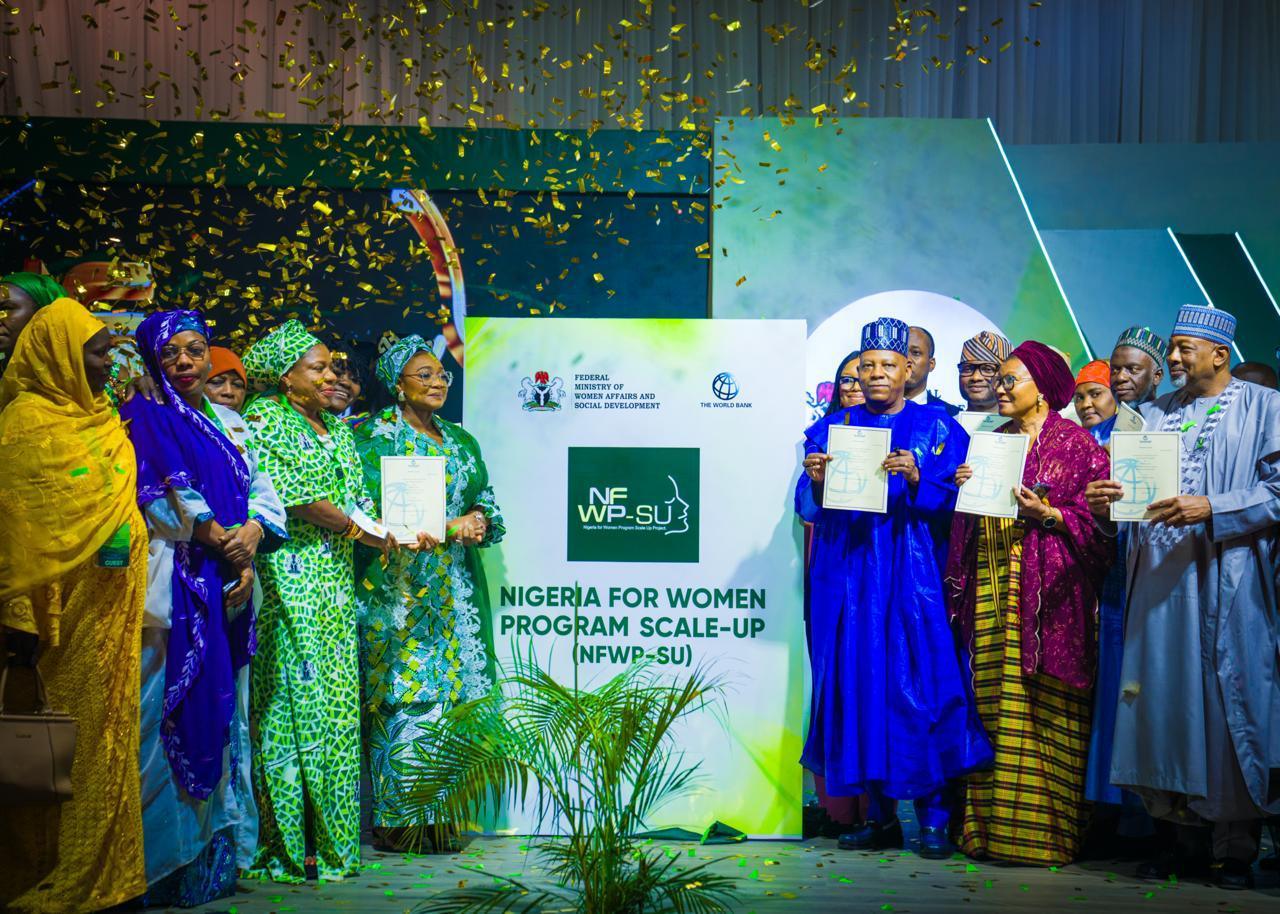
    The launch of the Nigeria for Women Scale-Up Programme has sent an unmistakable message from Nigeria to the world: women are no longer at the margins of development; they are now at the very centre of the nation’s economic architecture.

    President Bola Ahmed Tinubu validated this at the Presidential launch of the Nigeria for Women Programme Scale-Up (NFWP-SU), asserting that women driving development is a strategic economic imperative and not a social gesture.

    “Today marks a decisive moment in our National development journey and a clear affirmation of this administration’s priorities. With this launch of the Nigeria for Women Programme Scale-Up, we are reinforcing our deliberate choice to place women’s economic empowerment, child protection, family strengthening, and social development at the very centre of Nigeria’s growth strategy” the President declared.

    From Evidence to Expansion

    President Tinubu emphasised that the programme’s expansion is rooted in measurable impact.

    “In just six states under phase one, over one million beneficiaries were reached. This confirms an important principle of this administration: we act on evidence, not assumptions. What works will be strengthened, expanded, and institutionalised.”

    He was unequivocal about women’s place as engine rooms and bulwarks of reengineering Nigeria’s economic future.

    “Nigeria cannot achieve sustainable growth if half of its population remains structurally constrained. Women are not peripheral to National Development. They are central drivers of productivity, custodians of family stability, and indispensable partners in our ambition to build a resilient, competitive, and prosperous nation.”

    With Nigeria’s ambition to build a one-trillion-dollar economy, the President reaffirmed women’s participation as non-negotiable.

    “Unlocking their full potential is therefore not optional; it is essential for national growth, diversification, and resilience.”

    The 540-million-dollar Scale-Up Phase represents one of the largest investments in the agency of women on the continent. It is co-financed by the World Bank and the Federal and State Governments and designed to directly reach at least five million women across Nigeria’s States and the Federal Capital Territory- Abuja.
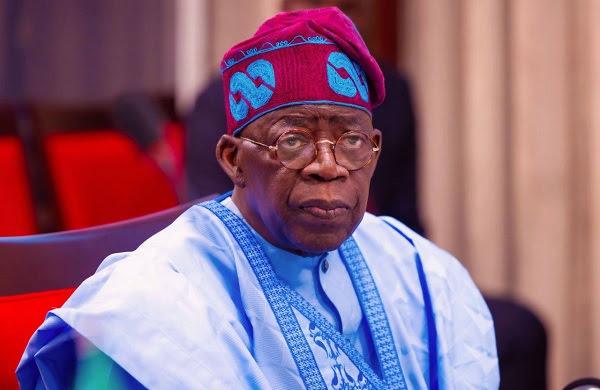
    President Bola Ahmed Tinubu

    President Tinubu has raised the bar; setting an even broader target to engender his administration’s Renewed Hope inclusion vision:

    “We will continue to invest in women-led enterprises. We will expand access to clean cooking and household energy. We will strengthen social protection systems. We will scale digital inclusion. And we will build platforms that convert potential into productivity, dignity into income, and inclusion into national stability” he pronounced.

    With this, the President formally declared 2026 as the Year of Social Development and Families, directing coordinated action across all arms and levels of government.

    Governance with a Human and Women’s Face

    The Minister of Women Affairs and Social Development, Hajia Iman Sulaiman-Ibrahim, described the scale-up launch as historic.

    “It confirms, unmistakably, that the Renewed Hope Agenda has given governance both a human face and a women’s face, and that it is now embedded in national systems, and not just promises.”

    She provided some facts and figures from Phase One’s documented success stories:

    “In just the 6 states in which Phase 1 was implemented, 26,577 Women Affinity Groups were formed with over 560,000 members… they collectively saved over ₦4.9 billion of their own money and have inter-loaned significantly to expand their businesses, cover health costs, and pay school fees.”

    Minister of Women Affairs and Social Development, Hajiya Iman Suleiman-Ibrahim
    Minister of Women Affairs and Social Development, Hajiya Iman Sulaiman-Ibrahim

    She highlighted an unexpected Renewed Hope democratic dividend in Niger State.

    “Many women, for the first time in their lives, obtained formal identification in order to participate… These newly registered women did not stop at programme participation; they became politically visible. In one local government area, women beneficiaries organized and voted collectively, and influenced the outcome of a local election… this is what happens when social policy meets civic identity. Empowerment becomes democratic strength” she disclosed.

    The Minister of Agriculture and Food Security, Senator Abubakar Kyari noted that it aligns with President Tinubu’s eight-point Renewed Hope Agenda and pledged the cooperation of the Ministerial steering committee.

    Commending the Minister of Women Affairs and Social Development for the impacts of the Nigeria for Women Scale-Up Programme, especially in the Agriculture sector, Senator Kyari said:

    “When the nation is secure with food, everybody rises and of course, women are the ones that are driving both the production and processing.”

    Subnationals Align Behind the Programme

    The Nigeria Governors’ Forum through the Katsina State Deputy Governor Alhaji Faruk Lawal Jobe, pledged full support for success of programme:

    “As Governors, we see this programme not as a social outlook, but as an economic strategy, one that recognises women as producers, entrepreneurs, and stabilisers of our local economy.”

    Citing impacts in Katsina State, Jobe detailed the state’s financial commitment:

    “We started with only three local governments… we made our counterpart funding of 500 million available… so far, we made an additional 4 billion Naira available last year, and we made an additional contribution of 4 billion in this year’s budget.”

    The National Assembly has also aligned itself with the initiative. Speaking through the Chairman, Senate Committee on Women Affairs, Senator Ireti Kingibe, Senate President Godswill Akpabio said:

    “It aligns strongly with the legislative priorities of the National Assembly and reinforces our commitment to inclusive growth, gender-responsive governance and sustainable national development.”

    He further assured stakeholders of legislative backing to entrench policy reforms:

    “I assure all partners and stakeholders of the continued support of the National Assembly in readying the legal and institutional framework that expands opportunities for women and protects their contributions to national progress.”

    World Bank: Power in the Collective

    World Bank Senior Social Development Specialist and Task Team Leader, Mr. Michael Ilesanmi, described the programme as transformative.

    “This programme aims to reach 5 million women and their households with access to finance and access to markets and ultimately it’s to improve livelihoods of these women.”

    While reflecting on lessons from Phase One, he noted:

    “One of the biggest lessons from the first phase is that there’s power in collective… nearly 600,000 women were supported… these women became driving force of economic change in their respective communities.”

    He added that layering interventions such as health insurance had reshaped household dynamics.

    “It’s helped them to create the space for joint household decision-making and this has transformed lives.”

    Read Also: President Tinubu Launches $540M Women Empowerment Programme, Targets 25M Nigerians

    Nigeria Centres Women in National Development Strategy

    Uche Amawu of the Gates Foundation further situated the importance of the scale-up poignantly.

    “Women represent about half of Nigeria’s population and a majority of the informal workforce in Nigeria. They drive food systems, microenterprise, caregiving, and community stability.”

    Amawu emphasised that expanding women’s access to finance, markets, skills, and digital tools through the Nigeria for Women programme scale-up is not only the right thing to do, but one of the smartest economic investments Nigeria can make today.

    “Because every time a woman increases her household income, that means the mother and father are likely to seek better health care, it means a child gets routine immunisation, it means a family eats better, a child stays at school, and the community at large.”

    Across the States: Stories of Transformation

    Documented reports of the success of Phase One from the beneficiary States, were backed by exhibited products including shea butter, groundnut cakes, Adire Fabrics, Palm oil, Palm kernel oil, rice and others

    Kebbi State

    Rifkatu Maigida, Livelihood Advisor in Kebbi, credits the scale-up impact as causing a social shift:

    “Initially, before the coming of this program in Kebbi, so many of our people, they don’t even allow their women to go out. Some of them, initially, they were not having National Identity Number, the N-I-N number. Because of this project, so many people have obtained their N-I-N. They have opened their own personal bank accounts. They have businesses that have been strengthened.

    “With these small, small loans they gave themselves, they were able to scale up their businesses. Some of them now are employers of labour. We have some beneficiaries that have up to seven, eight staff working for them.”
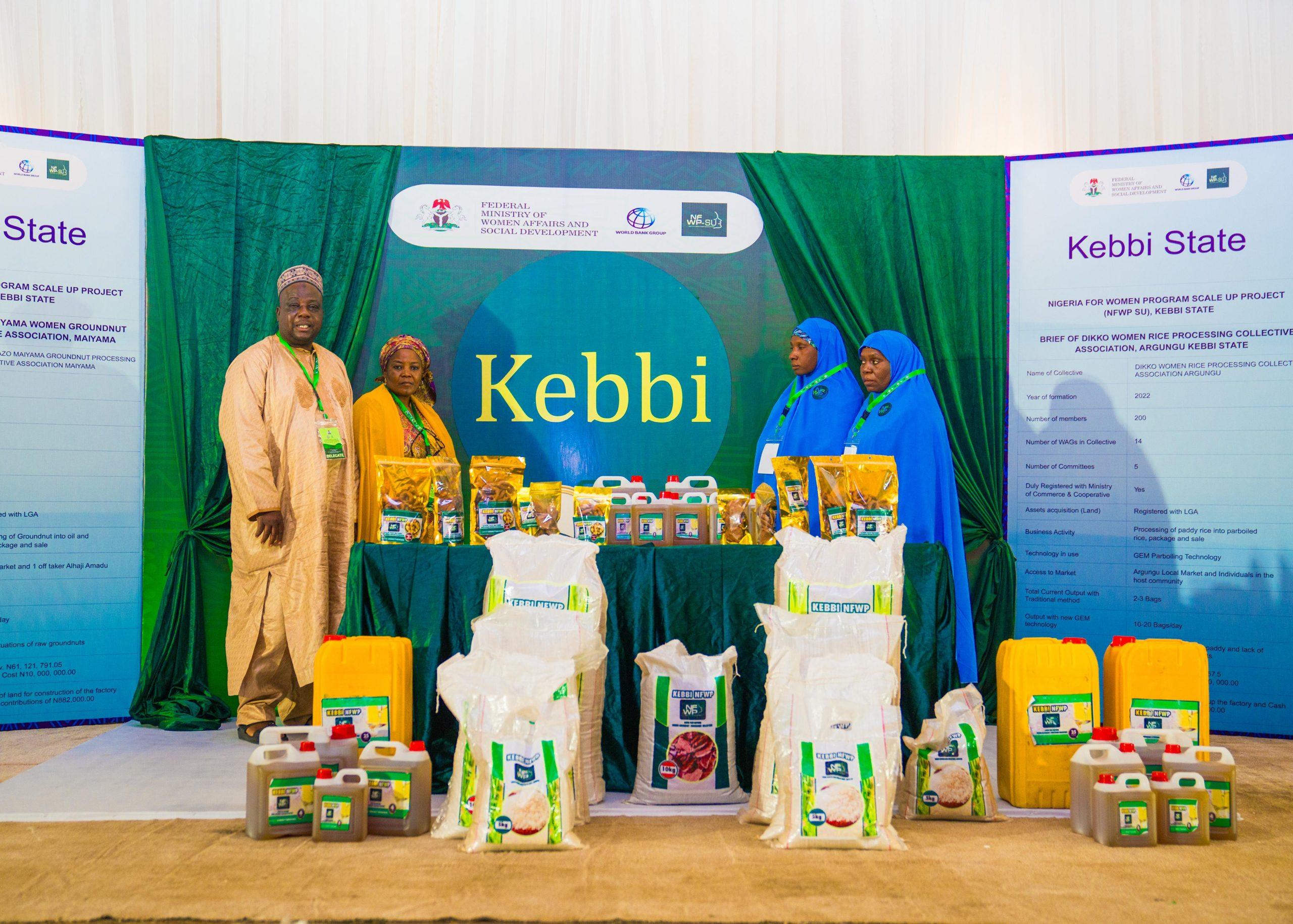
    According to her, Kebbi women are now exporting rice to Niger Republic, Ibadan and Lagos.

    Kebbi has 1,200 Women Affinity Groups under the parent project, with a target of 5,000 under the scale-up. The state showcased rice value chains and groundnut products, including groundnut oil, kulikuli and animal feed cake.

    Ogun State

    State Project Coordinator, Bolanle Fadairo, described the initiative as different from past interventions.

    “When we talk about Nigerian for Women Project, we talk about training… this brings the sustainability of the project.”
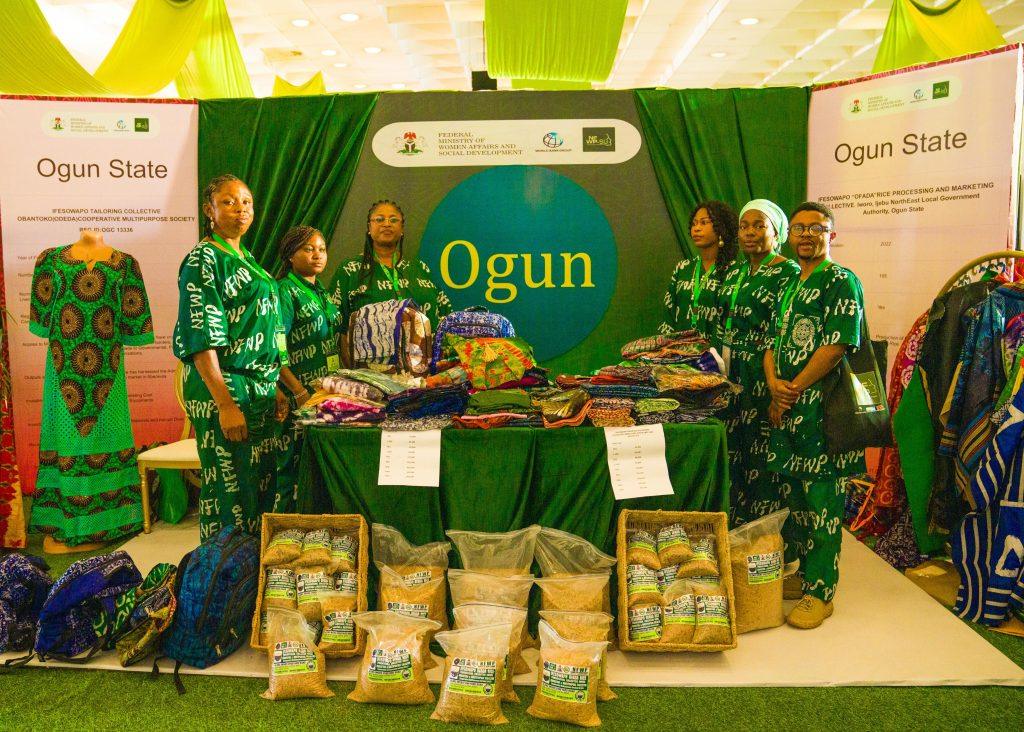
    Ogun surpassed its target of 54,000 women, empowering over 70,000 in four local governments.

    “Women voices were not heard. But with Nigeria for Women Project… these women now contribute meaningfully to the upkeep in the family and at the same time, to the community decision making.”

    From Ofada rice processing in Ijebu North East to Adire collectives producing for Dye Lab in the U.S., she said:

    “It’s a platform, already established platform.”

    Akwa Ibom State

    The State Coordinator for Akwa Ibom, Ofonime Iniobong Etuknwa said

    “We had 3,939 women groups… and 73,000 women registered on the program passing the benchmark of the 54,000 women.
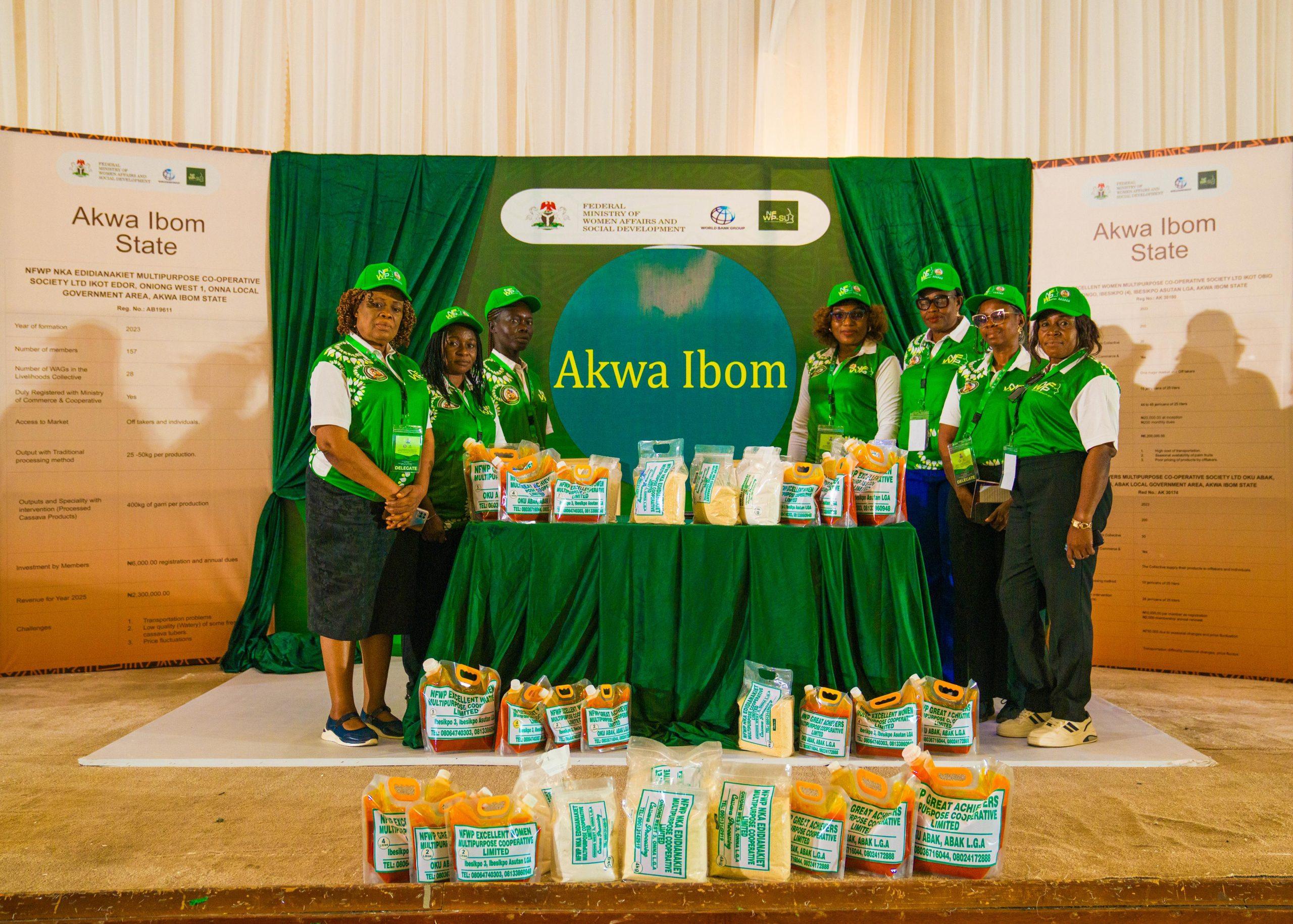
    “With palm oil and cassava processing collectives, the state is eyeing export markets.

    “We’re excited and looking forward to making our women more economically engaged… and then because I agree we will ensure financial inclusion.”

    Niger State

    The Coordinator for Niger State, Sarki Bello said;

    “In the pilot phase we had a total of 75,545 women… each of these women benefited from a 60,000 non-refundable grants.”
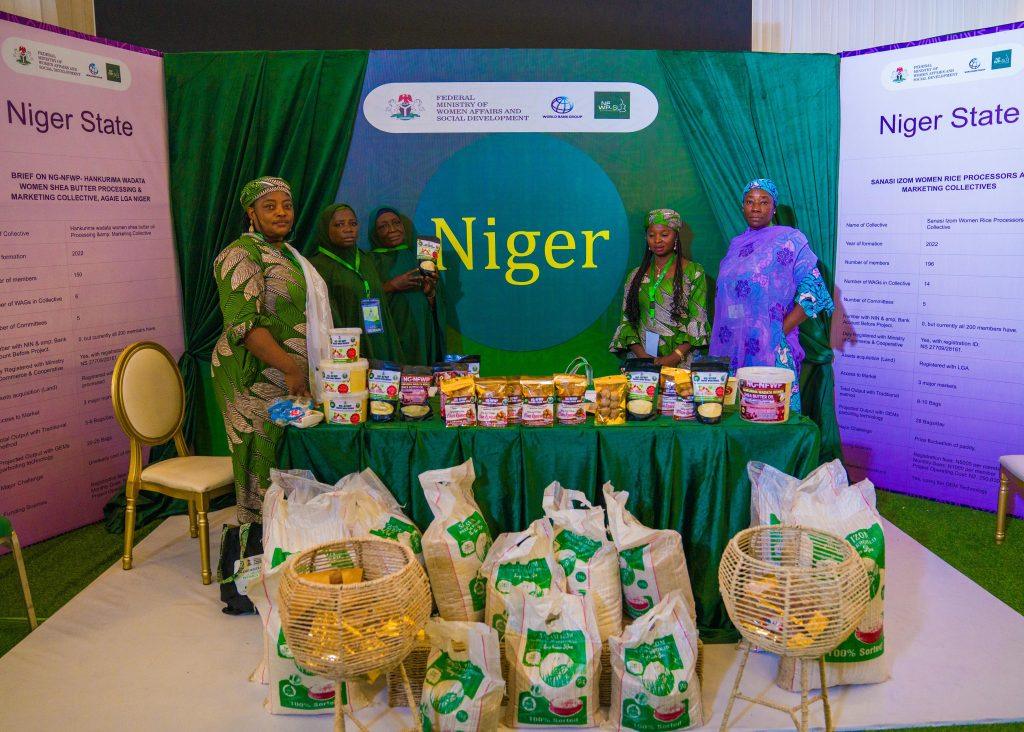
    Shea butter from Agai, rice from Gurara, and groundnut snacks such as ‘dankuwa’ reflect expanding business enterprises.

    “We intend to double this as we go to scale-up.”

    Taraba State

    In Taraba, Bether Kwatishe said the project brought knowledge and savings culture.

    “The Nigeria for Women project impacted women in Taraba State by bringing us the knowledge of understanding how we are going to save and enhance our livelihoods.”
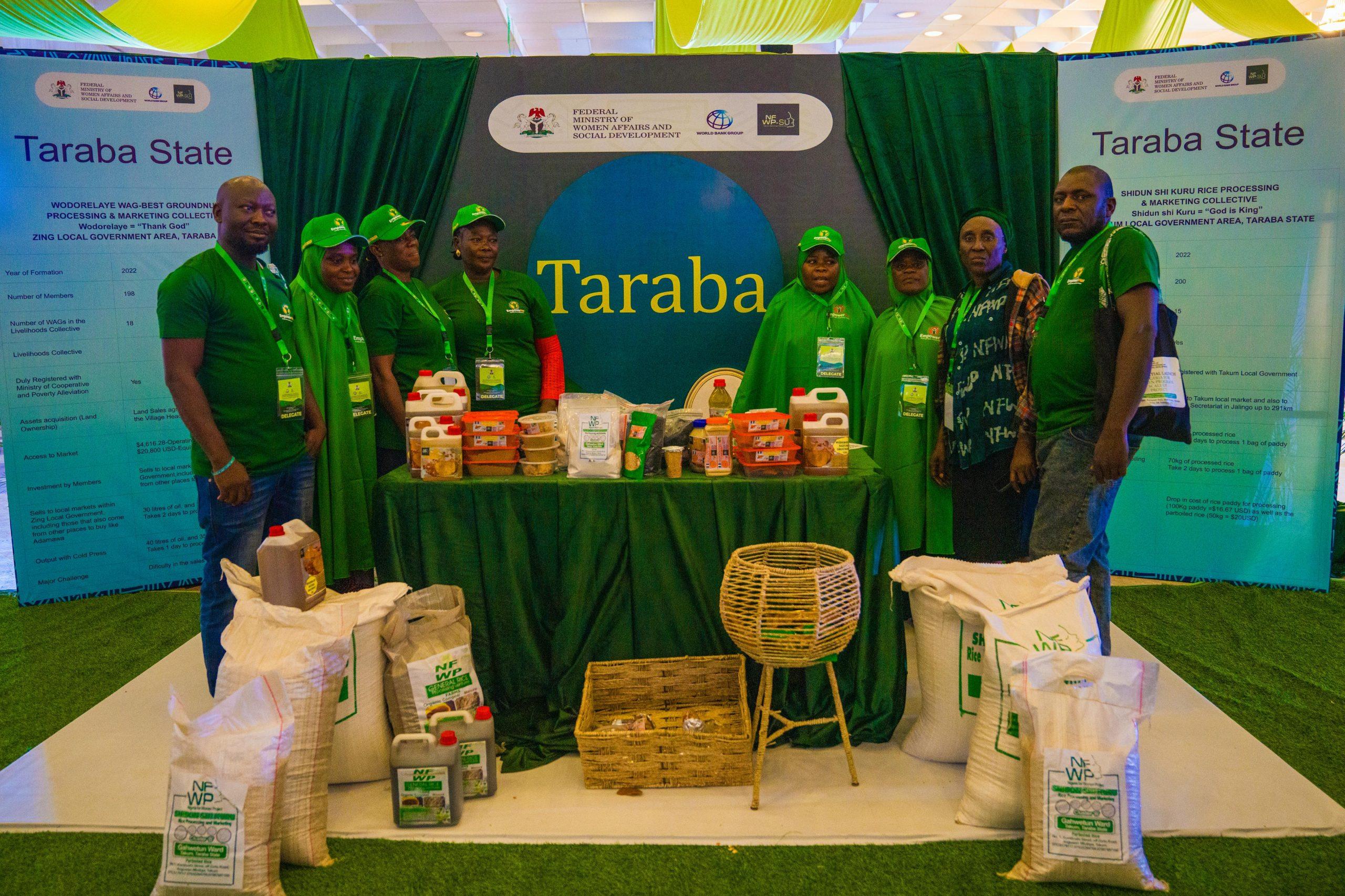
    Thirteen collectives produce rice, palm oil and a range of groundnut products.

    Kwatishe envisions more up-scaling.

    “I want them to come up with upscaling in yam, cassava, fabrics and tailoring in Taraba State.”

    Abia State

    In Abia, Chinenye Amos Uhegbu, shared the state’s performance:

    “We formed 3,657 WAGs… and we have 60 collectives standing in Abia.”

    With 38 cassava and 22 palm oil processing sites, she called the pilot phase “really a success story.”
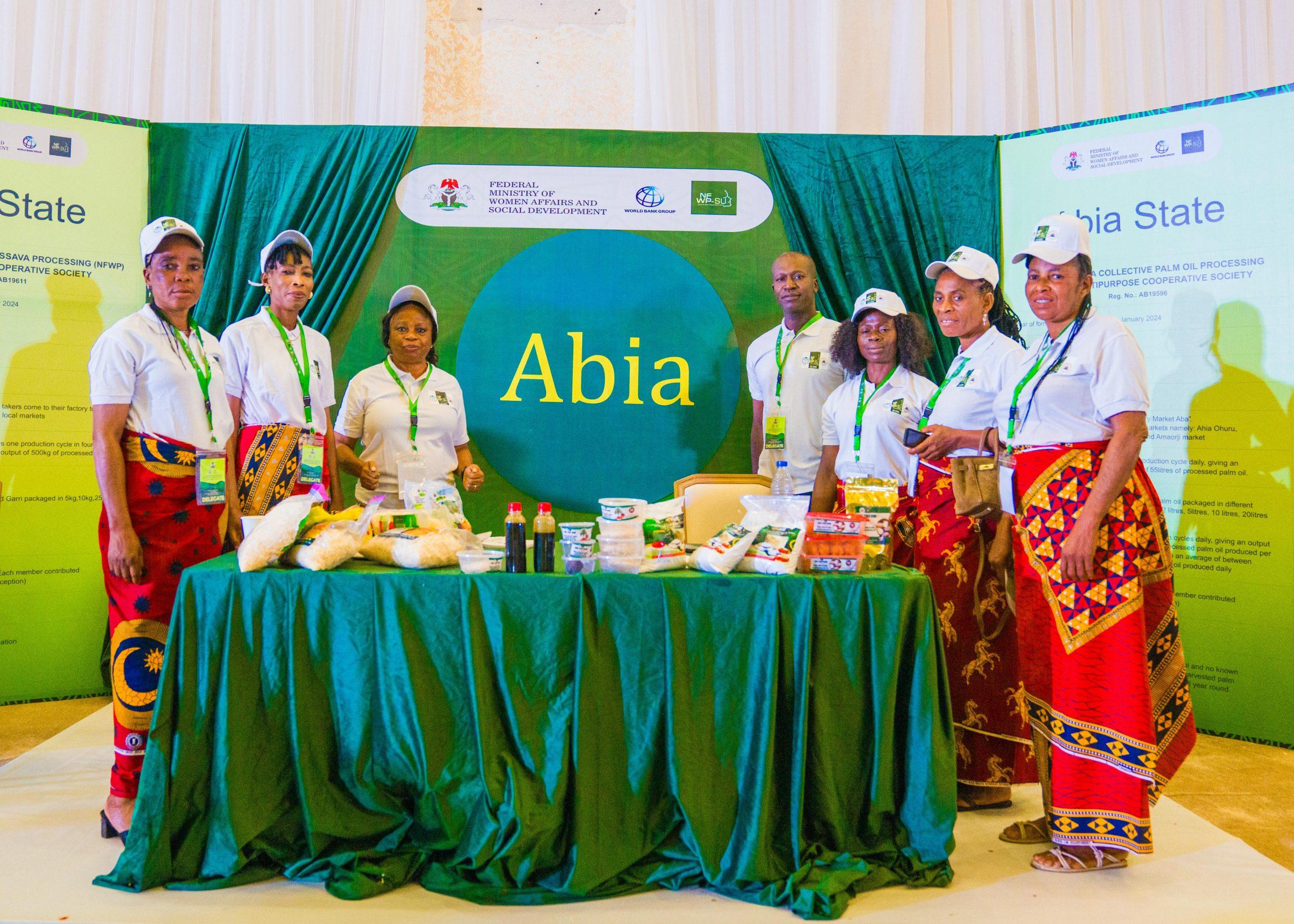
    Abia State embodies another success story of how the economies have improved from little to much.

    “Some of them have grown to become employers of labour from the little they had. And they got the individual livelihood grants of 60,000, borrowed from their WAGs, and financed their trade. And now most of them have grown so much that the stories abound everywhere.”

    She acknowledged early skepticism:

    “The initial problem or challenge of unbelief was surpassed when they saw that it was free.”

    She however appealed for increase in the number of benefitting Local Government Areas.

    “Other local governments are saying why are you doing it with three local governments per time? Why can’t you come at once? So everybody will benefit at the same time. If that can be done, it will be fine.”

    Looking Ahead

    From Kebbi’s rice exporters to Ogun’s Adire producers, from Akwa Ibom’s palm oil hubs to Abia’s cassava processors, from Niger’s shea butter collectives to Taraba’s groundnut enterprises, the Nigeria for Women Scale-Up Programme has moved beyond policy rhetorics into measurable economic and social transformation.

    President Tinubu summed up the vision:

    “To the women of Nigeria: this government sees you, values your contribution, and is investing in your success; not as charity, but as a deliberate national strategy for growth, stability, and prosperity.”

    With federal leadership, State ownership, legislative backing, strengthened legal frameworks, and World Bank partnership aligned, the Nigeria for Women Scale-Up Programme stands today, not merely as a social intervention but as a strategic investment in the critical bloc of Nigeria’s future.


    Source: VON – https://von.gov.ng/nigeria-for-women-scale-up-moving-national-development-from-margins-to-mainstream/
  • Empowering Africa’s Future: Youths Urged to Redefine Leadership

    Empowering Africa’s Future: Youths Urged to Redefine Leadership

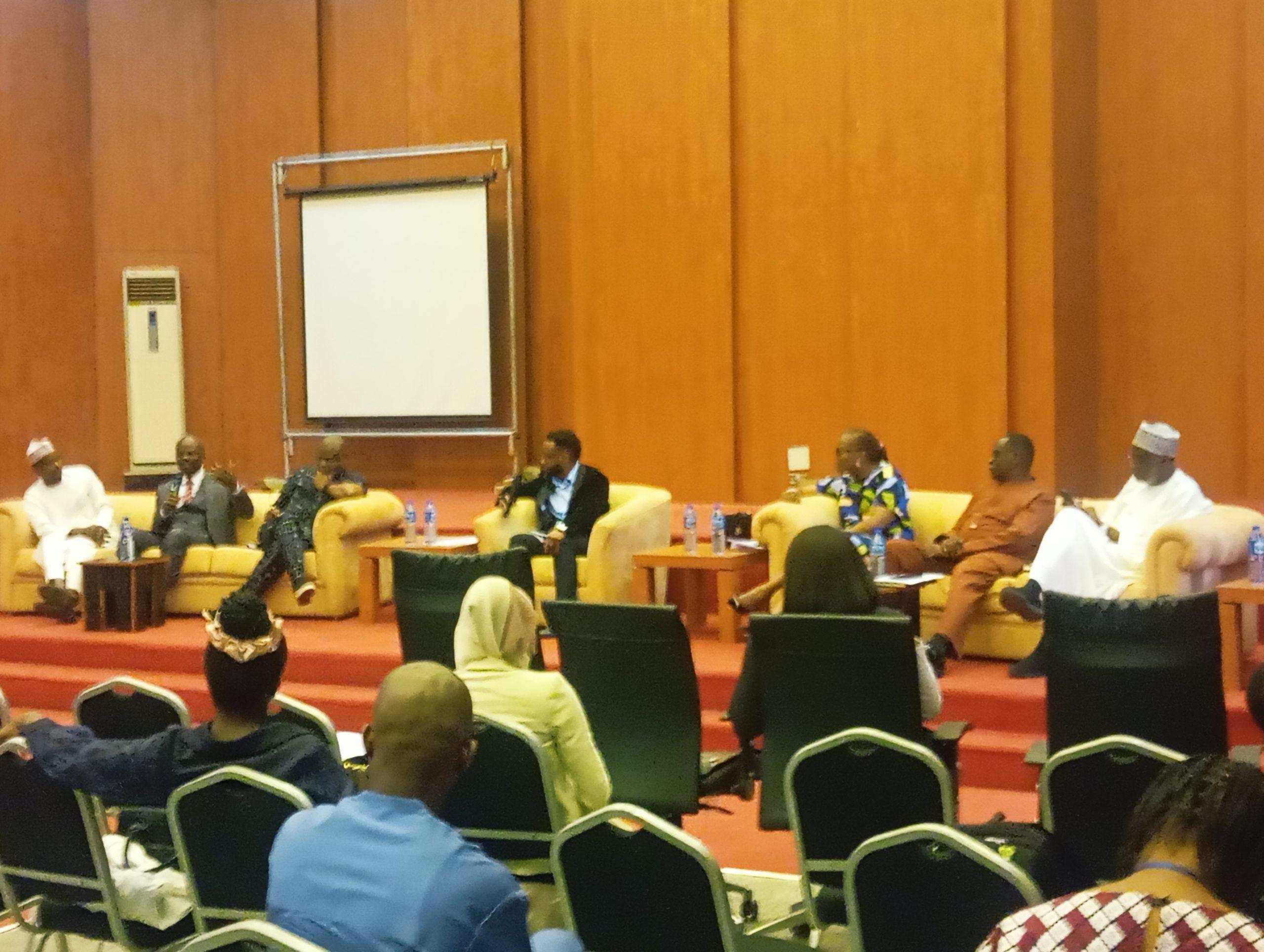
    African youths have been urged to take a centre role in shaping peace, strengthening governance, and redefining leadership amid global uncertainty. 

    The Director of Centre for African Conflict and Development, Dr Michael Nwankpa emphasised the importance of youth involvement in creating sustainable solutions, promoting social justice, and advocating for resilience in communities.

    Speaking at the National Youth Dialogue hosted by the Centre for African Conflict and Development, Dr Nwankpa said the dialogue was born out of a keen observation of an African spirit and desire to provide a much-needed intellectual space for youths in Africa to participate especially in governance and leadership.

    “The dialogue today encompasses three interconnected themes, peace and security, interethnic relations and government,” he said.

    Also speaking, the Executive Director of the Neem Foundation, Dr. Fatima Akilu said the world is confronting deep fractures in trust between citizens and institutions, fuelled by misinformation, economic hardship, and political polarisation.

    According to her, the future of peace in the country “will be determined by the values, decisions, and leadership of young people,” rather than institutions alone.

    Fatima challenged narratives that portray youth primarily as vulnerable to manipulation or violence, insisting that such vulnerabilities do not define young people.

    She concluded by affirming that reconciliation and recovery are possible, but only when young people choose unity over division and actively build a shared future.

    Dr Fatima Akilu was represented by Mrs Belsuk Tapgun- Alimikhena.

    The director of the Institute for Peace and Conflict Resolution represented by the Deputy Director, office of the DG, Mr, Chukwuemeka Mba said that by actively participating in dialogues and decision-making processes, young people can drive innovation and foster inclusivity, ultimately contributing to a more stable and prosperous nation.

    “The future of Nigeria’s peace architecture will be shaped not solely in government offices but in communities, campuses, innovative hubs, faith institutions  and civic platforms where young Nigerians are actively designing leadership,” he added.


    Source: VON – https://von.gov.ng/empowering-africas-future-youths-urged-to-redefine-leadership/

  • WFP Seeks Urgent Funding to Sustain Food Support in Somalia

    WFP Seeks Urgent Funding to Sustain Food Support in Somalia

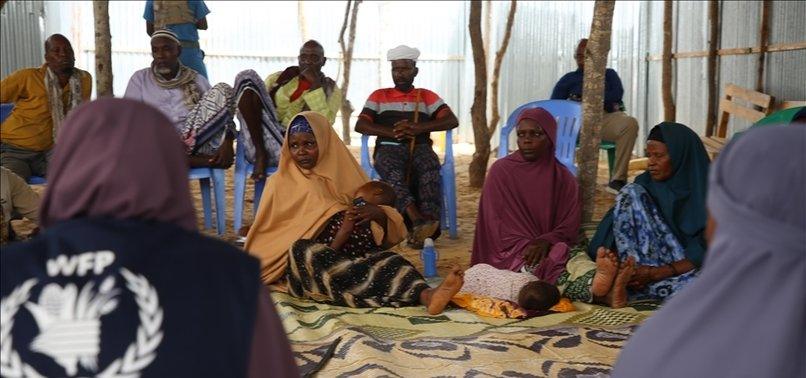
    The U.N. World Food Programme says its life-saving food and nutrition assistance in Somalia could grind to a halt by April unless new funding is secured, putting millions of people at risk of worsening hunger.

    An estimated 4.4 million people face crisis-level food insecurity, with nearly one million of them experiencing severe hunger, due to the impact of failed rainy seasons, conflict and declining humanitarian funding, the WFP said.

    “The situation is deteriorating at an alarming rate,” the WFP Director of Emergency Preparedness and Response, Ross Smith, said in a statement.

    “Families have lost everything, and many are already being pushed to the brink. Without immediate emergency food support, conditions will worsen quickly,” Smith said.

    Somalia declared a national drought emergency in November after recurrent seasons of poor rainfall, and other countries in the region have also been hit.

    The WFP, the largest humanitarian agency in Somalia, said it has already scaled back assistance from 2.2 million people earlier this year to just over 600,000 due to funding shortages.

    Nutrition programmes for pregnant and breastfeeding women and young children have also been sharply reduced.

    The agency said it faces a critical moment similar to a crisis in 2022, when famine was narrowly averted following large-scale international support.

    It is seeking $95 million to sustain operations between March and August. “If our already reduced assistance ends, the humanitarian, security, and economic consequences will be devastating, with the effects felt far beyond Somalia’s borders,” Smith said.


    Reuters/Hauwa M.


    Source: VON – https://von.gov.ng/wfp-seeks-urgent-funding-to-sustain-food-support-in-somalia/

  • Afghanistan vows ‘appropriate, measured response’ to Pakistani strikes

    Afghanistan vows ‘appropriate, measured response’ to Pakistani strikes

    The Defense Ministry of Afghanistan said on Sunday it would meet the reported Pakistani strikes on its soil with an “appropriate and measured response” at a “suitable time.”

    The ministry condemned the attacks “in the strongest possible terms” on U.S. social media company X, describing them as a clear violation of national sovereignty, international law, principles of good neighborliness and Islamic values.

    It said targeting civilian and religious centers demonstrates the Pakistani military’s intelligence and security shortcomings, and “such repeated acts of aggression will never be able to conceal their internal shortcomings.

    Pakistani forces reportedly carried out airstrikes in several areas of eastern and southeastern Afghanistan, according to Afghan media and the Pakistani Ministry of Information.

    “Pakistan in a retributive response, has carried out intelligence based selective targeting of seven Terrorist camps and hideouts belonging to Pakistani Taliban of Fitna al Khwarij (FAK) and its affiliates and Islamic State of Khorsan Province (ISKP) at the border region,” the Ministry of Information and Broadcasting wrote on X early Sunday.

    The strikes came in the aftermath of recent suicide bombings in Pakistan, it said.

    “Pakistan expects and reiterates the Interim Afghan Government to fulfil its obligations and deny use of its soil by Khwarij and terrorists against Pakistan as the safety and security of people of Pakistan comes first and foremost,” it added.

    Pakistan vowed to avenge the killing of two security personnel Saturday in Khyber Pakhtunkhwa, warning that it would not allow any attack launched from Afghanistan to go unanswered.(NAN/AA)(www.nannews.ng)
    Edited by Mark Longyen


    Source: NAN – https://nannews.ng/2026/02/22/afghanistan-vows-appropriate-measured-response-to-pakistani-strikes/

  • U.S., S/Korea postpone announcing date for major springtime military drills

    U.S., S/Korea postpone announcing date for major springtime military drills

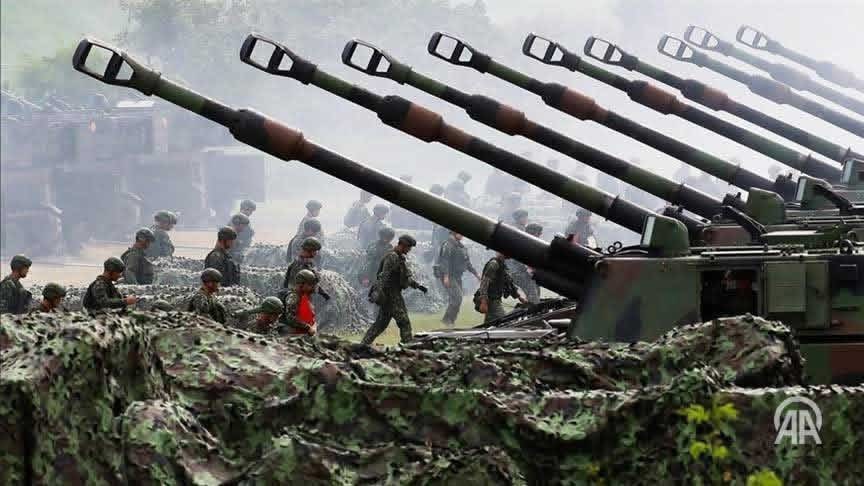
    The U.S. and South Korean militaries have decided to postpone announcing a date for their major springtime exercise for this year due to differences over the scale of on-field drills, the Seoul-based Yonhap News reported on Sunday.

    The two militaries had planned to make the announcement in a joint press briefing on Wednesday, but it was postponed after the U.S. military expressed reluctance over Seoul’s proposal to minimise field training during the Freedom Shield exercise, the news agency reported, citing security sources.

    The Freedom Shield drill takes place every spring under an all-out war scenario as the allies seek to enhance readiness against North Korea’s “advancing nuclear and weapons programmes.”

    President Lee Jae Myung’s administration has sought to scale back the allies’ on-field drills in an apparent reconciliatory gesture to Pyongyang, which has long denounced them as preparations for an invasion against it.

    The announcement was postponed due to coordination issues over on-field exercises as Seoul seeks to minimise on-field training.

    The U.S. military, however, has reportedly expressed disapproval of South Korea’s proposal, as additional troops and equipment have already arrived in the country to take part in the drills.

    The two sides plan to coordinate further and announce the exercise later this month or in early March.

    According to Seoul’s Defence Ministry, the Freedom Shield exercise, planned for March, “will take place normally.”(NAN/AA)(www.nannews.ng)
    Edited by Mark Longyen


    Source: NAN – https://nannews.ng/2026/02/22/u-s-s-korea-postpone-announcing-date-for-major-springtime-military-drills/

  • US Supreme Court Voids Trump’s Global Tariffs

    US Supreme Court Voids Trump’s Global Tariffs

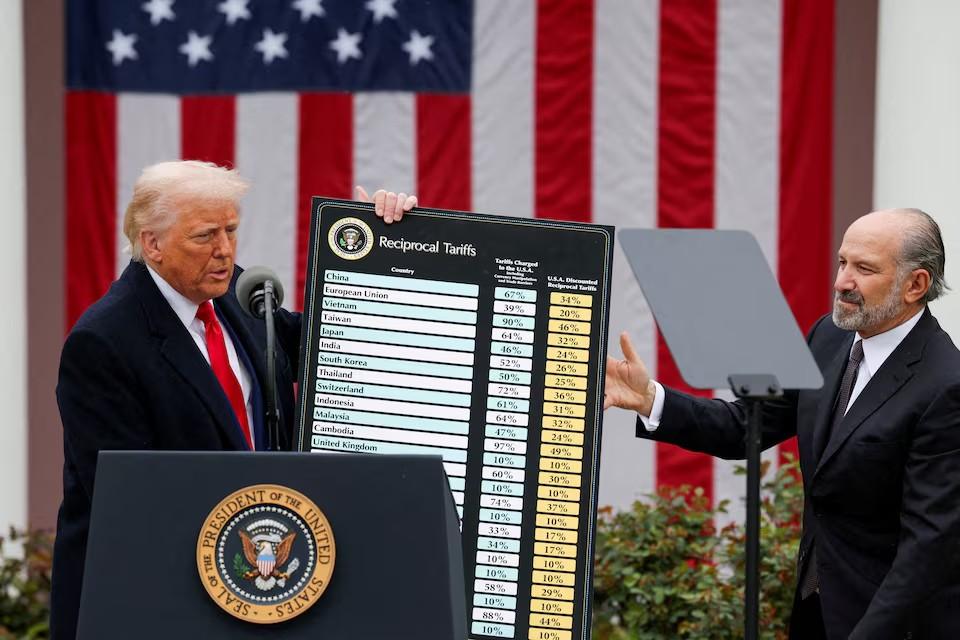
    The U.S. Supreme Court has struck down Donald Trump’s sweeping tariffs that he pursued under a law meant for use in national emergencies, handing a stinging defeat to the Republican president in a landmark opinion on Friday with major implications for the global economy.

    The justices, in a 6-3 ruling authored by conservative Chief Justice John Roberts, upheld a lower court’s decision that Trump’s use of 1977 law exceeded his authority. The justices ruled that the law at issue the International Emergency Economic Powers Act, or IEEPA did not grant Trump the power he claimed to impose tariffs.

    “Our task today is to decide only whether the power to “regulate … importation,” as granted to the president in IEEPA, embraces the power to impose tariffs. It does not,” Roberts wrote in the ruling, quoting the statute’s text that Trump claimed had justified his sweeping tariffs.

    The White House had no immediate comment on the ruling. Democrats and various industry groups hailed the ruling.

    READ ALSO:Trump Threatens Tariffs on Countries Resisting U.S. Control of Greenland

    Part of the Supreme Court’s majority also declared that such an interpretation would intrude on the powers of Congress and violate a legal principle called the major questions doctrine.

    The doctrine, embraced by the conservative justices, requires actions by the government’s executive branch of vast economic and political significance to be clearly authorized by Congress. The court used the doctrine to stymie some of Democratic former President Joe Biden’s key executive actions.

    Roberts, citing a prior Supreme Court ruling, wrote that the president must point to clear congressional authorization’ to justify his extraordinary assertion of the power to impose tariffs.

    Roberts wrote that if Congress had intended IEEPA to bestow on the president “the distinct and extraordinary power to impose tariffs, it would have it would have done so expressly as it consistently has in other tariff statutes.”

    Trump has leveraged tariffs – taxes on imported goods as a key economic and foreign policy tool. They have been central to a global trade war that Trump initiated after he began his second term as president, one that has alienated trading partners, affected financial markets and caused global economic uncertainty.

    The Supreme Court reached its conclusion in a legal challenge by businesses affected by the tariffs and 12 U.S. states, most of them Democratic-governed, against Trump’s unprecedented use of this law to unilaterally impose the import taxes.

    The three dissenting justices were conservatives Clarence Thomas, Samuel Alito and Brett Kavanaugh. Joining Roberts in the majority were conservative Justices Neil Gorsuch and Amy Coney Barrett, both of whom Trump appointed during his first term in office, along with the three liberal justices, Sonia Sotomayor, Elena Kagan and Ketanji Brown Jackson.

    The liberal justices did not join the part of the opinion invoking the major questions doctrine.

    The Supreme Court, which has a 6-3 conservative majority, previously had backed Trump in a series of other decisions issued on an emergency basis since he returned to the presidency in January 2025 after his policies were impeded by lower courts.

    Trump’s tariffs were forecast to generate over the next decade trillions of dollars in revenue for the United States, which possesses the world’s largest economy.

    Trump’s administration has not provided tariffs collection data since December 14. But Penn-Wharton Budget Model economists estimated on Friday that the amount collected in Trump’s tariffs based on IEEPA stood at more than $175 billion. And that amount likely would need to be refunded with a Supreme Court.


    REUTERS


    Source: VON – https://von.gov.ng/us-supreme-court-voids-trumps-global-tariffs/

  • India Delays US Trade Talks After Court Blocks Trump Tariffs 

    India Delays US Trade Talks After Court Blocks Trump Tariffs 

    India has delayed plans to send a trade delegation to Washington this week, majorly because of uncertainty after the U.S. Supreme Court struck down tariffs imposed by President Donald Trump, a source in its trade ministry revealed on Sunday.

    This is one of the first concrete reactions among Asian nations to the decision. It follows Trump’s move on Saturday to levy a temporary tariff of 15%, the maximum allowed by law, on U.S. imports from all countries, following the court’s rejection.

    “The decision to defer the visit was taken after discussions between officials of the two countries,” said the source, who sought anonymity.

    “No new date for the visit has been decided.”

    READ ALSO: US Supreme Court Voids Trump’s Global Tariffs

    The delay came mainly from the uncertainty over tariffs following Friday’s judgment, the source added.

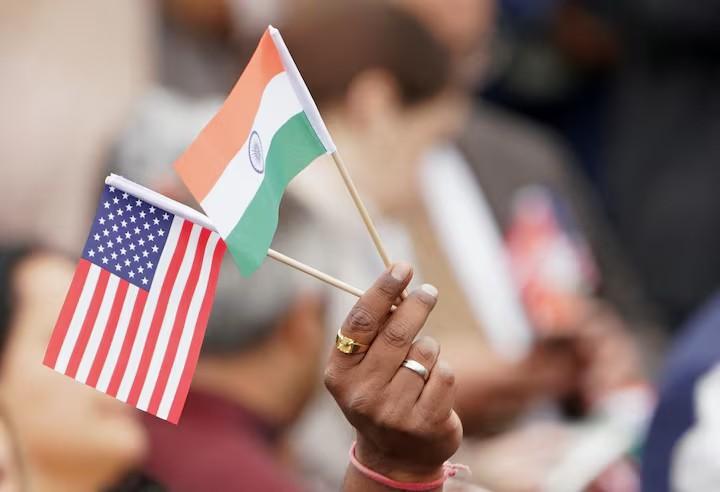
    The delegation had been set to leave on Sunday for talks to finalise an interim trade deal, after both countries agreed on a framework for Washington to cut punitive tariffs of 25% on some Indian exports linked to New Delhi’s Russian oil purchases.

    U.S. tariffs on Indian goods were set to be cut to 18%, while India agreed to buy U.S. items worth $500 billion over five years, ranging from energy supplies to aircraft and parts, precious metals and technology products.

    India’s opposition Congress party had called for the interim pact to be put on hold, urging a renegotiation and questioning Prime Minister Narendra Modi’s decision to issue a joint statement before the court’s ruling.

    On Saturday, the Indian trade ministry said it was studying the implications of the judgment and later U.S. announcements.

    Trade Minister Piyush Goyal said the interim pact could take effect in April, after outstanding issues were resolved during the delegation’s visit to Washington.


    REUTERS


    Source: VON – https://von.gov.ng/india-delays-us-trade-talks-after-court-blocks-trump-tariffs/

  • Lagos extends Sanwo-Olu Officers Care to 1,000 NDLEA personnel

    Lagos extends Sanwo-Olu Officers Care to 1,000 NDLEA personnel


    By Chiazo Ogbolu

    The Lagos State Government has extended the Sanwo-Olu Officers Care initiative to 1, 000 personnel of the National Drug Law Enforcement Agency ( NDLEA).

    The Senior Special Assistant to the state Gov. Babajide Sanwo-Olu on Transportation and Logistics, Mr Hassan Adekoya, who initiated  the programme, gave the figure on Thursday in Lagos.

    He spoke at a free eye screening and giving of free eyeglasses to the personnel through the initiative.

    According to Adekoya, extending the care to NDLEA is in recognition of the agency’s strategic collaboration with Lagos State Government during the state’s recently-concluded Drivers’ Care Programme.

    “Professional drivers across the state, up to 10,000 of them, benefitted from free eye screening and drug sensitisation,” he said.

    He said that the collaboration was important because it would no longer be tolerated for any individual on social contract in Lagos state to drive under alcohol influence.

    “Mr governor approved this sensitisation and fitness programme for NDLEA because the state will be embarking on an enforcement any moment from now.

    “This is a clear call to all transporters in the state not to allow any of their drivers to be on any substance while driving.  If caught, they will be dealt with,” he said.

    The Commander, Lagos State Strategic Command, NDLEA, Mr Abubakar Wali, expressed delight at the gesture.

    Wali said that NDLEA had collaborated with the state government in the area of drug testing for drivers.

    “The drug testing for drivers happened last week, and today we are here having eye test, prescriptions and giving of glasses for NDLEA officers.

    “We really appreciate the efforts of the governor in this regard,” he said.

    He noted  that health issues would affect one’s productivity.

    “Lagos State Government has always been a pacesetter. It should keep it up, and we urge others to key in,” he said.

    Mrs Rita Ajoko, a beneficiary of the initiative and  Area Commander, NDLEA Seme Special Area Command, said that a pair of eyeglasses she received would enable her to work more effectively.

    “When we came here, what I saw baffled me. Everything went well. My eye screening was swift, and  they gave me  glasses.

    “I can see very well with the glasses unlike when  I struggled with my old glasses,” she said.

    She thanked Sanwo-Olu, NDLEA Chairman,  Brig. Gen. Buba Marwa, Lagos State Strategic Commander of NDLEA, and others who ensured that the NDLEA personnel benefitted from the initiative.

    The News Agency of Nigeria (NAN) reports that the Sanwo-Olu Officers Care Initiative involves free eye tests and giving of corrective eyeglasses and health checks. (NAN)(www.nannews.ng)


    Edited by Ijeoma Popoola


    Source: NAN – https://nannews.ng/2026/02/20/lagos-extends-sanwo-olu-officers-care-to-1000-ndlea-personnel/

  • Adamawa traditional rulers move to curb open defecation

    Adamawa traditional rulers move to curb open defecation

    By Talatu Maiwada

    Traditional leaders in Ganye Local Government Area of Adamawa have pledged to sanction residents engaging in open defecation to improve sanitation and healthcare outcomes.

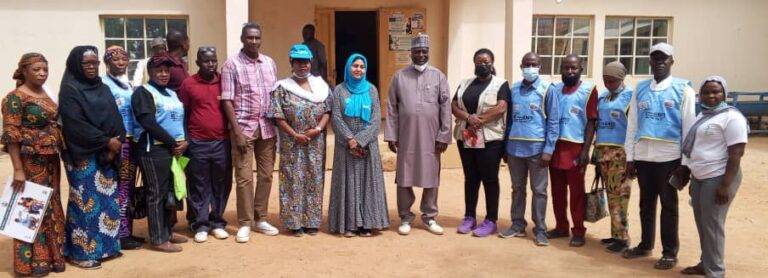
    The District Head of Gurumpawo, Alhaji Hammantukur Gisilanbe, gave the assurance in an interview with newsmen during a field visit on access to safe water under the Accelerated Sanitation and Water for All (ASWA III) project in Ganye.

    The News Agency of Nigeria (NAN) reports that the project is funded by the Government of the Netherlands and implemented by the United Nations Children’s Fund (UNICEF) through Water, Sanitation and Hygiene (WASH) units.

    Hammantukur said the intervention had helped residents to appreciate the importance of household latrines in curbing open defecation.

    “Initially, our people had the culture of defecating outside, polluting the environment which causes diseases to children and households, but with the introduction of latrines, the situation has greatly improved.

    “We are making bylaws on this issue. This is important because our people have stayed long defecating outside, so we are gradually enforcing sanctions against offenders.

    “There are different punishments meted to offenders based on their status, whether civil servants, business owners or residents, while stubborn violators may be reported to the police,” he said.

    He commended the WASH programme, noting that improved access to potable water had reduced disease burden and hospital expenses in the community.

    Similarly, Kabiru Jailani, District Head of Sankom, said the project had improved child wellbeing, health outcomes and school attendance.

    Jailani said most households now had latrines, adding that monitoring teams had been established to ensure compliance.

    He said the community now benefited from a solar-powered borehole, assuring that measures were in place to ensure proper maintenance.

    Jailani added that residents who defecate openly or vandalise water facilities would be reported to relevant authorities and fined.

    Jared Gangkuba, Executive Secretary, Primary Healthcare Authority, Ganye, said government and partners had intensified WASH sensitisation across communities.

    “WASH has been a blessing for us. In the last two years, we applied for ASWA II project which was granted and staff sensitised people in 150 communities.

    “Currently, we are working in an additional 150 communities, bringing the total to 300 benefiting communities, including schools through clubs and societies,” he said.

    Gangkuba added that the local government was gradually becoming open-defecation-free in practice.

    Dr Nuzhat Rafique, Chief of UNICEF Bauchi Field Office, said collaboration with the Adamawa Government had improved sanitation and water supply in benefiting communities.

    Rafique said the interventions would improve the health status of residents, particularly women and children.

    “We are happy to see traditional leaders and other stakeholders working together to achieve this success,” she said.

    Rafique added that the interventions would enhance outcomes within the first 1,000 days of a child’s life, including antenatal care, exclusive breastfeeding, nutrition and immunisation. (NAN)(www.nannews.ng).

    Edited by Funmilayo Adeyemi


    Source: NAN – https://nannews.ng/2026/02/21/adamawa-traditional-rulers-move-to-curb-open-defecation/

  • Nigeria to Establish Armed Forces Medical College

    Nigeria to Establish Armed Forces Medical College

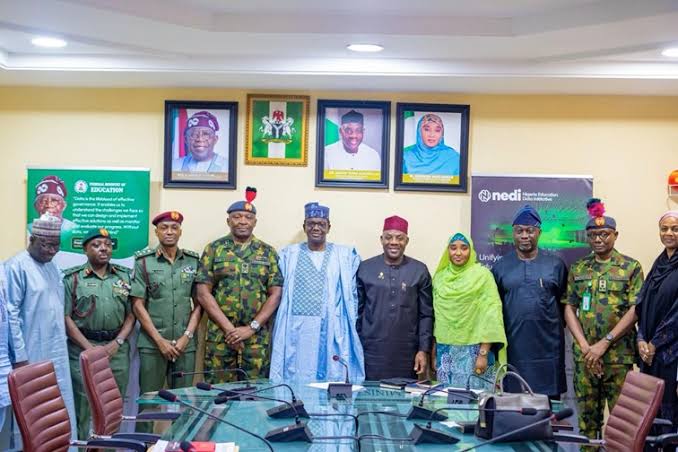
    The Nigerian Government has announced plans to establish the Armed Forces College of Medicine and Health Sciences (AFCOM&HS) as part of efforts to strengthen healthcare delivery within the military and expand Nigeria’s medical training capacity.

    This was disclosed in a statement issued by the Director of Press and Public Relations at the Federal Ministry of Education, Folasade Boriowo,

    Representing the Minister of Education, Dr Tunji Alausa, Boriowo made the disclosure during a high-level meeting with the Minister of Defence, retired Gen. Christopher Musa, and other key stakeholders. Also present at the meeting were the Minister of State for Education, Prof. Suwaiba Ahmad, and the Minister of State for Defence, Dr Bello Matawalle.

    According to Alausa, the proposed college aligns with the Federal Government’s broader reform agenda, particularly initiatives aimed at strengthening Science, Technology, Engineering, Mathematics and Medical Sciences education.

    He said the institution would “provide a structured and sustainable pipeline of military-trained doctors, surgeons, trauma specialists, emergency response medics and allied health professionals.”

    The minister noted that Nigeria was grappling with a significant shortfall in medical personnel amid a population exceeding 240 million.

    “Nigeria faces a growing shortage of medical professionals,” he said, adding that the country currently has a deficit of about 340,000 doctors, underscoring the need for scalable and innovative training models.

    Also Read: Air Chief Reaffirms Commitment to Armed Forces Transformation

    Alausa further revealed that the ministry had increased annual medical school admissions from about 5,000 to nearly 10,000, with projections to raise the figure to approximately 19,000 in the coming years.

    He described the proposed Armed Forces College as a critical component of this expansion strategy.

    In line with the Federal Government’s seven-year moratorium on the establishment of new tertiary institutions, the minister explained that the Nigerian Defence Academy would host the college within its existing framework.

    According to him, the institution will be located in Lagos State and will collaborate with accredited federal and military hospitals to provide clinical training.

    Training activities will be anchored at designated military medical facilities, including the 68 Nigerian Army Reference Hospital and the 661 Nigerian Air Force Hospital in Lagos.

    Alausa stated that medical cadets would undergo an eight-year programme comprising six years of academic study, one year of military training and one year of housemanship.

    He said graduates would be equipped with “medical expertise, discipline, leadership skills and operational readiness for military service.”

    The minister disclosed that a Technical Working Group had been constituted to ensure regulatory compliance and quality assurance.

    According to him, the group comprises representatives from the Ministries of Education and Defence, the Nigerian Defence Academy, as well as relevant professional and regulatory bodies.

    He said the objective was to ensure that admissions commence by October or November 2026.

    Alausa expressed appreciation to President Bola Tinubu for his continued support for human capital development and national security, reaffirming the ministry’s commitment to working closely with defence and regulatory partners to deliver the initiative in line with extant national standards and global best practice.

    NAN


    Source: VON – https://von.gov.ng/nigeria-to-establish-armed-forces-medical-college/